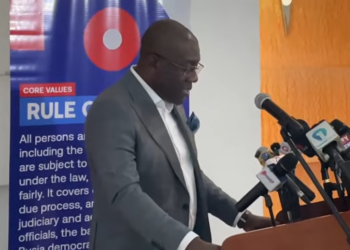
Acting Rent Commissioner Frederick Opoku says Ghana’s housing sector has operated without proper enforcement for decades, creating a culture of illegality within the rental market. He stated that weak regulation allowed landlords and accommodation operators to impose arbitrary charges on tenants across the country.
Opoku explained that restoring order within the sector remains his immediate priority after assuming office three months ago. He noted that public education on the Rent Act would form a major part of the department’s renewed enforcement strategy.
“The housing market is very chaotic and seriously lawless. The law exists, yet enforcement has been missing for years. People now treat illegality as a normal way of doing business.”
Mr. Frederick Opoku
He disclosed that his appointment marked the first time a substantive Rent Commissioner had been named since the Rent Act came into force 63 years ago. Previous governments operated through rent officers despite provisions within the law requiring the appointment of a commissioner.

Furthermore, Opoku indicated that the absence of strict enforcement weakened confidence in the Rent Control Department. Many landlords, he added, increased rent charges without following the legal procedures required under the law.
He also credited President John Dramani Mahama for supporting the enforcement of rent regulations. In his view, the current administration’s commitment to applying the law would strengthen accountability within the housing sector.
Meanwhile, the Rent Commissioner insisted that investors cannot place commercial interests above national laws governing accommodation. He maintained that every property owner remains subject to the Rent Act regardless of the scale of investment involved.
Opoku revealed that his office would intensify inspections and sensitisation campaigns in the coming months. He believes sustained public education would help tenants understand their rights and encourage compliance among landlords.
The Rent Commissioner further observed that ignorance surrounding the law contributed significantly to recurring disputes between landlords and tenants. Consequently, he plans to explain key sections of the Rent Act through continuous public engagement nationwide.
Hostel Charges Spark Student Accommodation Outcry
Frederick Opoku has raised concerns over increasing hostel fees across tertiary institutions, describing the situation as exploitative and financially dangerous for students. He explained that complaints from students pushed the Rent Control Department to begin investigations into hostel pricing systems.
The Rent Commissioner disclosed that a petition from the National Union of Ghana Students triggered recent inspections at hostels around some university campuses. The petition questioned persistent rent increments imposed on students every academic semester.

Opoku stated that Section 10 of the Rent Act requires formal assessment procedures before rent adjustments can take effect. He explained that tenants and landlords both possess the legal right to request assessments through the Rent Control Department.
“Accommodation is expensive, and people are taking advantage of the situation to exploit students. Some operators charge several students thousands of cedis for a single crowded room. The law cannot be ignored because investors want maximum profit.”
Mr. Frederick Opoku
He recounted instances where four students occupied a single room fitted with bunk beds while each paid between GH¢5,000 and GH¢8,800 per semester. In some cases, he said, operators generated tens of thousands of cedis from one room alone.

Additionally, Opoku warned that some facilities operating as hostels failed to provide evidence of registration during inspections. He stressed that accommodation providers using the label “hostel” without proper registration could face investigations.
The Rent Commissioner explained that hostel registration falls under the Ghana Tourism Authority, while rent assessment remains the responsibility of the Rent Control Department. He therefore maintained that hostel operators must comply with both regulatory systems before charging students for accommodation.
Opoku also linked rising hostel charges to growing social pressure on students, particularly young women struggling to pay accommodation fees. He argued that excessive rent costs expose vulnerable students to exploitation and unhealthy survival choices.
Moreover, he criticised investors who justify high prices with arguments centred on demand and supply. In his assessment, accommodation pricing must reflect the economic realities facing ordinary Ghanaian families and students.
Rent Control To Begin Nationwide Education Campaign
The Rent Control Department is preparing a nationwide sensitisation campaign to increase awareness of Ghana’s rent laws. Frederick Opoku explained that many tenants and landlords remain unfamiliar with procedures governing rent assessments and increments.
He indicated that the campaign would focus heavily on sections of the Rent Act frequently violated by property owners. Public engagement sessions are also expected to target students, landlords and tenant associations across the country.

Opoku stressed that education remains necessary before stricter enforcement measures begin. He argued that many people ignored the law for years because state institutions failed to communicate the regulations consistently.
“For decades, people barely heard discussions about the Rent Act. We need to educate the public section by section before strict enforcement begins. The country cannot continue operating outside its own laws.”
Mr. Frederick Opoku
He added that the department intends to simplify aspects of the law to improve public understanding. Through that process, the Rent Commissioner expects more tenants to report unlawful rent increments and unfair treatment.
Furthermore, Opoku maintained that stronger enforcement would protect vulnerable tenants from exploitation within the housing market. He believes renewed attention on rent regulation would restore discipline and fairness across the accommodation sector.
READ ALSO: Government Sets Up Committee to Rein in High Hostel Prices