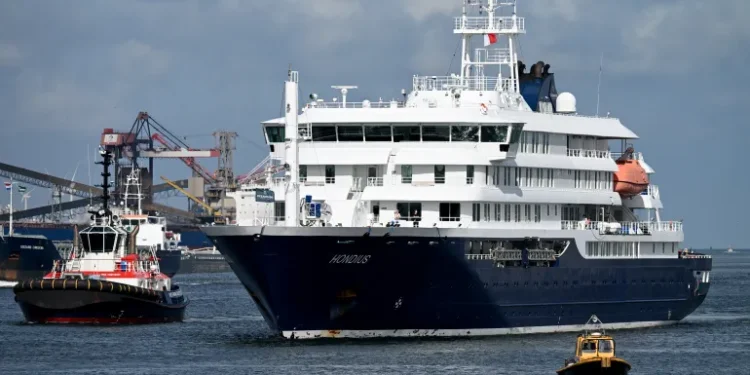
MV Hondius, the Hantavirus-hit cruise ship has docked in the Netherlands for disinfection.
MV Hondius was carrying 25 crew members and two medical personnel as it reached the Dutch port of Rotterdam on Monday, May 18, 2026, after all the passengers disembarked at other locations. According to the ship operator Oceanwide Expeditions, no one on board is experiencing any symptoms.
A short distance from where the ship docked, authorities had set up white containers along the water. The crew will enter immediate quarantine, with those who cannot be immediately repatriated spending their time in quarantine in these containers.
After everyone on board has disembarked, the ship will be decontaminated based on Dutch public health guidelines. “Personal protective measures are being taken to ensure that the cleaners do not need to quarantine after the cleaning,” the Dutch Health Ministry said in a letter to the Dutch parliament last week.
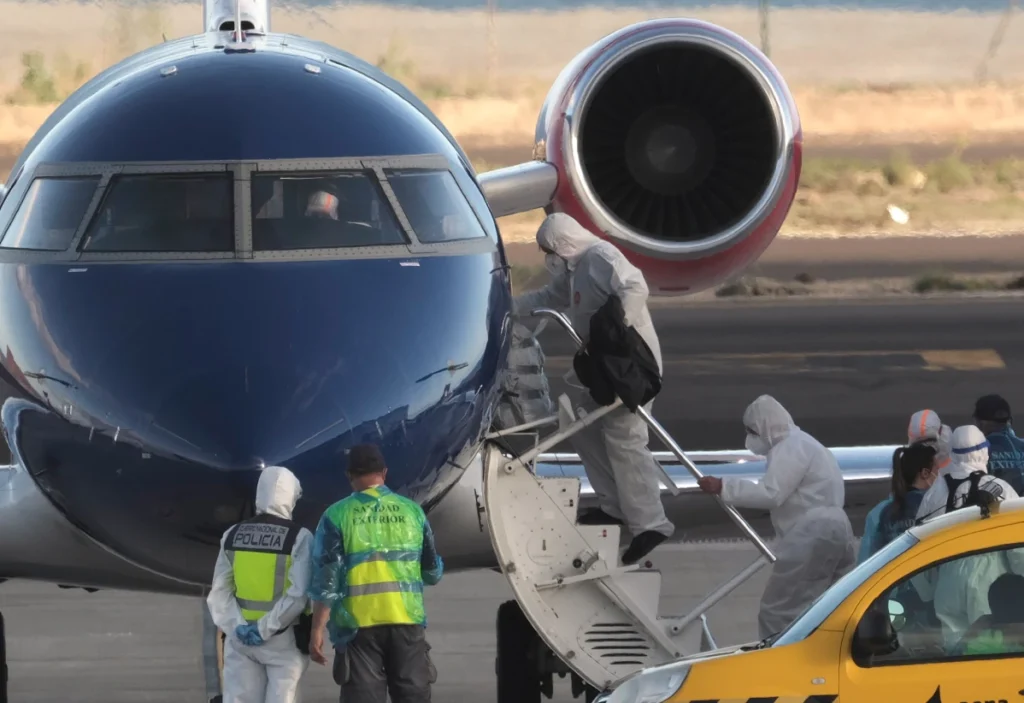
About two dozen passengers and crew members have already been in quarantine in the Netherlands after arriving in the country on different flights in the last two weeks.
Public health officials will inspect the ship before it is allowed to sail again. The hantavirus outbreak on Hondius is the first known case on a cruise ship.
The MV Hondius has spent the past six days sailing from the Canary Islands, where the remaining passengers were evacuated and boarded flights to more than 20 countries to enter quarantine.
Three passengers of the ship died, including a Dutch couple who health officials believe were the first exposed to the virus while visiting South America.
There were at least 11 cases of infection on the ship, nine of which have been confirmed.
The Public Health Agency of Canada said one of the four Canadians in isolation after leaving the ship had tested positive on Sunday. It said it would share information on the case with the World Health Organization (WHO). Last week, one of the 14 Spaniards evacuated from the cruise ship at the center of a hantavirus outbreak and put in quarantine, tested positive.
Speaking to a news agency, Yvonne van Duijnhoven, the Director of public health in Rotterdam, noted, “Luckily so far the crew has suffered no symptoms,” disclosing that crew members will be tested upon arrival and then weekly for the duration of their quarantine.
According to van Duijnhoven. the ship’s decontaminated process will take about three days. She also stressed that the risk to the public is very low. “We have very strict protocols to prevent virus going from the ship towards the outside world,” she said.
WHO Maintains Assessment Of Hantavirus Outbreak As “Low Risk”
Late Sunday, the World Health Organisation (WHO) said that it was maintaining its assessment of the hantavirus outbreak as “low risk.”
“While additional cases may still occur among passengers and crew members exposed before containment measures were implemented, the risk of onward transmission is expected to be reduced following disembarkation and the implementation of control measures.”
World Health Organisation
Despite years of research, many questions have yet to be answered about the hantavirus, including exactly how it spreads, how long it can survive outside a host and why it can be mild for some people and severe for others. There is no specific treatment or cure, but early medical attention can increase the chance of survival.
The Andes virus implicated in the cruise ship outbreak can have an incubation period of up to eight weeks and a mortality rate of up to 50%, according to the World Health Organization. The virus usually spreads from rodent droppings and is not easily transmitted between people, though the Andes virus may be able to spread between people in rare cases.
How long the hantavirus lives on surfaces is highly variable, experts said, potentially from days to weeks depending on how cold it is or the presence of sunlight. However, they said that based on circumstances known about the outbreak, basic sanitation should suffice.
Erik Hill, a virus expert at Seton Hall University, said that normal disinfectants and ultraviolet light are enough to kill the virus. Someone would need to be exposed to a large enough dose of the virus to get sick, he explained, which is why people cleaning rodent droppings in an enclosed space are most at risk. He noted that the virus won’t survive very well on touch surfaces.
Hill said that Hantavirus “is not the concern on cruise ships.” He and other experts say more contagious bugs, like measles or the norovirus, are much larger threats on cruises.
READ ALSO: Japan, Philippines Reaffirm Opposition To China’s Actions In Disputed Waters