The Bank of Ghana has once again chosen caution over complacency as it kept the Monetary Policy Rate unchanged at 14.0 percent following the conclusion of the Monetary Policy Committee’s 130th meeting.
The decision comes at a critical time for Ghana’s economy as inflation continues to ease, the cedi shows signs of stability and investor confidence gradually returns after months of uncertainty. While many market watchers had speculated about a possible rate cut, the central bank opted to maintain its tight monetary stance in a bid to protect the fragile economic recovery and sustain the ongoing disinflation process.
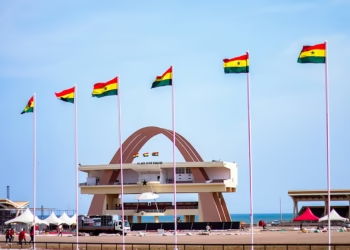
At a press briefing held at Bank Square in Accra, Governor of the Bank of Ghana, Dr. Johnson Asiama, explained that the committee’s decision was driven by a careful assessment of both domestic and global economic conditions.
Inflation Decline Brings Relief
One of the strongest signals influencing the MPC’s decision was the continued decline in Ghana’s headline inflation, which currently stands at 3.4 percent. The Governor noted that inflation has maintained a downward trajectory in recent months due to a combination of tight monetary policy, fiscal consolidation efforts and relative exchange rate stability.
The steady moderation in inflation has brought renewed optimism to businesses and consumers who endured prolonged periods of rising prices and economic uncertainty in recent years. Economists believe the latest inflation figures indicate that the country’s economic stabilization measures are beginning to produce tangible results.
The MPC stated that its assessment of inflation risks showed a broadly balanced outlook. Although there are concerns surrounding recent increases in fuel prices at the pumps, the committee believes there are sufficient mitigating factors to prevent those pressures from spiraling into broader inflationary shocks.
According to the committee, exchange rate stability, stronger reserve buffers and sustained fiscal discipline are expected to cushion the economy against potential upside risks.
Cedi Stability Boosts Confidence
Another major factor behind the policy decision was the improving performance of Ghana’s external sector. The Bank of Ghana highlighted stronger foreign exchange inflows and rising reserve accumulation as key indicators supporting economic resilience.
The relative stability of the cedi has become one of the strongest confidence boosters for businesses and investors. In previous years, sharp currency depreciation fueled inflationary pressures and increased the cost of imports across several sectors of the economy.
However, recent improvements in foreign exchange management and external sector performance appear to have eased some of those concerns. Analysts say the stable cedi is helping businesses plan more effectively while reducing panic in the financial markets.
The Governor stressed that preserving exchange rate stability remains essential to sustaining the country’s economic recovery agenda.
Why the MPC Refused to Cut Rates
Despite the positive economic indicators, the central bank remains cautious about loosening monetary policy too quickly.
Dr. Asiama warned that risks still exist from global commodity price volatility, external economic uncertainties and domestic fiscal developments. According to him, cutting the policy rate prematurely could reverse the gains achieved in inflation reduction and weaken market confidence.
The Monetary Policy Rate serves as the benchmark interest rate that influences borrowing costs across the economy. Commercial banks often adjust lending rates based on the policy rate, affecting businesses, households and investors.
By maintaining the benchmark rate at 14 percent, the central bank is signaling its determination to keep inflation under control while ensuring macroeconomic stability.
Financial analysts say the decision also sends a strong message to investors that Ghana remains committed to prudent economic management despite lingering global uncertainties.

Businesses and Consumers Watch Closely
The MPC’s decision is expected to generate mixed reactions from businesses and consumers.
For borrowers hoping for lower lending rates, the decision may come as a disappointment since financing costs are likely to remain elevated in the short term. Small and medium enterprises, in particular, continue to face pressure from high borrowing costs as they seek capital to expand operations.
However, supporters of the decision argue that maintaining stability is more important than rushing into aggressive rate cuts that could destabilize the economy.
Investors are also likely to interpret the move positively as it reflects confidence in Ghana’s current economic direction. Improved investor sentiment could encourage additional capital inflows and strengthen the country’s financial position further.
The Bank of Ghana now faces the the task of balancing economic growth with price stability. While inflation has slowed significantly, policymakers remain aware that external shocks can quickly disrupt progress.
Global oil price movements, geopolitical tensions and shifts in international financial markets remain potential threats to Ghana’s recovery journey. The central bank therefore appears determined to remain vigilant until inflationary pressures are fully subdued.
The MPC, meanwhile, believes its current policy stance offers the best path toward sustaining economic recovery while keeping inflation firmly under control.
As businesses, investors and consumers await the next policy announcement, one thing is becoming increasingly clear. Ghana’s economic managers are prioritizing stability over short term excitement, hoping that discipline today will secure stronger growth tomorrow.
READ ALSO: Ghana’s IMF Exit Signals a New Era of Financial Confidence, ADB MD