The Hungarian government has proposed limiting the Prime Minister’s mandate to two four-year terms.
Currently, the law states that the Prime Minister is elected by Parliament upon the proposal of the President. The mandate is not limited, which is why former Hungarian Prime Minister Viktor Orbán held the post of Prime Minister for decades.
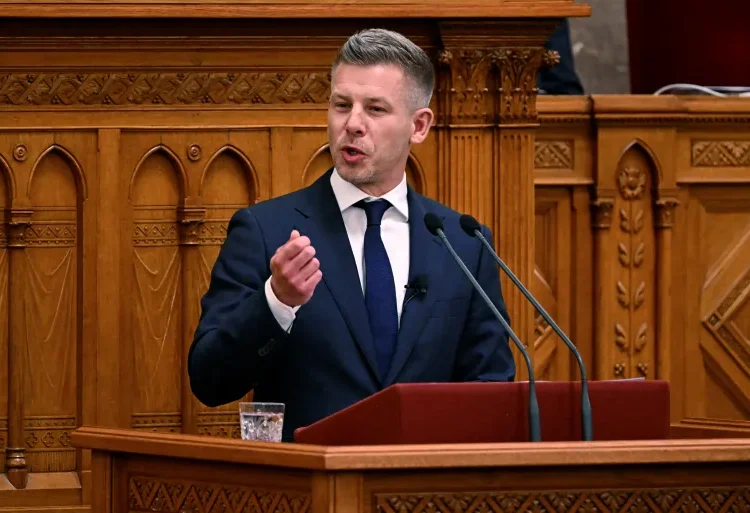
In a move which in effect bars Orbán from returning to the role, Hungary’s new government, led by Péter Magyar, put forward a constitutional amendment that would limit Prime Ministers to a maximum of eight years in office.
The draft amendment appears to be an attempt to ward off the threat of Orbán seizing on the situation to mount a comeback, stating that term limits are “essential” to restoring the rule of law. “A person who has served as Prime Minister, for a total of at least eight years, including any interruptions, may not be elected as Prime Minister,” it says.
The calculation would apply to all prime ministerial terms held since the country’s democratisation in 1990, meaning that Orbán, who had served five terms as Prime Minister since 1998, totalling 20 years in power, would be barred.
The amendment is far from foolproof, however, as any future leader with a two-thirds or supermajority could submit an amendment to extend their time in power.
The draft amendment was submitted just over a week after the new government took office. It marked Magyar and his Tisza party’s first step in dismantling a constitution that was unilaterally rewritten and amended more than a dozen times as Orbán and his Fidesz party worked to turn Hungary into what they called a “petri dish for illiberalism.”
During Magyar’s more than two years on the campaign trail, he repeatedly promised to bring in term limits, describing them as part of a wider push to restore the country’s democratic checks and balances.
As his party celebrated its landslide victory in last month’s election, Analysts were swift to say the new government faced a formidable task in rebuilding crumbling public services and a stagnant economy, one compounded by the many Fidesz loyalists who remain in the state, media and judiciary.
In the weeks since his election victory, Magyar has sought to emphasise his government’s break from the past, vowing to suspend broadcasts from state media that functioned as Orbán mouthpieces, calling on Orbán-era appointees to resign, and apologising to the teachers, journalists and public figures who were maligned by the state during Orbán’s time in power.
His government has also made clear that this stark shift also applies to foreign relations. In mid-May, the new Foreign Minister, Anita Orbán, said that she had summoned Russia’s Ambassador to Hungary over a massive drone attack in Ukraine, marking a reversal of her predecessor’s seemingly servile relations with Moscow.
Dissolution Of Sovereignty Protection Office
Another line in the draft amendment, which is expected to pass given Tisza’s own supermajority in parliament, paves the way for the dissolution of the controversial sovereignty protection office.
Launched during Orbán’s last years in power, the office was widely accused of seeking to quell critics of his government by allowing Hungary’s intelligence services to access information on individuals and organisations without judicial oversight.
As the new government races to unlock billions in frozen EU funds, the draft amendment also addresses a longstanding point of friction with the bloc by reclaiming the foundations that, during Orbán’s time, were used to maintain nearly two dozen universities and thinktanks such as the Mathias Corvinus Collegium.
In 2020, the parliamentary majority of Orbán’s Fidesz party introduced a provision into the Fundamental Law that subsequently allowed for the transfer of a portion of Hungarian higher education institutions and other state entities into foundation management.
Under the Orbán government, the foundations’ board of trustees, many of them stacked with Orbán loyalists, were handed complete control over the assets. The draft amendment states that this “eliminated democratic control” over these public assets and resulted in an “abuse of legislative power.”
The proposal sets out that the state could dissolve these foundations. “The amendment makes it clear that although the foundations … are private entities, their assets are national assets,” it says.
The draft amendment is expected to be discussed next week when the national assembly convenes.
READ ALSO: Israel Deports Gaza Flotilla Activists Amid International Backlash