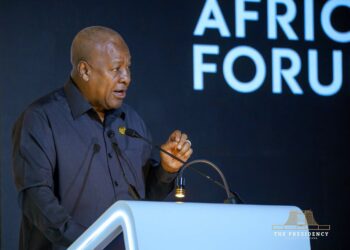
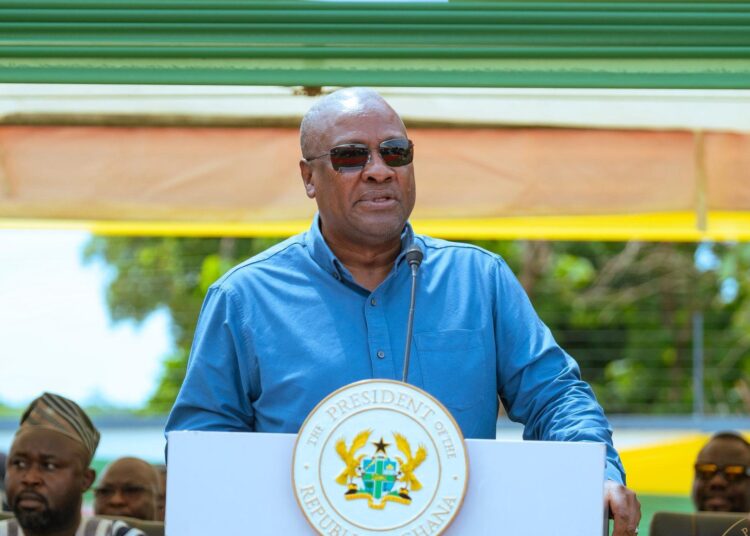
President John Dramani Mahama has outlined a comprehensive infrastructure expansion programme for the Savannah Region, framing it within a broader national policy of balanced development aimed at reducing regional inequality.
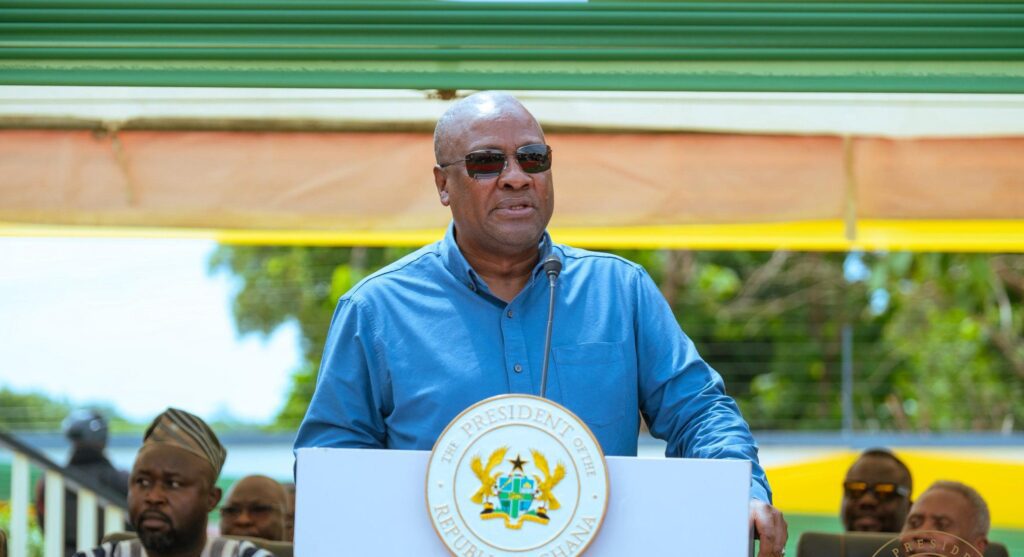
Speaking during a regional engagement, the President said national social survey data consistently show that the five northern regions remain the poorest parts of the country. He stressed that this reality demands targeted public investment to correct structural imbalances in development outcomes.
He explained that while Ghana’s constitution requires fairness in the distribution of national resources, it also requires equity—meaning that poorer regions must receive additional attention to close development gaps.
“When one part of the country develops faster than others, it creates migration pressure on social services and infrastructure in the more developed areas. That is why every country must pursue balanced development.”
John Dramani Mahama
President Mahama added that the Savannah Region has been identified as one of the priority areas under this strategy.
Education Boost: New Science and Technology University
A key component of the development plan is the establishment of a new public university in the Savannah Region, which will focus specifically on science and technology education.

The President announced that preparatory work for the institution is already underway, with funding support secured from international partners.
According to him, the Chinese government has provided a $30 million grant to kickstart the project, while additional funding of $100 million has been sought from the Arab Bank for Economic Development in Africa (BADEA) to support campus development.
He described the funding from China as a grant, emphasizing that it is non-repayable support intended to accelerate early-stage construction.
The university, he said, will be designed to expand access to tertiary education for students in northern Ghana and strengthen national capacity in science, technology and innovation.
Government also plans to upgrade infrastructure in senior high schools across the Savannah Region to ensure students are adequately prepared for higher education opportunities
Health Infrastructure: 300-Bed Regional Hospital
In the health sector, the President announced the construction of a 300-bed Savannah Regional Hospital, which he described as a major referral facility for the entire region.
The hospital, to be located near Sualipi, will be equipped with modern diagnostic and treatment equipment, including CT scan, MRI, X-ray and other advanced medical technologies.
According to President Mahama, the facility will serve as the highest-level referral centre in the region, supporting district hospitals in areas such as Buipe, Bole and surrounding communities.

He explained that cases that cannot be managed at district hospitals will be referred to the regional facility to improve healthcare outcomes and reduce mortality rates.
The President said the project forms part of a broader effort to decentralise healthcare delivery and ensure equitable access to quality medical services across all regions of Ghana.
Water Supply Expansion Across Communities
President Mahama also highlighted a major water supply project aimed at addressing long-standing challenges in the Savannah Region.
The project will draw water from Yapei and distribute it across multiple communities, including Yapei township itself, Busunu, Damongo, Larabanga and areas extending toward the Mole Game Reserve.
He said the initiative will significantly improve access to potable water for both domestic use and economic activities in the region.
The President disclosed that planning and technical processes are ongoing to officially commence construction, including sod-cutting for the Damongo water system. He praised the leadership of the Ghana Water Company Limited for driving preparatory work and ensuring project readiness.
Road Network Expansion Under Big Push Programme
The President further confirmed that the Savannah Region will benefit from expanded road infrastructure under Phase 2 of the government’s “Big Push” programme.
He noted that several roads not included in the first phase of the programme will now be captured in the upcoming expansion, ensuring improved connectivity across rural and urban communities.
The road projects are expected to enhance trade, reduce transportation costs and improve access to health and education services. President Mahama stated that the government is committed to ensuring that the Savannah Region receives its fair share of national road investments.
Energy and Rural Electrification Drive
On energy access, the President revealed that 172 communities in the Savannah Region have been identified under Phase 1 of a national electrification expansion project.
He said contracts have already been signed, and contractors are currently mobilising to project sites to begin installation works. The initiative aims to increase electricity coverage in the region from 68 percent toward the national average of approximately 90 percent.
For communities that are too remote to be connected to the national grid, President Mahama said the government will deploy solar energy solutions to ensure no community is left behind.
He described electrification as a critical driver of economic development, enabling businesses, education and healthcare delivery.
Rotational Infrastructure Strategy: Hospitals and Stadiums
The President also introduced a phased national infrastructure strategy aimed at ensuring equitable distribution of hospitals and sports facilities across newly created regions.
He explained that the government will construct three regional hospitals this year in selected new regions, while three others will receive sports stadiums. In the following year, the arrangement will be reversed, ensuring that all six new regions eventually receive both a regional hospital and a stadium.
This rotational approach, he said, is designed to manage fiscal constraints while ensuring balanced infrastructure delivery. President Mahama noted that Savannah Region will benefit from its share of this programme in subsequent phases.
Sports Infrastructure Development
As part of the broader infrastructure plan, the President confirmed that sports development remains a key priority for youth engagement and regional equity. Three new stadiums will be constructed this year in regions that currently lack such facilities.

He added that sports infrastructure will be complemented by future investments once hospital projects in priority regions progress sufficiently. The President emphasised that youth development, through both education and sports, is central to national transformation.
Commitment to Equitable National Growth
President John Dramani Mahama concluded by reaffirming his government’s commitment to closing regional development gaps through sustained public investment in infrastructure, education, health, energy and water systems.
He stressed that the Savannah Region represents a key priority in Ghana’s broader agenda of inclusive development, given its relatively lower socio-economic indicators compared to other parts of the country.
The President said the ultimate goal is to ensure that no region is left behind in the country’s development journey, adding that equitable investment is essential for national stability and long-term prosperity.
The announced projects ranging from a science and technology university to a major regional hospital, water expansion systems, road improvements and electrification form part of what he described as a coordinated effort to transform living standards in northern Ghana.
He assured residents that implementation will proceed in phases, with continued monitoring and additional interventions introduced as necessary to sustain progress in the Savannah Region and beyond.
READ ALSO: “This Must Be Ghana’s Last IMF Bailout” — Mahama Declares End to IMF Dependency