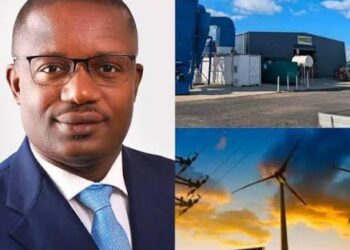
Energy Minister, John Jinapor, has announced that Ghana’s upstream petroleum sector is projected to experience a major turnaround, ending five continuous years of falling production across the country’s oil fields.
This long-awaited recovery is expected to manifest before the close of the year, driven by intensive government interventions targeted at reviving output and bringing new operational energy back into the economy.
“For five consecutive years, petroleum production has been declining. This year, let me assure you, petroleum production is not going to decline. It’s going to pick up and rise again. Although the energy sector remains challenging, ongoing reforms and new investments are beginning to yield positive results.”
Energy Minister, John Jinapor
The sector’s rebound is tightly linked to a series of aggressive state-led policies designed to cushion the industry against systemic challenges while aggressively restoring investor confidence.

To permanently reverse the negative production curve, the state has finalized significant investment agreements, highlighted by a freshly signed $1.5 billion Memorandum of Understanding with Italian energy giant Eni, alongside an additional $2 billion development pact with the Jubilee Partners.
These multi-billion-dollar injections are strategically tailored to enhance the institutional resilience of the upstream petroleum framework, expand exploration infrastructure, and unlock stalled hydrocarbon reserves to stabilize long-term output.
Overcoming Half a Decade of Hydrocarbon Declines
The anticipated turnaround marks a critical departure from half a decade of structural operational downturns that heavily weighed on the state’s macro-fiscal projections.
Industry data highlights that aging oil wells, technical disruptions, and capital flight have systematically dragged down Ghana’s daily output, creating a prolonged deficit in petroleum revenues.
By committing to these extensive operational updates, the sector is steering away from historic vulnerabilities toward a steady production path.

The introduction of the new capital from Eni and the Jubilee Partners directly addresses these historical constraints by funding the extraction infrastructure required to optimize deep-water yields.
Government analysts emphasize that these targeted financial commitments are already transforming field operations, shifting the sector from a phase of asset depreciation to asset maximization.
These deliberate policy adjustments ensure that the era of dwindling outputs is replaced by an era of operational efficiency and steady extraction increases.
Strategic Capital Injections and Investor Confidence
Securing $3.5 billion in cumulative commitments from Eni and the Jubilee Partners represents a major shift in foreign direct investment into Ghana’s upstream space, particularly at a time when global capital is increasingly selective due to the energy transition.

This substantial financial inflow serves as a strong validation of Ghana’s updated legal and regulatory framework, making the sedimentary basins highly attractive despite expensive deep-sea exploration costs.
The $1.5 billion Eni partnership will significantly expand production capabilities within Western Ghana’s offshore blocks, deploying state-of-the-art subsea technologies to boost extraction rates.
Simultaneously, the $2 billion accord with the Jubilee Partners will focus heavily on drilling new development wells and optimizing natural gas tie-backs.
This comprehensive investment structure guarantees that both infrastructure development and technical capacity building are prioritized concurrently.
By restoring close collaboration with global energy majors, the government is successfully positioning the country as an attractive and stable environment for long-term international energy infrastructure investments.
Macroeconomic Implications and Long-Term Energy Security
The successful recovery of crude oil production holds immense benefits for Ghana’s macroeconomic indicators and broader energy sector security.
From a fiscal standpoint, a rise in hydrocarbon output translates directly into higher state revenues through corporate income taxes, royalties, and carried interest, which will significantly reduce current national budget deficits.

These enhanced petroleum receipts provide the government with crucial fiscal space to finance vital developmental projects and fund the Annual Budget Funding Amount without relying heavily on expensive external borrowing.
Furthermore, the domestic energy framework stands to benefit substantially from the increased availability of associated natural gas, which is vital for powering local thermal electricity plants.
This steady supply of indigenous gas will lower power generation costs, stabilize the national grid, and reduce the country’s reliance on imported fuel alternatives.
Ultimately, this production rebound will not only secure domestic energy self-sufficiency but also provide the reliable power infrastructure needed to drive industrial growth across the country.
READ ALSO: Senegal President Dismisses Prime Minister, Dissolves Government