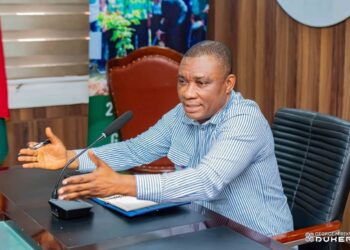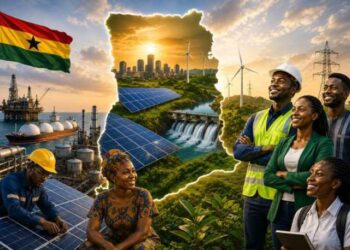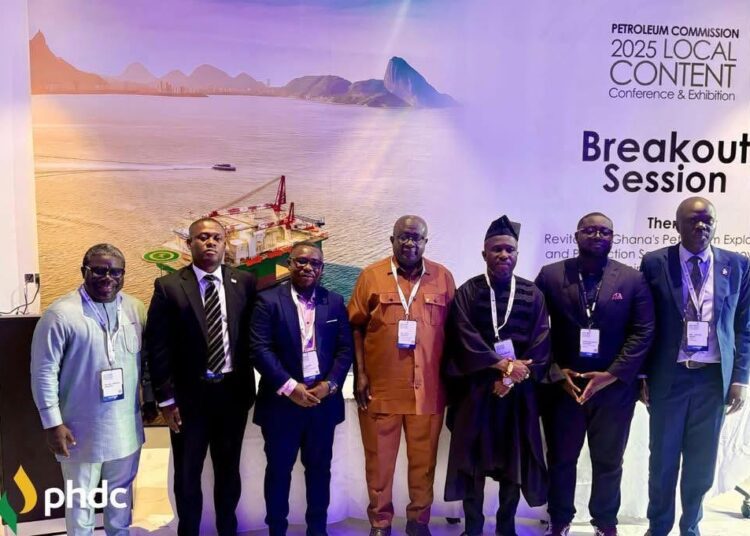
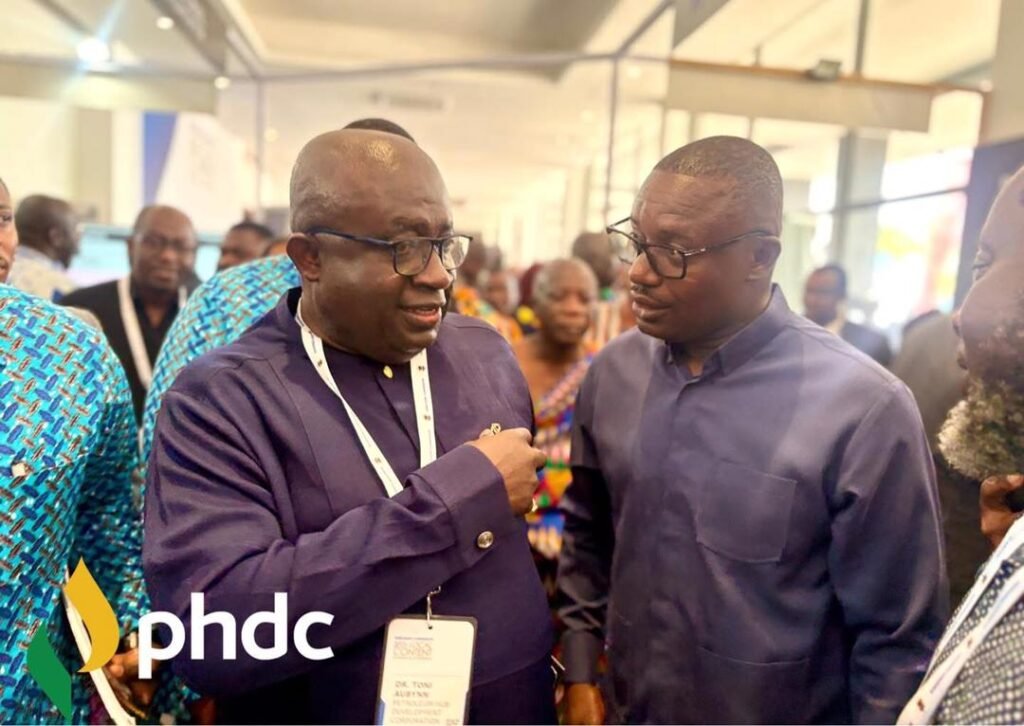
Chief Executive Officer of the Petroleum Hub Development Corporation (PHDC), Dr Toni Aubynn, has announced groundbreaking plans to integrate gas and solar energy to power the multi-billion-dollar Petroleum Hub project.
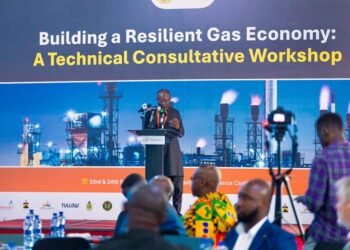
Speaking at the Energy Conference, Dr Aubynn revealed that the corporation will utilize natural gas to drive the hub’s primary, heavy-duty industrial operations, while simultaneously deploying solar power to run all ancillary and administrative facilities.
This dual-energy mechanism is designed to establish a highly sustainable operational model that reduces the environmental footprint of heavy industrialization, directly advancing the state’s transition toward low-carbon economic structures.
“He [Dr Toni Aubynn ] believes that Africa has been blessed with abundant gas resources, which must be explored and harnessed for the benefit of the continent and that developing a complex infrastructure like the Petroleum Hub project is key in achieving that.”
Petroleum Hub Development Corporation (PHDC)

The PHDC boss explained that leveraging domestic gas resource infrastructure represents a pragmatic approach to industrial self-sufficiency.
By securing a cleaner baseline energy source for core refining, processing, and petrochemical manufacturing, the project safeguards itself against power disruptions while keeping carbon intensity significantly lower than traditional oil-fired systems.
Meanwhile, dedicating decentralized solar photovoltaic installations to support secondary infrastructure ensures that administrative offices, maintenance yards, and residential quarters function entirely on renewable energy.
This clean energy mix serves as a pioneering framework for mega-projects across the continent, proving that Africa can aggressively expand its industrial capacity without compromising international climate commitments.
Driving Africa’s Hydrocarbon Sovereignty and Gender Equity
Dr Aubynn strongly argued that the Petroleum Hub project remains the most viable vehicle for the continent to thoroughly exploit its massive hydrocarbon reserves, thereby fostering unprecedented economic self-reliance.
He pointed out that historical models of exporting raw, unrefined resources have consistently deprived regional economies of vital downstream wealth, a systemic challenge this infrastructure seeks to correct.
By positioning the hub as a centralized processing nexus, African nations can retain maximum value within their borders.
He emphasized that utilizing abundant natural gas deposits is crucial to fuel this transition, declaring that complex infrastructure projects are fundamentally necessary to translate underground wealth into tangible social development and economic transformation.
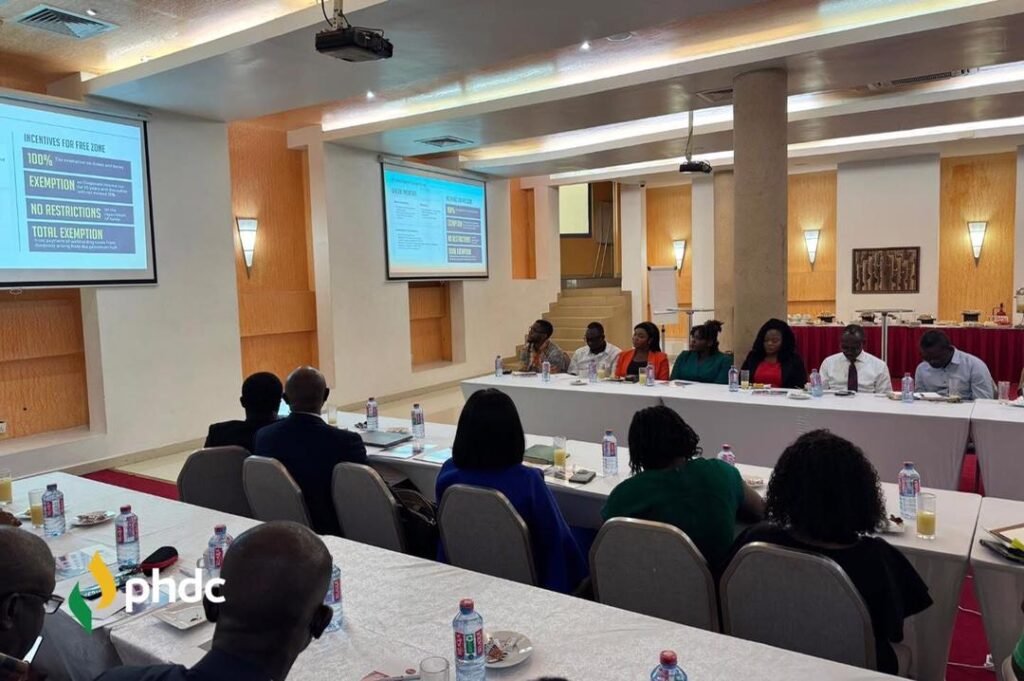
In tandem with structural engineering, the PHDC leader passionately advocated for systemic human resource reforms, focusing heavily on the indispensable contributions of women within traditionally male-dominated extractive sectors.
He made a compelling case for aggressively expanding female representation across all operational tiers of the energy, mining, and industrial ecosystems.
Rather than restricting gender mainstreaming to token administrative roles, Dr Aubynn stressed that women must be actively integrated into technical operations, complex engineering tasks, and high-level strategic decision-making panels.
Achieving true energy security, he maintained, requires breaking structural barriers to ensure that Africa’s top female technical intellects are actively leading the continent’s industrial institutions.
Catalyzing Ghana’s Midstream Capacity and Grid Stability
This integrated energy proposal holds transformative potential for Ghana’s domestic energy economy, particularly through the rapid optimization of its midstream infrastructure.
By establishing a guaranteed, large-scale industrial off-taker for natural gas, the project incentivizes domestic and regional upstream producers to commercialize stranded gas fields instead of flaring them.
This consistent demand creates a robust investment climate for expanding pipeline networks, processing facilities, and storage terminals across the country.
Consequently, Ghana can effectively curb its historical reliance on imported liquid fuels for industrial use, capturing complete control over its energy supply chain and insulating local businesses from volatile global market shocks.
Accelerating Petrochemical Integration and Green Benchmarks
On a broader macroeconomic scale, the gas-driven infrastructure accelerates Ghana’s industrial diversification by anchoring a world-class domestic petrochemical sector.
The reliable thermal energy and electricity generated from gas allow processing plants to efficiently manufacture essential industrial inputs, including plastics, synthetic fibers, fertilizers, and pharmaceuticals. Locally producing these high-value commodities dramatically alters Ghana’s balance of trade, slashing import bills and generating vital foreign exchange through regional exports to the African Continental Free Trade Area (AfCFTA).
The financial liquidity generated from these downstream operations provides the state with a stable revenue stream to fund critical public infrastructure and social interventions.
Finally, the deliberate inclusion of solar energy sets a transformative green benchmark that completely redefines the global competitiveness of Ghana’s industrial output.

As international markets increasingly impose carbon boundary adjustments and penalize goods manufactured via carbon-heavy processes, the PHDC’s low-emission manufacturing environment ensures that products refined within the hub escape these punitive tariffs.
This strategic foresight makes Ghanaian-manufactured petrochemical products highly attractive to Western and eco-conscious global supply chains.
Ultimately, by balancing aggressive fossil fuel exploitation with cutting-edge renewable integration, Ghana positions itself as a sophisticated, forward-thinking leader capable of navigating the complex realities of the modern global energy transition.
READ ALSO: US Sanctions Tanzanian Police Official Over Alleged Abuse of Activists