United States has imposed sanctions on a senior Tanzanian police official over allegations linked to the “torture and sexual assault” of East African human rights activists Boniface Mwangi and Agather Atuhaire during their detention last year.
In a statement released by US Secretary of State Marco Rubio, the State Department indicated that it had designated Faustine Jackson Mafwele based on “credible information that he was involved in gross violations of human rights.”
The designation marks a significant escalation in international scrutiny of Tanzania’s security forces and represents the first time a senior official under President Samia Suluhu Hassan’s administration has been directly sanctioned by a foreign government over alleged abuses.
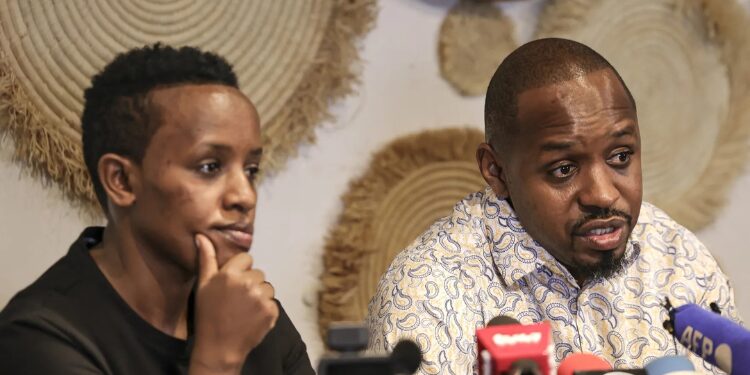
According to US officials, members of the Tanzanian Police Force “detained, tortured, and sexually assaulted” the two activists, who had travelled to Tanzania in May last year to observe the trial of opposition politician Tundu Lissu.
The activists were later released, but their accounts of what happened during their detention have since drawn global condemnation and renewed attention to alleged abuses by security agencies.
Kenyan activist Boniface Mwangi has alleged that he was stripped naked, hung upside down, beaten on his feet and sexually assaulted while in custody. Ugandan journalist and activist Agather Atuhaire has also stated that she was raped during her detention. Tanzanian police at the time dismissed the allegations, describing the accounts as “opinions” and “hearsay.”
While the US statement did not provide detailed evidence of Mafwele’s specific actions, Assistant Secretary of State for Democracy, Human Rights, and Labor Riley Barnes noted that Washington was “taking action to promote accountability for this heinous act,” signalling that further measures could follow if credible evidence of abuse continues to emerge.
Mafwele, a Senior Assistant Commissioner of Police, is now subject to US sanctions that include a travel ban and restrictions on entry into the United States.
Tanzanian Foreign Affairs Minister Mahmoud Thabit Kombo has indicated that the government had not yet received formal notification of the designation.
The sanctions come at a time of heightened concern over Tanzania’s human rights record, with international organisations and lawmakers increasingly questioning the country’s democratic trajectory. Amnesty International has previously called for an urgent investigation into what it described as arbitrary arrest, torture, incommunicado detention and forcible deportation of the two activists. Human Rights Watch has also referenced the case in its recent reporting on Tanzania, highlighting what it described as a wider crackdown on opposition figures, activists and freedom of expression.
The US action also reflects broader tensions between Washington and Dar es Salaam over governance and civil liberties. In recent months, US lawmakers have urged tougher measures in response to what they describe as democratic backsliding in Tanzania, alongside concerns about political repression and restrictions on civic space.
Tanzania Faces US Sanctions Over Alleged Rights Abuses

Moreover, last December, the US government accused Tanzania of undermining religious freedom and free expression, warning that such actions were affecting American interests and could threaten long-standing development and security cooperation. Tanzanian authorities did not respond to those claims.
The current case is unfolding against the backdrop of contested political developments following Tanzania’s general election last October, which was accompanied by widespread unrest and allegations of excessive force by security agencies.
A commission of inquiry established to investigate the post-election violence reported that 518 people died during the unrest, including 197 who were shot dead.
However, the commission did not assign direct responsibility for the killings, instead attributing the violence to what it described as foreign-backed groups.
Opposition parties and human rights organisations have rejected this explanation, insisting that the death toll may have been significantly higher and that state security forces were responsible for firing on unarmed protesters.
President Samia Suluhu Hassan, who came to power in 2021 following the death of John Magufuli, was initially praised for opening political space and easing restrictions on dissent. However, rights groups argue that the political environment has since tightened, with growing pressure on opposition figures and activists.
During the disputed election period, President Samia declared the vote fair and transparent while blaming foreign interference for the unrest, which she described as part of a broader attempt to destabilise the country.
Authorities have also acknowledged the use of force against protesters, stating that some groups were attempting to forcibly change the government.
The latest US sanctions are likely to intensify diplomatic pressure on Tanzania at a time when international attention is increasingly focused on governance, accountability and human rights standards in the region.
The Tanzanian Police Force has not yet issued a detailed response to the sanctions or the renewed allegations.
READ ALSO: PURC Outlines Sixty Percent Refund Policy for Private ECG Poles