In a major strategic shift to transform indigenous businesses into multinational powerhouses, the Ghana Investment Promotion Centre (GIPC) has launched a campaign urging local enterprises to utilize international offshore financial hubs to anchor their global expansion.
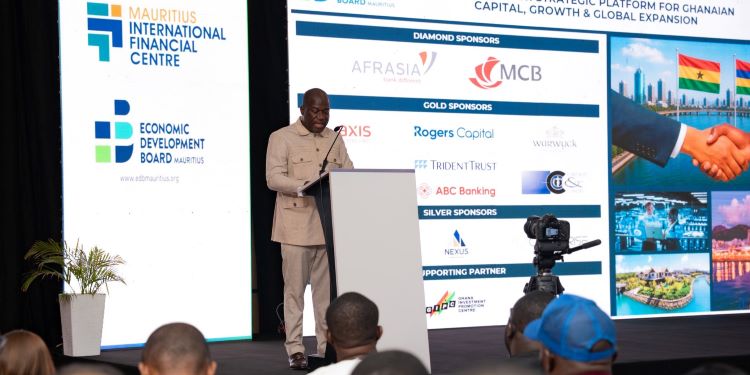
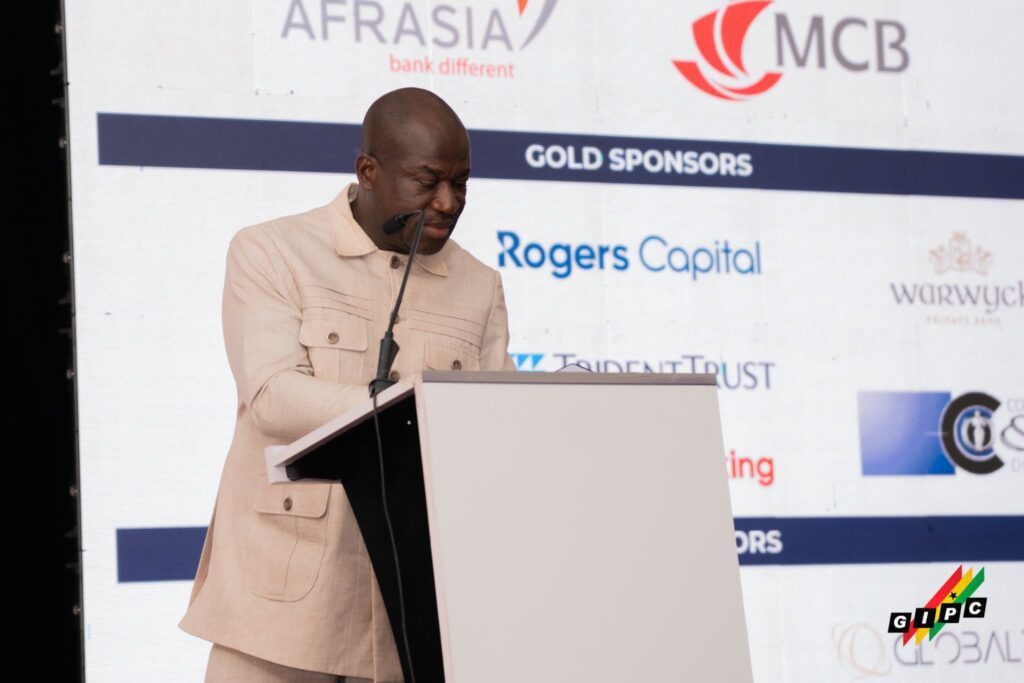
Speaking at a high-level business forum in Accra focused on capital growth and cross-border scale, GIPC’s Director of Monitoring and Evaluation, Dr. George Asafo-Agyei, highlighted Mauritius as the primary financial conduit for Ghanaian firms looking to attract international venture capital and scale across regional markets.
The policy initiative comes as Ghanaian enterprises are facing domestic borrowing costs and looking for innovative ways to structure corporate equity.
Endorsing established offshore jurisdictions like Mauritius, state investment officials are signaling a sophisticated maturation in how the country manages outbound investment, recognizing that for domestic companies to dominate continental trade corridors, they must first master international capital routing and corporate risk management.



“Dr. George Asafo-Agyei highlighted Mauritius as a key financial hub for African enterprises seeking regional and international scale. He reaffirmed Ghana’s commitment to a competitive, private sector-driven economy, noting that ECOWAS and AfCFTA continue to open up major opportunities for growth and cross-border trade”
Ghana Investment Promotion Centre
Mauritius has long established itself as the preeminent financial gateway for capital entering and exiting the African continent, boasting a robust network of Double Taxation Avoidance Agreements, an uncompromised common law legal framework, and a completely frictionless capital repatriation architecture.
For Ghanaian businesses – particularly those in the high-growth enterprise bracket – structuring a parent holding company or an intellectual property vehicle in Mauritius provides a shield against arbitrary macro-financial volatility.
During his address to the gathered business leaders and institutional investors, Dr. George Asafo-Agyei emphasized that utilizing international financial platforms is no longer a luxury reserved for foreign multinationals operating within Ghana, but a necessary operational baseline for local businesses seeking external financing.
International private equity funds and global venture capital firms frequently mandate that African startups and expanding enterprises register their corporate headquarters in a neutral, tax-efficient jurisdiction before any institutional capital can be deployed.
Removing the legal and structural friction associated with direct inbound investments into West Africa, the Mauritius routing enables Ghanaian entrepreneurs to compete on equal footing with global competitors, opening up a direct pipeline to international liquidity pools that would otherwise remain closed to localized corporate structures.
Leveraging AfCFTA And Regional Corridors
The GIPC’s outbound expansion push is directly linked to the wider geopolitical and economic integration occurring under the Economic Community of West African States (ECOWAS) and the African Continental Free Trade Area (AfCFTA), the secretariat of which is headquartered in Accra.
The Centre highlighted that the operationalization of AfCFTA effectively dissolves traditional tariff barriers across a market of 1.3 billion people, rendering legacy, purely domestic corporate strategies entirely obsolete.
Dr. Asafo-Agyei reaffirmed the government’s unwavering commitment to fostering a competitive, private sector-driven economy that does not merely absorb foreign direct investment but actively projects domestic corporate power across the continent. Under this macro-policy framework, the GIPC is transitioning to an active facilitator of outbound industrial and financial positioning.
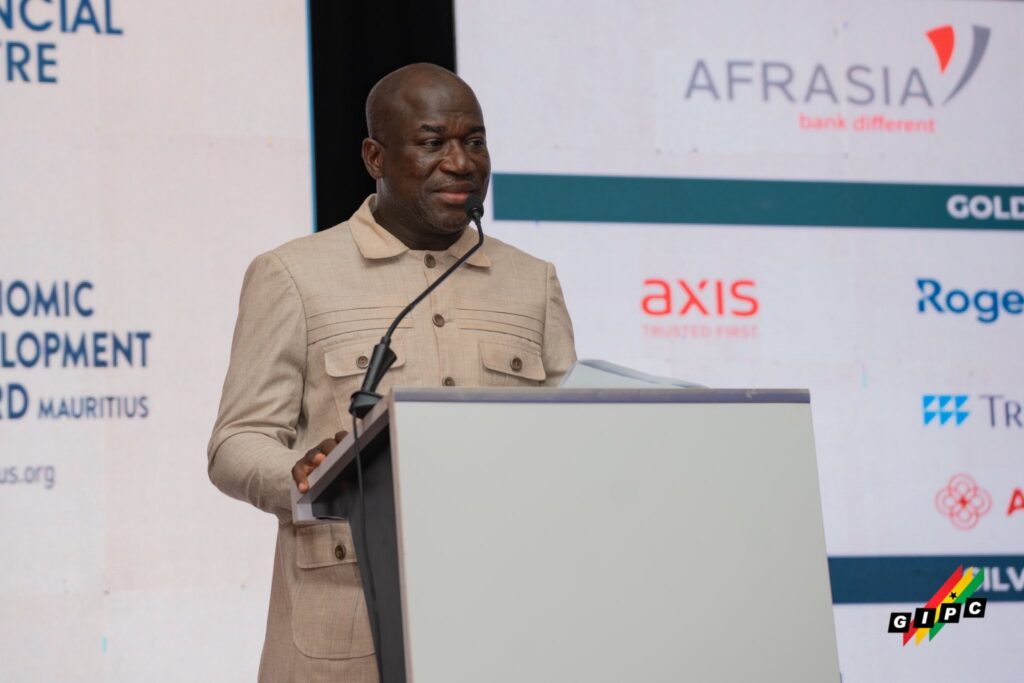
The vast market access unlocked by ECOWAS and the AfCFTA presents an unprecedented growth runway for our private sector, demanding a radical realignment in how Ghanaian firms manage cross-border corporate governance and regulatory compliance.
To fully capitalize on these continental trade corridors, Ghanaian enterprises require massive injections of growth capital that domestic commercial banking sectors – currently constrained by tight monetary tightening cycles – cannot adequately provide.
The integration with offshore financial hubs thus becomes a structural prerequisite to funding the cross-border logistics, manufacturing setups, and distribution networks required to win market share in highly competitive regional enclaves.
The Accra forum brought together a highly specialized coalition of business leaders, fund managers, fintech innovators, and investment risk specialists to map out the technical parameters of this outbound transition. The fintech sector, in particular, was identified as a critical spearhead for Ghana’s regional ambitions.
According to the GIPC, discussions at the forum centered heavily on investment risk management, with specialists outlining how cross-border corporate structures can protect local founders from “political risk, currency depreciation, and regulatory overreach in unfamiliar jurisdictions.”
This approach to corporate expansion ensures that as Ghanaian enterprises scale into neighboring West African states and beyond, their core capital reserves and intellectual property remain securely anchored within highly predictable, internationally recognized legal frameworks.
The GIPC’s strategic directive marks a vital evolution in Ghana’s national economic narrative. Ghana is dismantling the outdated notion that economic development is a one-way street dependent entirely on incoming foreign aid and localized investment, directing domestic firms toward international financial hubs.

As the business forum concluded, the consensus among institutional investors and corporate executives was clear: the future of Ghanaian economic sovereignty depends on the private sector’s ability to transcend national borders.
Through the coordinated utilization of the Mauritius financial pipeline, the trade protections of ECOWAS, and the vast commercial landscape of the AfCFTA, the country is establishing a highly sophisticated framework to transform indigenous enterprises into dominant pan-African conglomerates, delivering long-term wealth creation and industrial resilience back home.