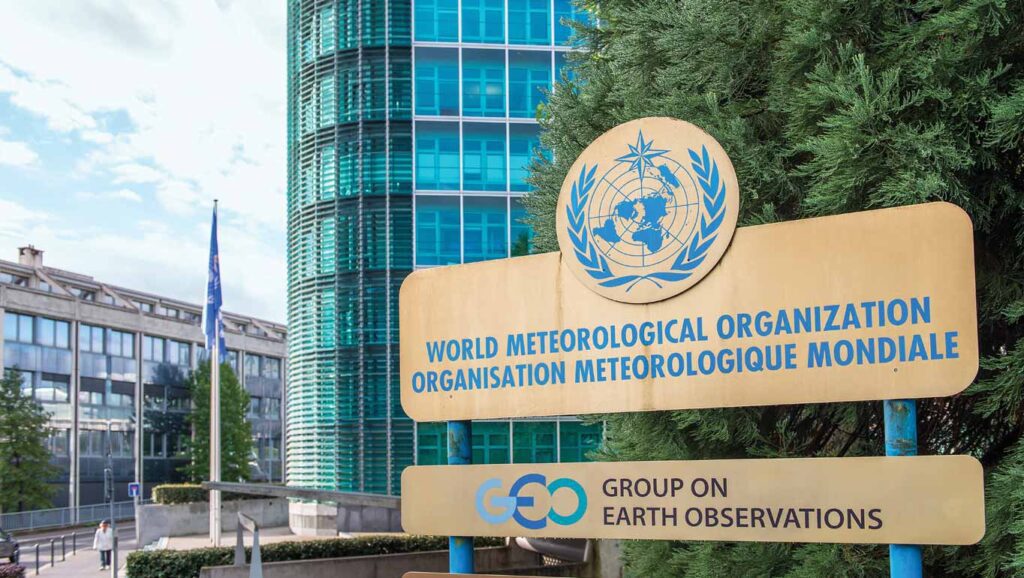
World Meteorological Organization (WMO) has warned that the world is increasingly likely to experience another record-breaking hot year before the end of the decade, as rising greenhouse gas emissions and the intensifying effects of El Niño continue to accelerate the global climate crisis.
According to the World Meteorological Organization there is an 86% chance that at least one year between 2026 and 2030 will surpass 2024 as the hottest year ever recorded.
Scientists also estimate there is a 75% likelihood that the average global temperature over the five-year period will exceed 1.5°C above pre-industrial levels.
The findings add to mounting concern among scientists and policymakers that the planet is moving dangerously close to breaching key climate thresholds set under the Paris Agreement. At the same time, extreme weather events continue to affect communities across the globe.
According to the report, annual global mean near-surface temperatures between 2026 and 2030 are expected to range from 1.3°C to 1.9°C above the 1850–1900 average.
The World Meteorological Organization also indicated a 91% chance that at least one year during that period will temporarily exceed the 1.5°C warming threshold.
Although the Paris Agreement measures warming over longer periods rather than single years, scientists warn that temporary breaches are becoming more frequent as global temperatures continue to rise.
The warning comes amid severe heatwaves across Europe and parts of Asia, with scientists linking increasingly intense and prolonged extreme weather events to human-driven climate change. Record temperatures have recently swept through the United Kingdom and other parts of Europe, while countries including India have also faced dangerous heat conditions.
Simon Stiell, the UN Climate Chief, described the current heatwaves as another sign of the growing human and economic costs of climate change.
“The latest heatwave in Europe is a brutal reminder of the spiralling impacts of the climate crisis, both human and economic. Many other parts of the world are also getting hit hard, such as India and other parts of Asia.”
Simon Stiell
He added that reducing dependence on fossil fuels remains central to limiting further warming and protecting communities from escalating climate impacts.
“Protecting human lives, businesses and economies from extreme heat and the many other soaring costs of climate change is core business for every nation, and it starts with kicking the fossil fuel addiction much faster.”
Simon Stiell
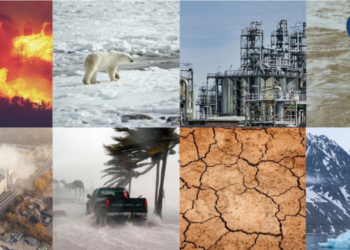
Scientists further noted that carbon dioxide emissions from fossil fuels continue to rise globally, trapping more heat in the atmosphere and driving more severe droughts, floods, storms and heatwaves. Global heating is already estimated to contribute to roughly one death every minute worldwide, a figure experts warn could rise sharply without urgent emissions cuts.
Strong El Niño and Rising Emissions Raise Risk of Record-Breaking Heat
Moreover, the report also highlights the likely influence of an El Niño weather event expected to develop later this year.
El Niño is a naturally occurring climate pattern caused by warming ocean temperatures in the Pacific, which can temporarily boost global temperatures.
Forecasts from the US National Oceanic and Atmospheric Administration indicate a 96 percent chance of El Niño conditions between December 2026 and February 2027, with a 35% possibility of a particularly strong “super El Niño.”
According to Dr Leon Hermanson, lead author of the WMO report, “there is an El Niño predicted for the end of 2026, which increases the chances of the following year, 2027, being the next record-breaking year.”
The WMO report also warns that the Arctic is expected to continue warming at a much faster rate than the rest of the world. The next five winters in the Arctic are predicted to average about 2.8°C above recent norms, more than three times the pace of global warming.
Scientists emphasised that rapid Arctic warming could further accelerate global climate instability by contributing to melting sea ice, rising sea levels and disruptions to weather systems.
Regional rainfall patterns are also expected to shift over the coming years. Northern Europe, the Sahel region of Africa, Alaska, and Siberia are forecast to become wetter than average between May and September, while the Amazon basin is expected to experience drier conditions, raising concerns about drought and ecosystem stress.
Despite the alarming projections, the report notes that the chances of any single year exceeding 2°C of warming above pre-industrial levels before 2030 remain extremely low, estimated at less than one percent.
Scientists continue to stress that every fraction of a degree of warming avoided can significantly reduce the scale of climate damage and improve communities’ ability to adapt. However, many experts now believe the world is unlikely to keep long-term warming below the Paris Agreement’s preferred 1.5°C target unless governments dramatically accelerate emissions reductions.
The World Meteorological Organization warned that without rapid global action to cut emissions and transition away from fossil fuels, the coming years are likely to bring even more dangerous climate extremes.
READ ALSO: Tyla and Future Team Up for Official FIFA 2026 Single “Game Time”