United Nations Human Rights Chief has condemned a series of developments in Nicaragua that threaten civil and political rights, warning that growing restrictions on public freedoms, political participation and civic space are deepening concerns over the country’s democratic future.
Volker Türk, the UN High Commissioner for Human Rights, voiced concern over actions taken by Nicaraguan authorities that would bar people and organisations with opposing political opinions from taking part in upcoming elections.
The warning comes after Daniel Ortega, Nicaragua’s co-president, suggested earlier the introduction of new legislation that may prohibit opposition leaders and groups deemed critical of the administration from participating in elections.
The latest developments have intensified international concerns over the shrinking space for political opposition and independent voices in Nicaragua, where authorities have been accused of weakening democratic institutions and restricting fundamental freedoms.
Earlier this month, the government abruptly revoked the credentials of several lawyers without providing a legal explanation or official justification. Human rights officials said the move raised further concerns about the independence of legal professionals and the broader state of the rule of law.
According to reports received by the United Nations, at least 46 people remain arbitrarily detained for political reasons, with rights groups continuing to call for their immediate release.
“These latest developments further deepen the severe restrictions on fundamental freedoms, the dismantling of civic space, and the steady erosion of the rule of law.”
Volker Türk
The United Nations Human Rights Chief also warned that political authority was becoming increasingly concentrated under the country’s co-presidency structure, with power increasingly placed in the hands of Daniel Ortega and his wife, Rosario Murillo.
The ruling Sandinista National Liberation Front (FSLN) maintains control over key state institutions, including Parliament, municipalities and the North and South Caribbean Coast Regional Councils. Critics argue that this concentration of power has reduced opportunities for political competition and weakened institutional checks and balances.
The situation has also raised concerns among Indigenous communities, with civil society organisations reporting that mining and extractive concessions have affected a significant number of Indigenous territories.
Up to 25% of Nicaragua’s 18 Indigenous territory have been affected by mining operations and other extraction projects, according to reports referenced by human rights organisations.
According to reports, many of these concessions were made without significant consultation or the free, prior, and informed consent required by international norms safeguarding the rights of Indigenous Peoples.
As stated by United Nations Human Rights Office, these changes are part of a larger pattern of limitations on religious freedom, political expression, and autonomous civil society.
UN Human Rights Chief Calls for Release of Political Prisoners and Restoration of Civic Space
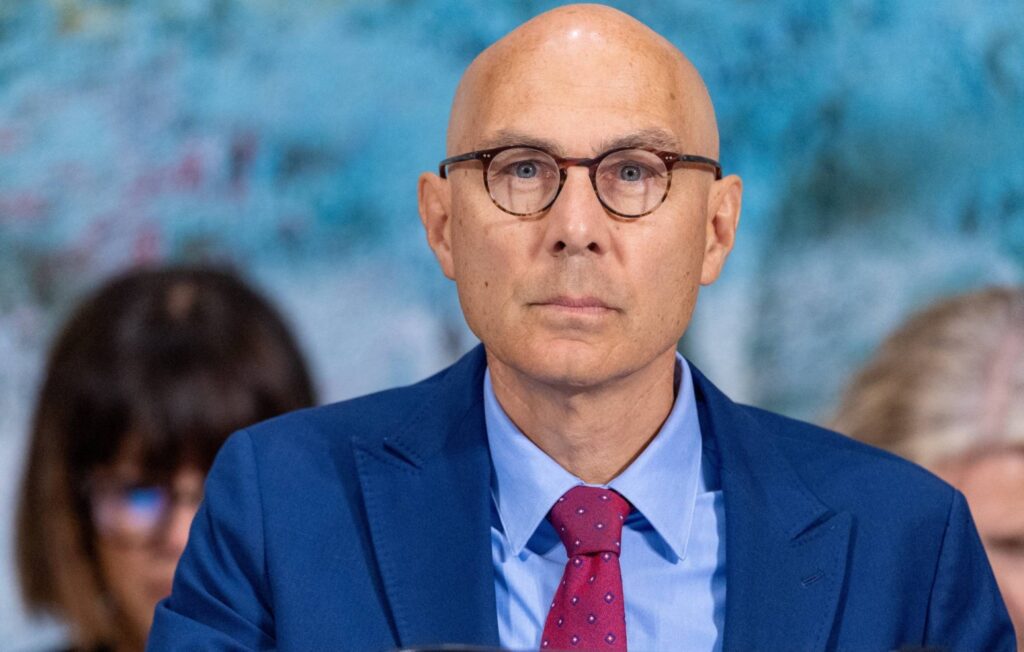
Beyond political participation concerns, United Nations Human Rights Chief Volker Türk also highlighted an increasing pressure on religious institutions and individuals expressing independent views.
“I am disturbed by the reports of repression against the Catholic Church and other religious denominations, including by the absence of official information regarding the fate or whereabouts and condition of 80-year-old Bishop Abelardo Mata Guevara, who was detained on 29 June.”
Volker Türk
The detention of Bishop Abelardo Mata Guevara has attracted particular attention because of his long-standing role within Nicaragua’s Catholic community and his criticism of government policies.
UN Human Eights Chief called on Nicaraguan authorities to guarantee that all inmates be handled in accordance with international human rights standards and to provide information on those who are incarcerated.
“I urge the authorities to release immediately all individuals who have been arbitrarily detained and to ensure that all those detained are treated with humanity and dignity in line with Nicaragua’s obligations under international human rights law.”
Volker Türk
Human rights organisations have repeatedly accused Nicaragua’s government of targeting political opponents, journalists, activists, religious figures and civil society groups since widespread protests erupted in 2018.
The government has rejected many of these allegations, arguing that measures taken against opposition groups are necessary to protect national stability and prevent foreign interference.
However, United Nations has continued to call for greater protection of fundamental freedoms, including freedom of expression, peaceful assembly and political participation.
Türk stressed that citizens must be able to participate in political life regardless of their views or affiliations, warning that excluding people from elections based on political disagreement violates international human rights obligations.
“I call on the authorities to reopen civic space, and restore the rule of law. People of all political viewpoints must be allowed to vote and run for office, in line with the State’s international human rights obligations.”
Volker Türk
UN’s latest statement adds to growing international scrutiny of Nicaragua’s political environment as authorities continue restructuring the country’s institutions and expanding executive control.
With civic space increasingly restricted and opposition voices facing significant barriers, rights observers warn that the country’s democratic institutions face continued pressure.
United Nations Human Rights Chief has called on Nicaragua’s authorities to reverse measures limiting political participation, restore independent institutions and ensure that citizens can freely express opinions without fear of punishment.
READ ALSO: Mamdani Demands US Enforce ICC Warrant Against Netanyahu