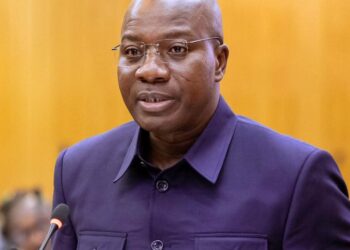
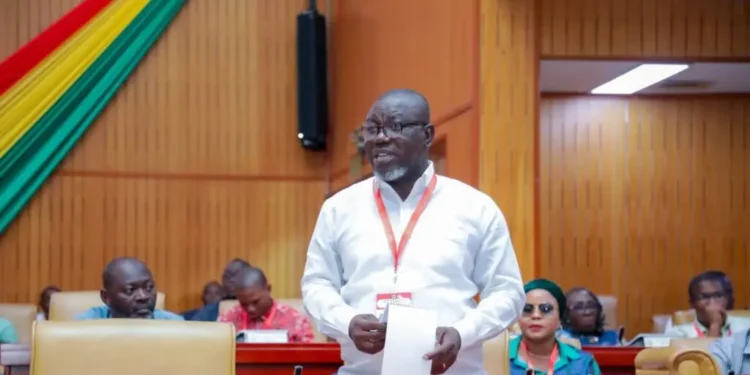
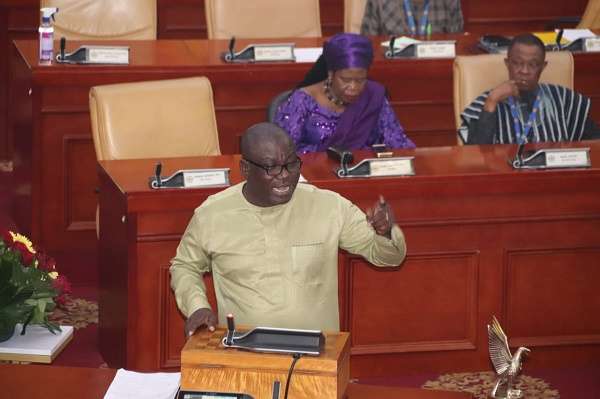
The Chairman of Parliament’s Economy Committee and Member of Parliament for Bolgatanga Central, Hon. Isaac Adongo, has strongly criticised the Minority in Parliament over claims that the government is attempting to reintroduce the Electronic Transfer Levy, popularly known as the E-Levy.
Speaking during parliamentary debate on Finance Minister Dr. Cassiel Ato Forson’s statement regarding Ghana’s successful exit from the International Monetary Fund’s Extended Credit Facility programme, Hon. Adongo accused the opposition of deliberately creating what he described as a false narrative aimed at misleading Ghanaians.
According to him, allegations that the Mahama administration had secretly reintroduced the E-Levy were unfounded and ignored the facts surrounding recent discussions on mobile money transaction charges.
Adongo maintained that the current government had fulfilled its promise to abolish the E-Levy and had not presented any proposal before Parliament seeking to bring it back.



Bank of Ghana Letter Takes Centre Stage
In defending the government’s position, Hon. Adongo disclosed that he possessed a letter issued by the Bank of Ghana to MTN Mobile Money dated January 31, 2024, during the tenure of the previous New Patriotic Party administration.
He explained that the letter contained a no objection approval for specific transaction related charges. According to him, the document approved a one percent fee on cash out transactions below GH¢2,000 and a 0.75 percent fee capped at GH¢5 for transfers from mobile money wallets to bank accounts.
Adongo stressed that the National Democratic Congress was not in government at the time the letter was issued and therefore could not be held responsible for decisions taken during that period.
He argued that the document clearly demonstrated that the transaction charges now being discussed originated before the current administration assumed office.
“The leader of this house in the minority does not know levies are imposed by this house and they are not imposed by a certain letter by a certain organisation”.
Chairman of Parliament’s Economy Committee and Member of Parliament for Bolgatanga Central, Hon. Isaac Adongo
According to him, Parliament remains the only institution with the authority to impose taxes and levies, making claims of a secretly introduced E-Levy inaccurate.
Calls for Minority to Apologise
The Bolgatanga Central MP did not hide his frustration with the Minority’s claims and called on opposition lawmakers to publicly apologise to Ghanaians. He accused the Minority of spreading misinformation by portraying the proposed transaction charges as evidence of a revived E-Levy.
According to Hon. Adongo, the allegations were designed to create unnecessary public anxiety and undermine confidence in the government’s economic management efforts.
“I want them to hold another press conference when we are done to apologize to the people of Ghana because deception and falsehood has no place in our governance”.
Chairman of Parliament’s Economy Committee and Member of Parliament for Bolgatanga Central, Hon. Isaac Adongo
He further indicated his readiness to table the Bank of Ghana letter before Parliament to support his assertions and provide clarity on the matter. Hon Isaac Adongo argued that it was ironic for those who introduced the original E-Levy to accuse the current administration of imposing a similar charge.

He claimed that the previous government not only introduced the E-Levy through Parliament but also approved additional transaction related charges through regulatory channels.
Defence of Government’s Economic Record
Beyond the E-Levy controversy, Hon Adongo used the debate to highlight what he described as significant improvements in Ghana’s economic performance under the current administration.
He argued that the economy inherited by the government was facing severe challenges but had since shown signs of recovery. According to him, the strengthening of the Ghana cedi against major international currencies had reduced pressure on households and businesses.
He noted that consumers who previously purchased dollars at exchange rates between GH¢15 and GH¢17 were now benefiting from a much stronger local currency.
Adongo also pointed to reductions in the prices of some goods and services, arguing that the gains from economic stabilisation were beginning to be felt by ordinary citizens. “What is in it for the people of Ghana is that they no longer buy a dollar at 15 or 17 cedis but now get it at 10 or 11 cedis,” he stated.
Infrastructure Development and National Transformation
The lawmaker further praised the government’s development agenda, saying infrastructure projects underway across the country demonstrated a renewed commitment to national transformation.
The Bolgatanga Central legislator described Ghana as a vast construction site, with major projects being undertaken to improve roads, public infrastructure, and economic productivity.

According to him, the scale of development currently taking place reflects the government’s determination to improve living standards and restore public confidence.
Hon Isaac Adongo argued that these initiatives were helping to lay the foundation for sustainable growth while creating opportunities for businesses and communities.
Background to the Controversy
The debate follows recent controversy surrounding a proposed 0.75 percent charge on mobile money wallet to bank transactions announced by telecommunications operators.
The proposal sparked criticism from the Minority, which accused the Mahama administration of attempting to reintroduce the E-Levy through indirect means despite having abolished it. Following public concern, the Bank of Ghana suspended the proposed fee, leading to further debate over its origin and legal basis.
The Electronic Transfer Levy was originally introduced in 2022 under the previous NPP administration as a revenue mobilisation measure. The tax attracted widespread public criticism and became one of the most contentious fiscal policies in recent years.
After assuming office, President John Dramani Mahama’s government abolished the levy in April 2025, fulfilling a major campaign promise aimed at easing financial pressures on Ghanaians.
Against this backdrop, Hon Isaac Adongo insisted that accusations of a secret E-Levy reintroduction were politically motivated and unsupported by evidence.
He concluded by expressing confidence in Ghana’s economic direction and endorsed the government’s commitment to maintaining fiscal stability without returning to an IMF support programme. “Ghana is back and the economy is back and we are not going back,” he declared.