The Government of Ghana is preparing to extend its curriculum embedded tablet programme from senior high schools to basic education, with plans to provide digital learning devices to pupils from kindergarten through junior high school as part of efforts to modernise education and equip learners with future ready skills.
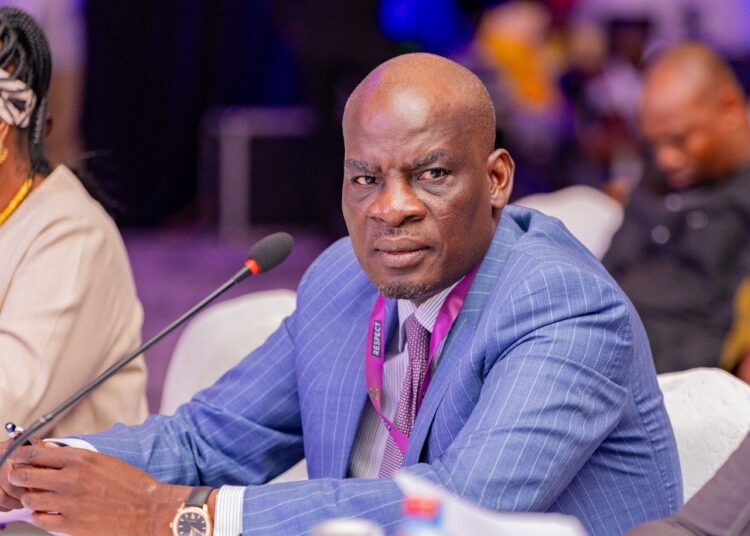
Minister for Education Hon. Haruna Iddrisu announced the initiative during the 19th Edition of e-Learning Africa held in Accra, where he outlined the government’s vision for a technology-driven education system under President John Dramani Mahama’s Reset Agenda.
According to the minister, the proposed rollout builds on the success of the tablet programme already implemented at the senior high school level, where students and teachers have been provided with devices loaded with curriculum content to support teaching and learning.
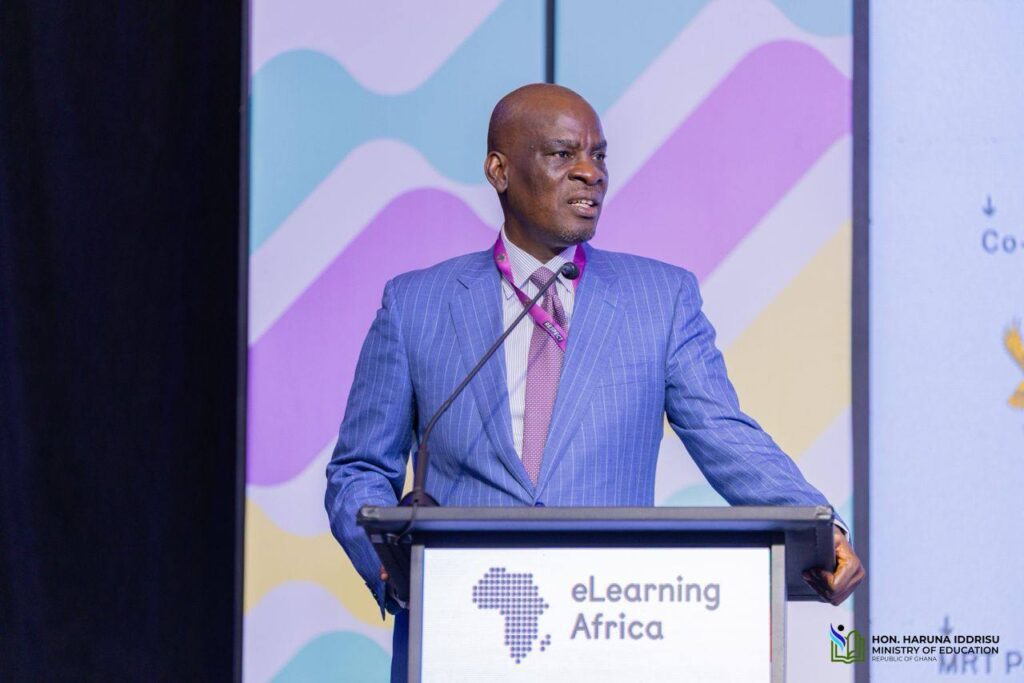
Speaking at the conference, the Tamale South legislator explained that the government intends to replicate the model across the entire basic education system to strengthen digital literacy and improve access to educational resources at an early age.
“Every Ghanaian student in a senior high school has access to a tablet. Embedded in it is a curriculum for the senior high school. The same was done for teachers. Government is now planning, under President Mahama’s Reset Agenda, to roll out this from kindergarten to junior high school”.
Education Minister Hon. Haruna Iddrisu
Curriculum Review to Introduce Emerging Technologies
The planned expansion comes as Ghana completes a major review of its national curriculum aimed at aligning education with emerging global technological trends.
Hon. Haruna Iddrisu revealed that the country’s curriculum review committee is expected to complete its work this week, paving the way for the introduction of new subjects and competencies designed to prepare learners for a rapidly changing digital world.
He indicated that artificial intelligence, coding, electronics, and other technology related disciplines will become part of foundational learning at the basic school level.

According to the minister, the inclusion of these subjects reflects the government’s determination to ensure that Ghanaian children develop the skills needed to compete in an increasingly digital economy.
“Our curriculum review committee is completing its work only this Friday, and we are incorporating AI, coding, artificial intelligence, and electronics into basic foundational learning in order that we prepare them for a world of e-learning tomorrow”.
Education Minister Hon. Haruna Iddrisu
Education experts have increasingly emphasized the need for early exposure to digital technologies, arguing that foundational knowledge in coding, computational thinking, and artificial intelligence can help learners adapt to future workforce demands.
The government’s proposed reforms are expected to position Ghana among a growing number of countries integrating digital skills into primary and secondary education.
Africa Must Shape Its Own Future
Addressing delegates at the continental conference, the Education Minister stressed that Africa must take ownership of its educational transformation rather than rely on external models and solutions.
He argued that digital learning provides a pathway for African countries to leverage technology in addressing educational challenges while building homegrown innovations capable of driving development across the continent.
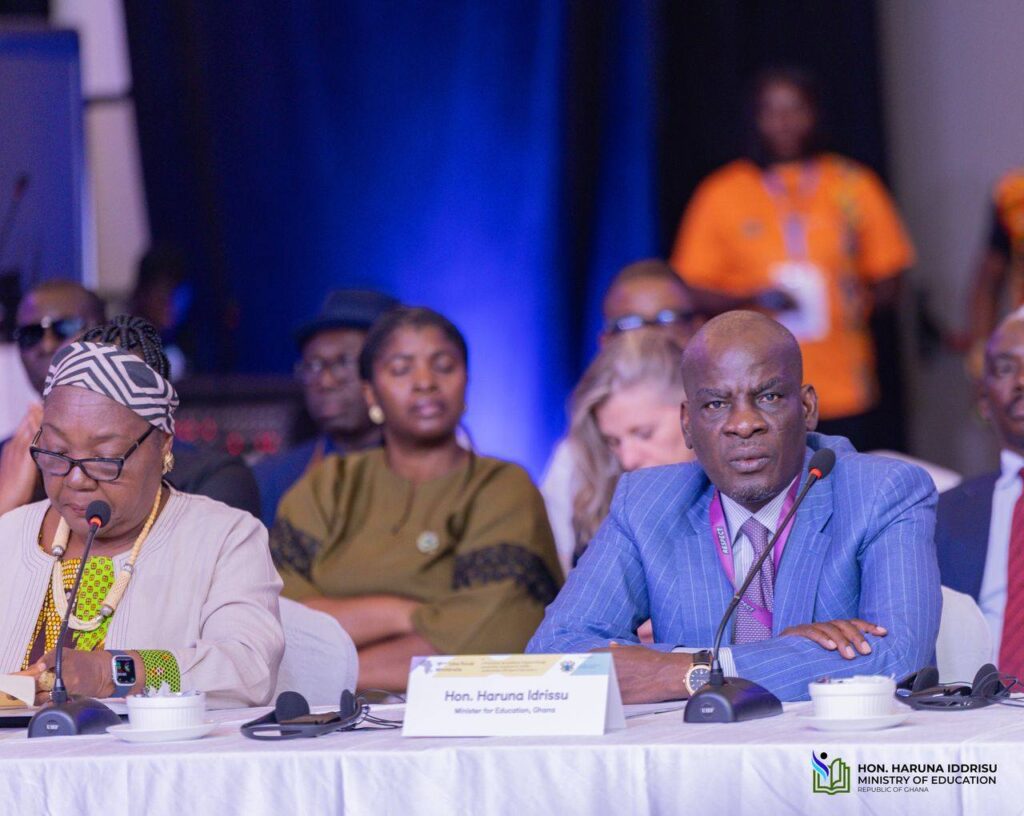
“I trust that many other African countries have done the same or are probably doing better. Africa’s future should not be imported,” he said. According to him, the continent must embrace e-learning and information and communication technologies as central pillars of its educational systems.
His remarks resonated with the central theme of this year’s eLearning Africa conference, which focused on strengthening educational sovereignty and empowering Africans to shape their own development trajectory through knowledge and innovation.
Ghana Reaffirms Commitment to Technology Driven Education
In a statement following the opening ceremony, Hon. Haruna Iddrisu reaffirmed Ghana’s commitment to building a modern, inclusive, and technology-focused education system capable of meeting the needs of future generations.
He formally inaugurated the conference under the theme, “Africa’s Time, Africa’s Terms: Learning for Sovereignty, Strength, and Solidarity.” The minister noted that the theme highlights the importance of enabling Africans to define the future of education through innovation, digital transformation, and locally driven solutions.
According to him, governments across the continent must invest strategically in science, technology, engineering, and mathematics education while ensuring equitable access to digital tools and opportunities.

He pointed to ongoing investments in STEM education, artificial intelligence, teacher training, and digital infrastructure as evidence of Ghana’s determination to strengthen educational outcomes and improve competitiveness.
“As we invest in STEM education, artificial intelligence, teacher development, and equitable access to technology, we reaffirm our commitment to equipping every learner for the future.”
Education Minister Hon. Haruna Iddrisu
Building the Workforce of Tomorrow
The planned rollout of tablets to basic school pupils forms part of broader efforts to prepare Ghana’s workforce for the demands of a technology driven global economy.
Government officials believe that introducing digital learning tools and emerging technologies at an early stage will improve educational outcomes while fostering creativity, innovation, and problem solving skills among learners.
The initiative is also expected to support efforts to bridge the digital divide by ensuring that children across different regions and socioeconomic backgrounds have access to learning technologies.

As Ghana advances its digital education agenda, policymakers view technology integration as a critical component of national development and economic transformation.
For the government, the expansion of curriculum embedded tablets and the introduction of artificial intelligence and coding into basic education represent significant steps toward creating a future ready generation capable of driving innovation and growth.
Hon. Haruna Iddrisu summed up the vision by emphasizing that Africa’s future will be shaped by Africans themselves through knowledge, collaboration, and innovation. “Africa’s future will be built by Africans through knowledge, innovation, and collaboration,” he said.
READ ALSO: Inflation Hits 3.7% as Food Costs Surge