The Imani Centre for Policy and Education has cautioned that financial investments alone will not resolve Accra’s recurring flooding crisis, urging government to strengthen urban governance systems and institutional accountability to safeguard the capital against future disasters.
In a policy brief titled GARID and Urban Governance as Adaptation and Strategic Measures to Address Perennial Floods, the think-tank argued that while the Greater Accra Resilient and Integrated Development Project represents a significant intervention, its success ultimately depends on effective implementation, coordinated governance, and strict enforcement of planning regulations.
The warning comes as Accra continues to grapple with seasonal flooding, building collapses and fire outbreaks that place lives, livelihoods and infrastructure at risk.
“Accra faces an unending cycle of environmental catastrophe. Recent weeks have once again exposed the city to devastating floods, dangerous building collapses, and fire hazards that threaten the safety of residents.”
Imani Centre for Policy and Education
GARID’s origins and objectives
According to IMANI, the GARID Project emerged in response to the June 3, 2015, flood disaster, which claimed more than 150 lives and caused widespread economic losses across the capital.
The World Bank funded initiative was designed to address persistent flooding, inadequate solid waste management and infrastructure deficits, particularly within the Odaw River Basin.

The project seeks to reduce disaster risks in vulnerable communities through drainage improvements, waste management interventions, infrastructure development and climate adaptation measures.
It also aims to improve access to basic services in low income communities while enhancing the resilience of settlements located within flood prone areas.
The policy institute noted that the project involves collaboration among several government institutions, including ministries responsible for housing, sanitation and water resources, as well as the Hydrological Services Department, Environmental Protection Agency, Lands Commission and seventeen metropolitan and municipal assemblies.
Concerns over available funding
Despite the scale of the intervention, IMANI questioned whether the remaining resources available under the project would be sufficient to address the enormity of Accra’s flooding challenges.
The organisation noted that although the project was initially approved with financing amounting to 350 million dollars, a portion of those funds was redirected during the Covid 19 pandemic.
“The World Bank reallocated 65 million USD of that total toward emergency COVID-19 response efforts,” the brief stated. As a result, the effective amount available for core flood mitigation infrastructure was reduced to approximately 285 million dollars.
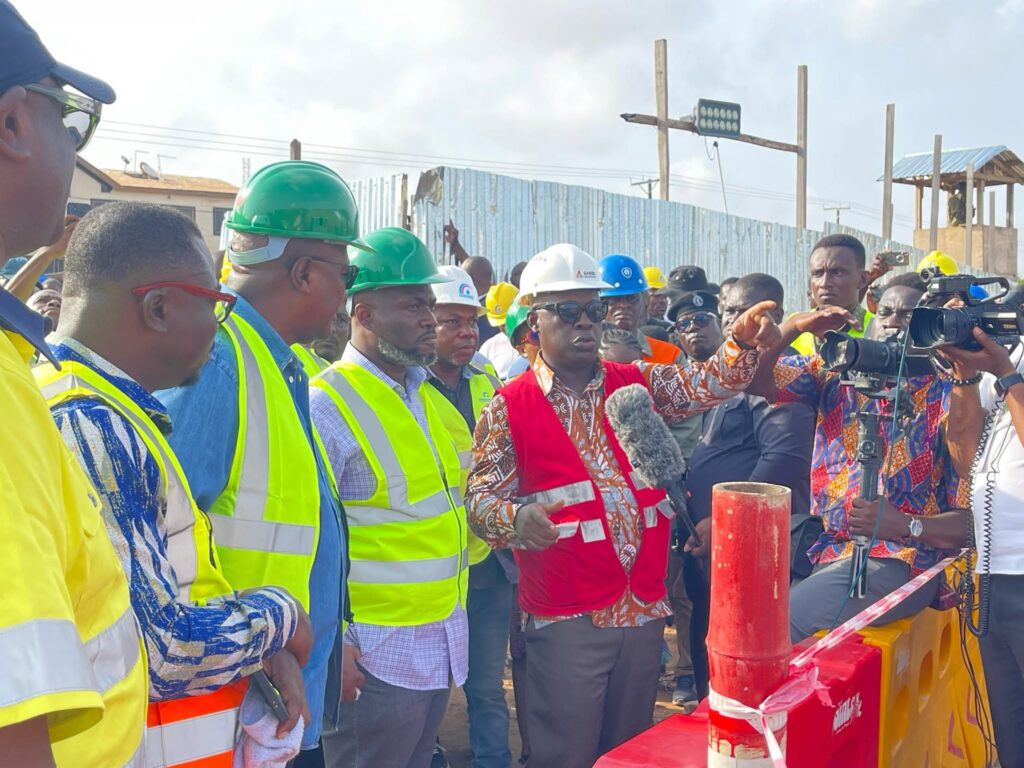
According to IMANI, more than 118 million dollars had already been spent from the 127 million dollars drawn down as of June 2025, narrowing the financial space available for the remaining interventions.
The think-tank observed that spreading the available resources across seventeen local assemblies presents a significant challenge, given the high costs associated with engineering works within the Odaw Basin.
Progress Overshadowed by Implementation Gaps
While acknowledging some achievements under GARID, particularly in drainage improvements and waste management initiatives, IMANI argued that progress has generally been incremental rather than transformative.
The organisation referenced findings from its November 2025 study on governance and accountability for climate adaptation, which highlighted disparities in institutional performance among implementation units.
According to the study, some project teams demonstrated strong technical capabilities, while others struggled with staffing shortages and inadequate engineering resources.
These variations, IMANI argued, have contributed to inconsistent project outcomes. The brief cited Ablogboshie as an example of the difficulties confronting implementation efforts.

Residents in the area reportedly continue to experience flooding due to delays in completing works along the Odaw River. Although the GARID Project has been extended to 2027 to accommodate setbacks, contractor performance remains a major concern.
“In Ablogboshie, for example, a contractor failed to meet milestones despite receiving mobilization funds. If the money is available but the execution is stalled by poor contractor oversight and limited local capacity, then the funding amount becomes secondary to the management of these human and institutional failures.”
Imani Centre for Policy and Education
Call for Stronger Leadership and Accountability
IMANI urged authorities to adopt a more proactive approach in managing the project and addressing the broader governance challenges contributing to Accra’s vulnerability.
The think-tank identified the Ministers responsible for Works, Housing and Water Resources, as well as Climate Change and Sustainability, as critical actors in driving reforms.
It called for stricter contractor accountability measures, insisting that firms that repeatedly fail to meet agreed milestones should be replaced. The organisation also advocated targeted support for assemblies experiencing capacity constraints, including the provision of technical expertise and necessary equipment.
According to IMANI, successful practices from better performing implementation units should be replicated across weaker districts.
Moving Beyond Reactive Governance
Beyond the GARID project, the think-tank argued that Ghana’s urban governance framework requires fundamental reform. It linked flooding, illegal developments, building collapses, and fire outbreaks to weaknesses in planning enforcement and institutional coordination.
Buildings constructed on waterways, it noted, indicate failures in regulatory oversight and land-use planning. The organisation therefore called for an integrated governance model that incorporates resilience planning, community participation, enforcement mechanisms, and data-driven decision-making into the annual plans of metropolitan and municipal assemblies.
“We cannot afford to view GARID as a project that will fix itself. If the government continues to treat it as a routine infrastructure program, the city will remain vulnerable to the next disaster.”
Imani Centre for Policy and Education
For IMANI, ending Accra’s perennial flooding will require more than financial resources. It will demand sustained leadership, stronger institutions and a commitment to governance reforms capable of protecting lives and securing the city’s future.
READ ALSO: Trump Urges Israel, Iran To Halt Hostilities