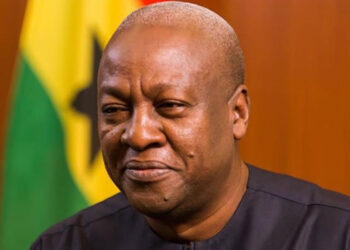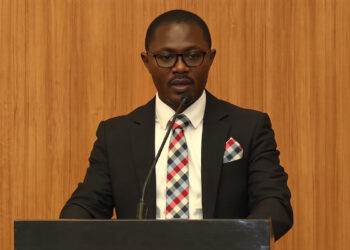
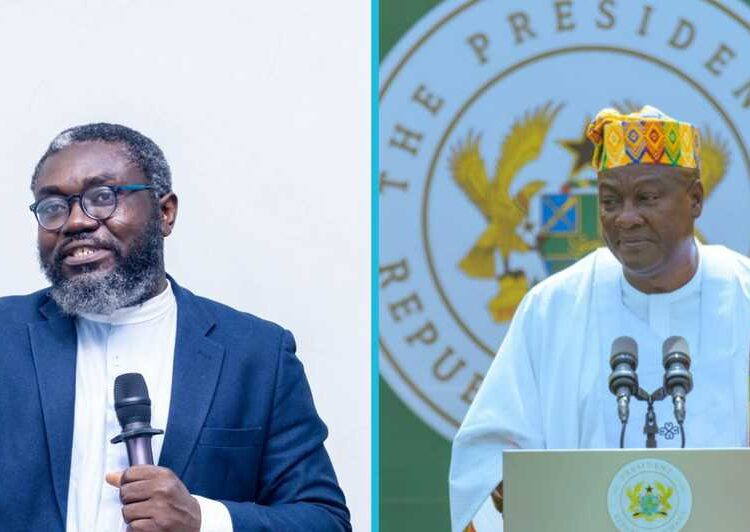
Constitutional rights activist and legal practitioner Osagyefo Oliver Barker-Vormawor has described Ghana’s ongoing constitutional review process as the most significant opportunity for President John Dramani Mahama to shape the country’s democratic future, arguing that successful reforms could become the defining legacy of his presidency.
In a strongly worded reflection on Ghana’s governance architecture, Barker-Vormawor contended that while the 1992 Constitution played a vital role in ushering in the Fourth Republic, its structural weaknesses have become increasingly evident over the past three decades.
His comments come at a time when the Mahama administration is moving toward the implementation phase of a broad constitutional reform process that seeks to address longstanding concerns over governance, accountability, separation of powers, and citizen participation.
According to Barker-Vormawor, the current constitutional framework has failed to fully realize the aspirations that inspired Ghana’s democratic transition.
“Constitution Review will be the President’s biggest legacy. The PNDC gave us the 1992 Constitution. We have since seen its limitations as a blueprint for a socially just democracy”.
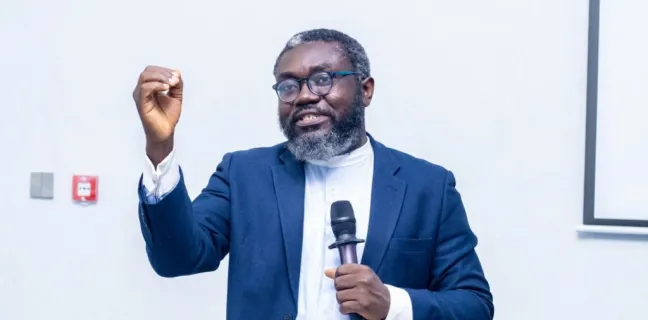
Constitutional rights activist and legal practitioner Osagyefo Oliver Barker-Vormawor
Concerns Over Ghana’s Democratic Development
The legal practitioner argued that Ghana’s democratic evolution has produced outcomes that increasingly favour a political elite rather than ordinary citizens. “The 4th Republic has entrenched elitism at every level and made illusory the promise of probity, accountability and transparency,” Barker-Vormawor stated.

He further suggested that many of the ideals associated with the June 4 Revolution have not been adequately reflected within Ghana’s contemporary democratic institutions.
According to him, the country’s democratic system has become increasingly vulnerable, with political actors often prioritizing shared elite interests over the welfare of citizens.
“Our democracy is less secure, less socially progressive and has produced, in Afenyo-Markin’s words, a single interest ‘political class’ across the political divide which regularly cedes to appeals to stick together to protect themselves at the expense of we the people.”
Constitutional rights activist and legal practitioner Osagyefo Oliver Barker-Vormawor
Barker-Vormawor argued that constitutional reform presents an opportunity to correct these imbalances and establish governance structures that better reflect Ghana’s democratic aspirations. “We can change that. We can craft a social democracy of our own making,” he said.
Mahama’s Constitutional Review Process
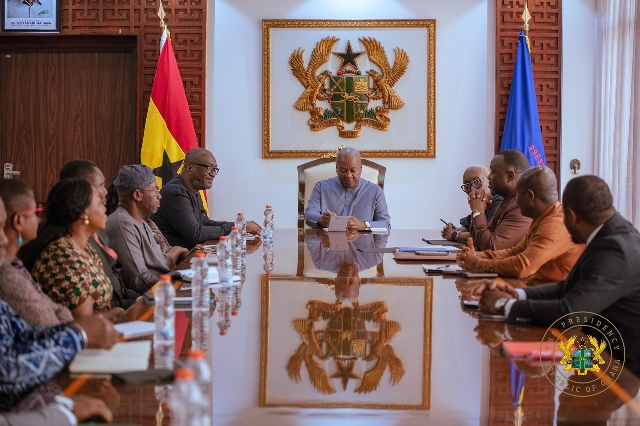
President Mahama initiated the constitutional review exercise shortly after assuming office, fulfilling one of his major campaign commitments. In January 2025, the President inaugurated an eight member Constitutional Review Committee chaired by Professor Henry Kwasi Prempeh, Executive Director of CDD Ghana.
The committee embarked on extensive stakeholder consultations and public engagements across the country before presenting its final report in December 2025. The comprehensive 127 page document contained recommendations aimed at strengthening democratic institutions and improving governance outcomes.

Following the submission of the report, the government referred the recommendations to the Attorney General and relevant legal institutions for technical review and harmonisation.
By March 2026, President Mahama announced that the executive arm of government had begun examining the recommendations and would soon establish a Constitutional Review Implementation Committee to oversee the transition from consultation to execution.
Unlike previous constitutional review exercises undertaken under Article 278 of the Constitution, this process is expected to proceed without the issuance of a formal White Paper. Instead, accepted recommendations will be publicly communicated through official declarations.
Key Reform Proposals Under Consideration
Several of the proposals contained in the final report have generated significant national discussion. Among the most notable recommendations is a proposal to extend the presidential term of office from four years to five years while maintaining the existing two term limit.
Proponents argue that a longer tenure could enhance policy continuity and improve development planning. The report also recommends reducing the size of government by limiting the number of ministers to a maximum of 57.
It further proposes preventing Members of Parliament from simultaneously serving as ministers, a move intended to strengthen the separation of powers. In a bid to promote youth participation in governance, the committee proposed reducing the minimum age requirement for presidential candidates from 40 years to 30 years.
Other recommendations include removing tax exemptions currently enjoyed by the President and introducing the election of Metropolitan, Municipal and District Chief Executives.
The report also advocates greater involvement of traditional authorities in regional governance structures. For Barker-Vormawor, the significance of these reforms extends beyond administrative adjustments.
He believes they represent an opportunity to reshape Ghana’s democracy into a more inclusive and socially responsive system. “May love of nation prevail on how we think of the path forward,” he urged.
Addressing President Mahama directly, he added: “Take this path to greatness.” As the government continues its review of the committee’s proposals, the constitutional reform process is likely to remain at the centre of national discourse, with supporters viewing it as a chance to deepen democratic accountability and critics scrutinizing its potential implications.
For many Ghanaians, the success or failure of the exercise could indeed become one of the defining chapters of President Mahama’s administration.
READ ALSO: Accept Wontumi Plea Bargain with 100% Interest, Barker-Vormawor Tells AG