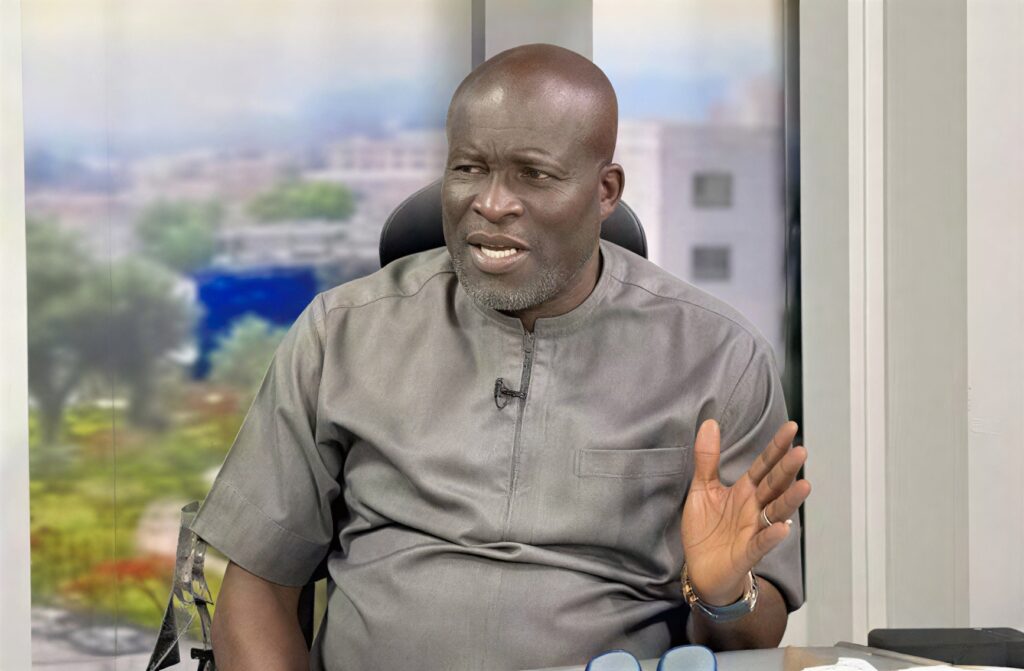
The Former Greater Accra Regional Minister, Honourable Titus Glover has criticised the decision to proceed with the National Thanksgiving Service in the aftermath of the devastating Accra floods. The Former Greater Accra Regional Minister argued that the solemn national mood demanded reflection and mourning for the lives lost.
Honourable Glover stated that the event, held on July 1, came at a time when several families were grieving and communities were still counting their losses. In his view, the occasion offered an opportunity for the nation to stand in solidarity with victims instead of proceeding with celebration.
Addressing the tragedy, the former minister indicated that the scale of destruction made the thanksgiving ceremony difficult for many Ghanaians to accept. He added that the emotional burden carried by affected families require a more sensitive national response.

“They should have cancelled it or turned it into a day of mourning because we have lost lives. Thanking God in all things, yes, but this particular one is just too much for us.”
Honourable Titus Glover
The former minister recalled the national response to the June 3 disaster and said Ghana had previously demonstrated its ability to mourn collectively during periods of pain. That experience, he noted, should have informed decisions taken after the recent flooding.
Moreover, Honourable Glover referenced the public reaction that followed scenes from the service, where songs of praise dominated the programme. He observed that the backlash showed the depth of public unease and revealed a disconnect between leadership and the prevailing mood on the ground.
He further cited the case of a woman at Tema’s 31 Market who remains missing after floodwaters swept her away. The former regional minister explained that the woman, known for selling cabbages while seated on a wooden slab over a drain, disappeared after the structure collapsed.

The incident, he remarked, captured the human cost of the disaster in painful detail. Families searching for missing relatives, he said, continue to endure uncertainty and anguish.
Turning to the wider flood challenge, Honourable Glover referenced the Justice Douse Committee commissioned after the June 3 catastrophe. He noted that President John Dramani Mahama has firsthand experience from that period and therefore possessed significant institutional knowledge to confront the recurring problem.
Subsequently, the former minister urged authorities to draw lessons from past recommendations and apply them decisively. He emphasised that leadership must remain proactive whenever disasters strike.
Flood Prevention Requires Stronger Enforcement and Planning
The recurring flood crisis in Accra has also been linked to poor drainage maintenance and weak local enforcement, with calls growing for stronger oversight. Attention is increasingly shifting from emergency response to long term structural solutions.
Discussing the infrastructural dimension, Honourable Glover pointed to years of dredging works on the Korle Lagoon and the Odaw River as critical interventions that reduced flood pressure in previous years. He recalled that contractors including Dredge Masters and later GARI removed enormous volumes of accumulated silt.
The former minister explained that once dredging slows or stops, silt rapidly builds up and obstructs water flow. Consequently, stormwater loses its natural path and begins to overflow into surrounding communities.
Beyond drainage, he identified human activity as a major contributor to flooding. Illegal developments on wetlands and mangroves, he argued, continue to destroy natural water retention zones across the capital.
Honourable Glover cited areas around Mallam Total, Dansoman Otojor and mangrove belts where unauthorised structures emerged despite warnings. In several instances, he said, warehouses were built after land reclamation with laterite dumped into ecologically sensitive zones.’
Furthermore, he criticised some assembly officials for approving developments without proper site inspections. The priority, he said, is on accountability within planning departments and engineering units.
The former minister argued that some district engineers sign approvals from their offices without verifying whether buildings sit on waterways. Such administrative lapses, he added, create avoidable risks for residents.
He also praised former local government leadership, particularly Nii Armah Ashitey, for strict enforcement practices during earlier years. Under that system, assembly members acted swiftly whenever suspicious developments appeared.
Similarly, he warned that delayed enforcement emboldens developers who exploit regulatory weaknesses. Overnight construction on waterways, he noted, often reaches advanced stages before officials intervene.
Honourable Glover stressed that mangroves serve as natural flood buffers by slowing and redirecting water into the Atlantic Ocean. Once those ecosystems are destroyed, floodwaters gain destructive force across urban settlements.
The former minister therefore called for stronger collaboration between assemblies, engineers and enforcement officers. He added that decisive supervision, regular dredging and disciplined planning remain essential to reducing Accra’s flood vulnerability.
READ ALSO: Ghana Medical Association Demands Urgent Action Over Recurrent Flooding Crisis