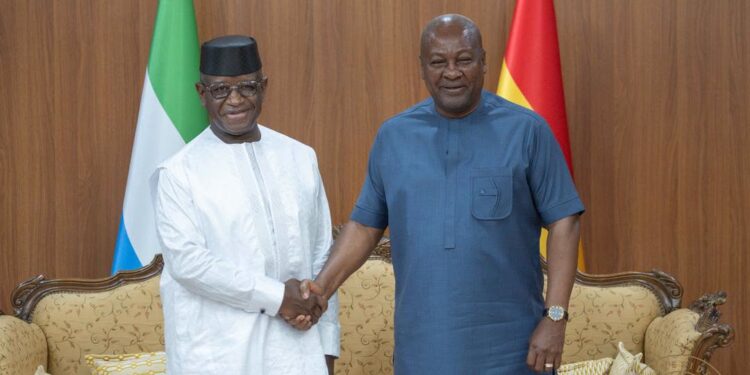
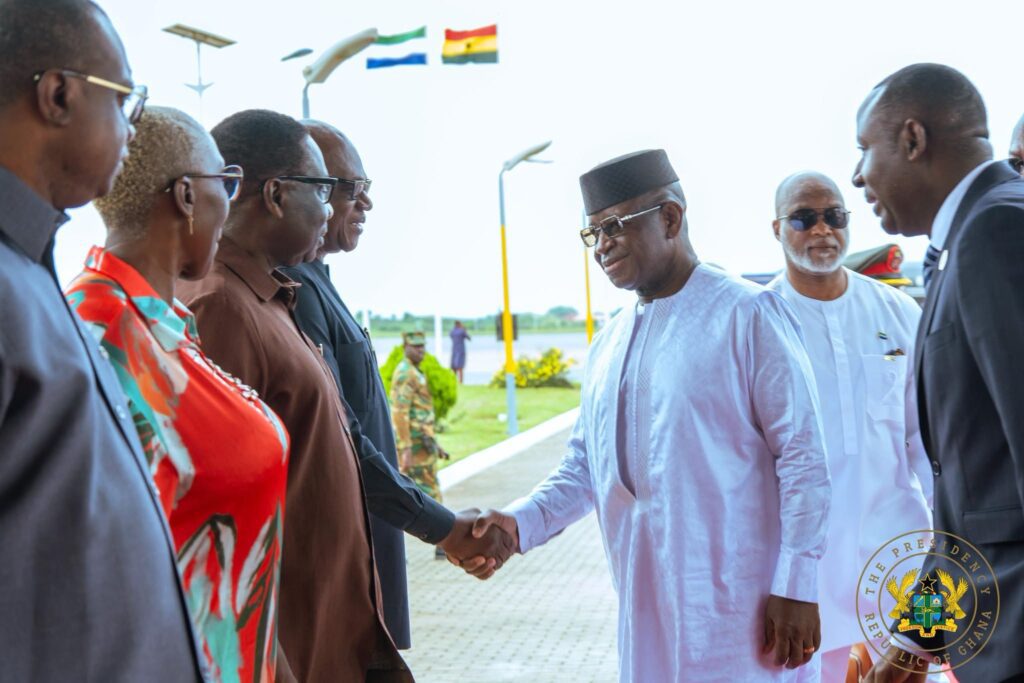
President John Dramani Mahama has welcomed Sierra Leone’s President, His Excellency Julius Maada Bio, to Accra for a one day state visit that focused on climate induced flooding, regional cooperation, security, and economic integration within the Economic Community of West African States.
The visit combined diplomatic engagement with a message of solidarity as President Bio, who also serves as Chair of the ECOWAS Authority, conveyed condolences to the people of Ghana following the recent floods that have devastated several communities, displaced thousands of residents, and claimed lives.
The discussions reflected the growing recognition among West African leaders that climate related disasters require stronger regional cooperation, coordinated emergency responses, and long term planning to protect vulnerable populations.
President Bio Offers Condolences to Ghana
A significant moment during the visit came when President Bio expressed sympathy to Ghana over the human and economic impact of the recent floods.
The Sierra Leonean leader conveyed condolences to families who lost loved ones and expressed solidarity with communities struggling to recover from one of the country’s latest climate related disasters.
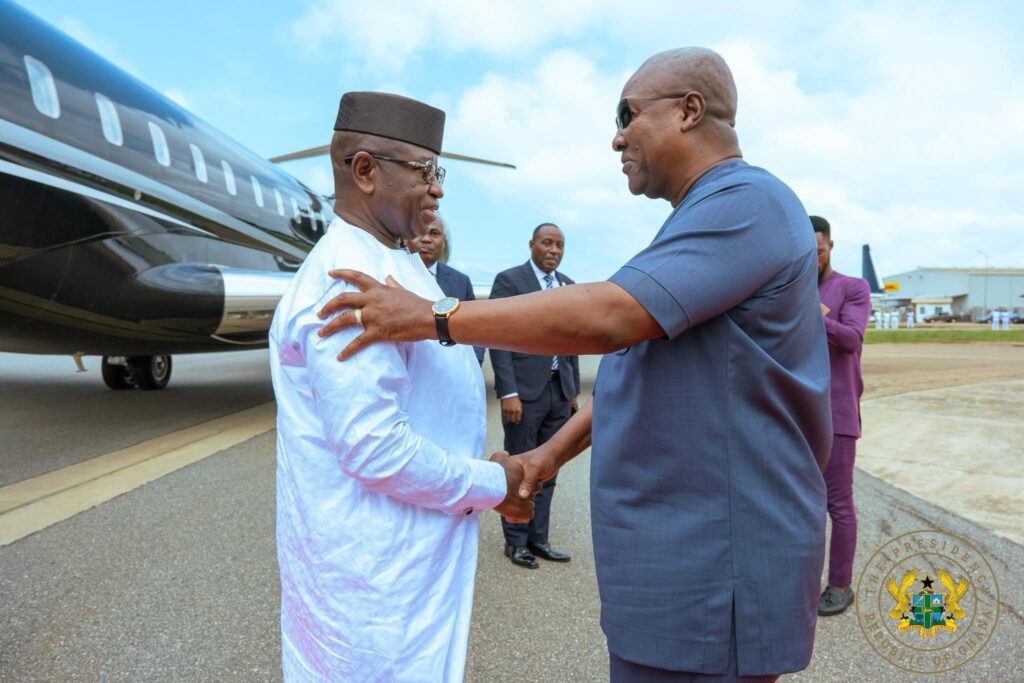
As Chair of the ECOWAS Authority, President Bio emphasized that climate change continues to pose serious challenges across the West African sub region, making closer collaboration among member states increasingly important.
He stressed the need for stronger regional cooperation in addressing climate change, improving urban planning, and strengthening disaster preparedness to reduce the devastating effects of flooding and other climate related emergencies.
His remarks highlighted the growing importance of collective action as countries across the region face increasingly unpredictable weather patterns and rising environmental risks.
Mahama Outlines Government Response
President Mahama used the occasion to provide an update on Ghana’s response to the flooding, outlining measures already taken to support affected communities and restore normalcy.
He said the government has mobilised the Ghana Armed Forces together with the Joint Task Force to assist ongoing recovery operations in the flood affected areas.
According to the President, the security services are helping to clear blocked waterways, support emergency operations, and facilitate efforts aimed at restoring normal life in communities that suffered extensive damage.
He also announced that the Minister for Finance has released resources from the Contingency Fund to strengthen relief operations being coordinated by the National Disaster Management Organisation and other state agencies.
The funding is intended to support emergency assistance, humanitarian relief, and immediate interventions for families displaced by the disaster.
President Mahama noted that government institutions continue to work together to deliver relief supplies and coordinate recovery activities while assessing the full extent of the destruction.
Thousands Displaced by Devastating Floods
Providing the latest preliminary assessment of the disaster, President Mahama disclosed that approximately 48,000 people have been rendered homeless by the floods.
He said the disaster has also resulted in 12 confirmed deaths, while several other individuals remain unaccounted for as search and emergency operations continue.
The figures underscore the scale of the humanitarian challenge confronting authorities as emergency responders work to provide shelter, food, medical support, and other essential services to affected families.
Government agencies remain engaged in damage assessments while relief distribution continues across impacted communities.
The President indicated that recovery operations remain active as authorities seek to restore essential services and reduce further risks associated with blocked drainage systems and damaged infrastructure.
Regional Security and Economic Integration
Beyond the humanitarian situation, the two Presidents held bilateral consultations covering a broad range of regional issues ahead of the upcoming ECOWAS summit in Sierra Leone.
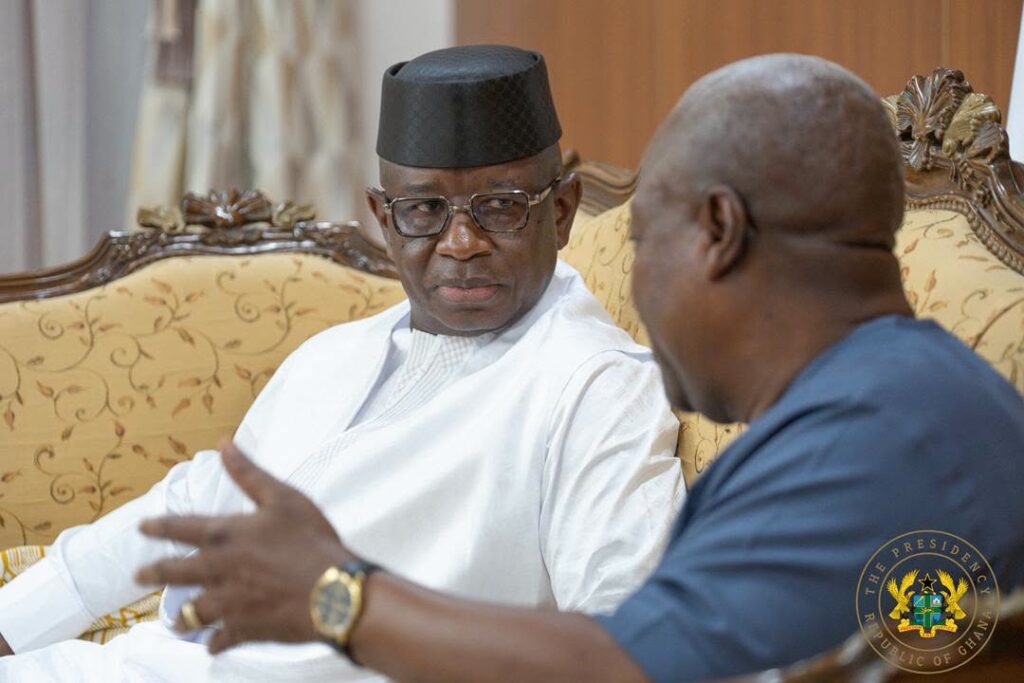
The discussions focused on regional security, democratic governance, and efforts to deepen economic integration within the West African bloc.
The meeting provided an opportunity for both leaders to exchange views on shared challenges confronting ECOWAS member states and to reaffirm their commitment to strengthening cooperation on issues affecting peace, stability, and development.
Regional security continues to remain high on the ECOWAS agenda as member states confront evolving political, economic, and security challenges across the sub region.
The consultations also reflected the importance both Ghana and Sierra Leone place on sustaining dialogue and collective action through regional institutions.
Climate Change Demands Collective Action
Climate induced flooding emerged as one of the central themes of the discussions between the two leaders. President Bio stressed that the increasing frequency and severity of flooding across West Africa require governments to adopt coordinated approaches that extend beyond national borders.
He highlighted the importance of improving disaster preparedness, investing in resilient urban planning, and strengthening cooperation among ECOWAS member states to respond more effectively to future emergencies.
The conversations reinforced growing concern that climate change is becoming a defining policy challenge for governments throughout the region, affecting lives, infrastructure, agriculture, and economic development.

Both leaders acknowledged that stronger collaboration can improve preparedness while enhancing the capacity of countries to respond quickly when disasters occur.
Longstanding Friendship Reinforced
The state visit also reaffirmed the longstanding relationship between Ghana and Sierra Leone, countries that have maintained close diplomatic ties through decades of regional cooperation.
The meeting reflected a shared commitment to promoting peace, stability, and sustainable development while strengthening collaboration within ECOWAS.
President Bio’s decision to personally visit Ghana during a period of national recovery underscored the spirit of solidarity that has long characterised relations between the two neighbouring West African nations.
The visit also demonstrated the value of continued engagement among regional leaders as they work together to confront both immediate humanitarian challenges and broader development priorities.
Shared Commitment to Regional Progress
As the discussions concluded, both Presidents reaffirmed their determination to deepen cooperation through ECOWAS while supporting initiatives that advance regional peace, economic growth, and collective security.
The visit highlighted the importance of maintaining strong diplomatic partnerships at a time when West African countries face increasingly complex challenges ranging from climate change and disaster response to economic transformation and regional stability.
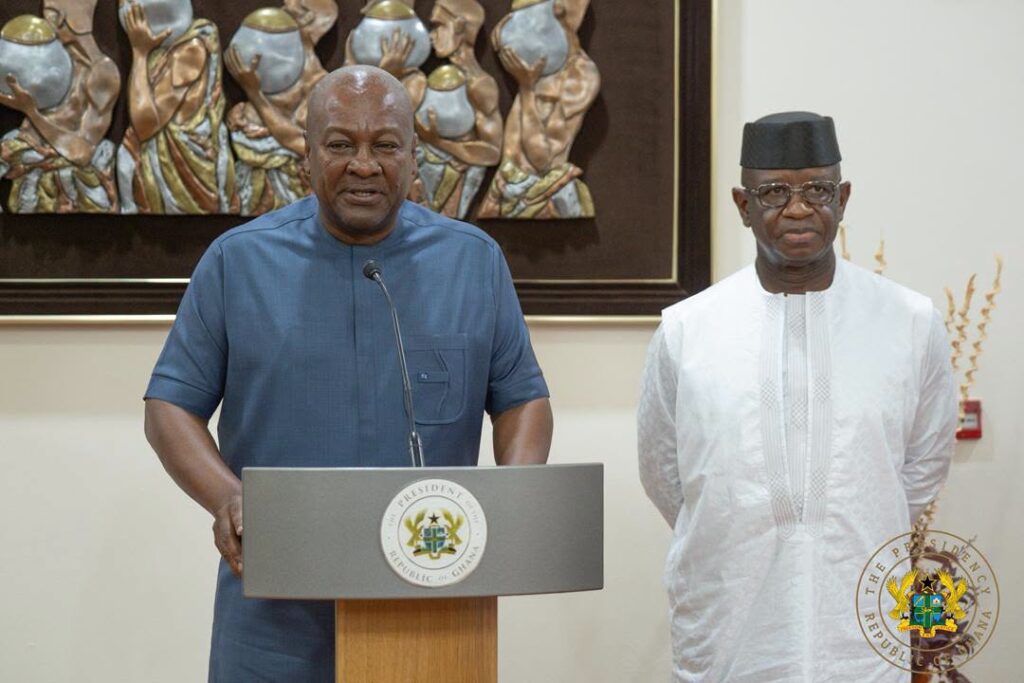
For Ghana, the visit provided an opportunity to brief a key regional partner on the government’s ongoing response to the devastating floods while reinforcing international support for recovery efforts.
For Sierra Leone and the ECOWAS Authority, it reaffirmed the importance of solidarity among member states in addressing shared challenges that no single country can confront alone.
As emergency operations continue in flood affected communities across Ghana, the discussions between Presidents Mahama and Bio underscored a broader message that regional cooperation remains essential for protecting lives, strengthening resilience, and advancing sustainable development throughout West Africa.
READ ALSO: Ghana to Showcase Energy Investment Pipeline at AEW 2026