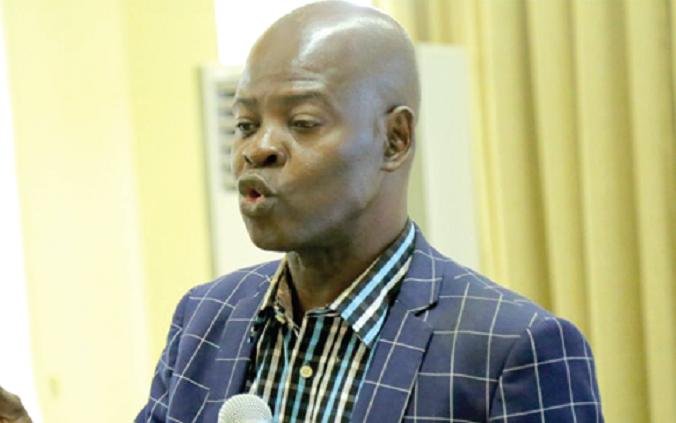
Dr. Emmanuel Steve Asare Manteaw, a prominent policy analyst and Co-Chair of the Ghana Extractive Industries Transparency Initiative (GHEITI), has strongly criticized the persistent failure of mining host communities to secure sustainable advancements from their mineral wealth.
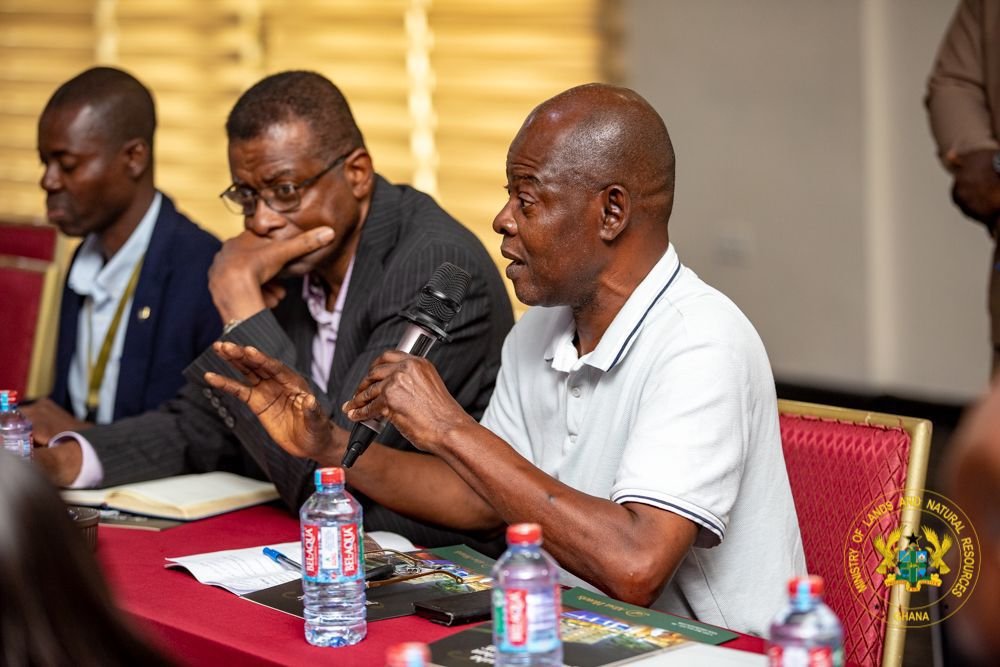
Speaking at a critical Natural Resource Governance Institute (NRGI) workshop in Accra, the energy and extractives expert argued that structural weaknesses are fundamentally undermining local development.
According to Dr. Manteaw, the current fragmented architecture governing the administration of resource revenues drastically reduces the impact of mineral monies, leading to severe operational inefficiencies in the delivery of long-term development projects across the country.
“One of the major reasons why none of our mining host communities has not been able to translate their share of mineral royalties into lasting benefits for community members has to do with the issue of mismanagement and inefficient use of the share of mineral royalties that are ceded by central governments to local government authorities for the purpose of financing local economic developments.”
Dr. Emmanuel Steve Asare Manteaw
Expanding on these governance challenges, Dr. Manteaw pointed directly to a historical lack of institutional cohesion and oversight regarding how mineral proceeds are distributed.
Central governments routinely cede a specific percentage of mineral royalties to local government authorities, fully intending for these funds to serve as the financial bedrock for local economic initiatives.
However, extensive data gathered throughout the operations of the Ghana Extractive Industries Transparency Initiative reveals that systemic leakages, poor planning, and structural fragmentation have consistently hindered progress.
Consequently, sub-national administrative units have routinely failed to build lasting, generational assets out of the liquid capital provided by the country’s extractive operations.
The Fragmented Structure of Mineral Sub-National Transfers
The institutional architecture regulating how mining royalties trickle down to local assemblies remains a primary driver of sub-national underdevelopment.
Under the current legislative frameworks, mining host communities are legally entitled to statutory disbursements intended to offset the ecological, social, and economic disruption caused by intensive resource extraction.
However, the disbursement pipeline is marred by prolonged bureaucratic delays and fragmented management frameworks that lack stringent, transparent accountability systems.
Because these funds arrive at the local assembly level without rigid spending frameworks or ring-fenced protections, they are often absorbed into recurrent administrative expenditures rather than being deployed for capital-intensive projects.
This institutional fragmentation means that instead of pooling funds for regional, transformative infrastructure like hospitals, roads, or localized processing hubs, the revenue is broken up into minor, uncoordinated allocations that show no real, measurable return on investment.
Mismanagement and Local Accountability Loopholes
Beyond structural deficiencies, the lack of strict sub-national governance metrics has allowed local authorities to utilize mineral wealth with minimal direct accountability to the communities they represent.
Public financial management tracking indicates a significant disconnect between the priorities of local government officials and the immediate economic needs of citizens living near large-scale concessions.

Without targeted civic monitoring, funds meant for long-term economic diversification are frequently channeled into short-sighted, politically motivated projects that decay rapidly after an election cycle.
The absence of a uniform, legally binding template for municipal investment means that as mines deplete the physical terrain, the corresponding financial capital evaporates through poor fiscal oversight, leaving host communities vulnerable to post-mining economic collapse.
The GHEITI Remedy: Standardized Utilization Guidelines
To stop this continuous loss of capital, the Ghana Extractive Industries Transparency Initiative has consistently advocated for a complete overhaul of the sub-national resource governance model.
The multi-stakeholder group stresses that simply transferring liquidity from the capital city to local government coffers is entirely insufficient if it is not paired with structured, mandatory deployment frameworks.

The implementation of clear, strict spending guidelines would legally restrict local authorities from utilizing resource royalties for recurrent municipal operational costs.
By establishing specialized asset-classification frameworks, local assemblies would be forced to split their allocations between immediate structural upgrades and long-term sovereign wealth reserves.
This dual-action approach ensures that extraction areas retain tangible, wealth-generating assets long after the multi-national mining firms have exited the concessions.
READ ALSO: MOLIY and Yailin La Más Viral Unleash “JETSKI” Music Video