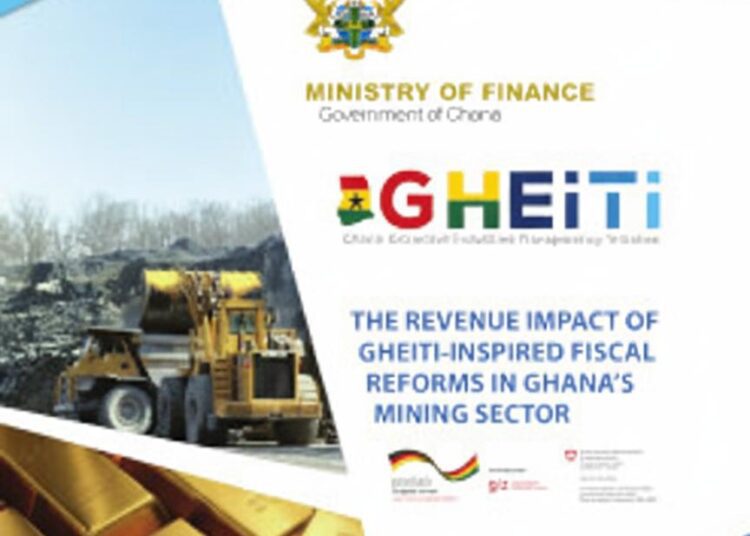
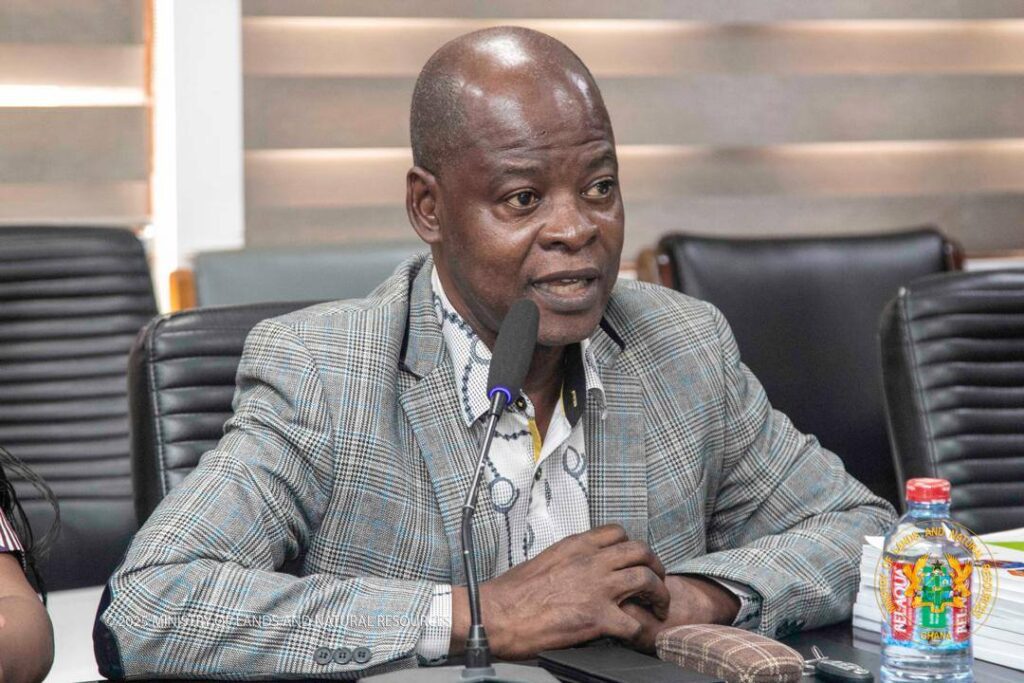
Dr. Emmanuel Steve Asare Manteaw, a prominent policy analyst and Co-Chair of the Ghana Extractive Industries Transparency Initiative (GHEITI), is urgently calling for the immediate restructuring and harmonisation of Ghana’s mineral royalty management system.
This policy push seeks to rectify structural duplications within the existing institutional architecture, thereby maximizing development outcomes across the country’s vulnerable mining communities.
By addressing these institutional redundancies, the initiative aims to build a more predictable and streamlined revenue channel that safeguards community funds against unnecessary administrative depletion.
“In my view, it will be more efficient to harmonise the official nomenclature for managing, distributing, and ensuring that community share of mineral royalties are converted into lasting benefits for the people. When you do that, when you harmonise, you reduce the administrative cost of pursuing that objective. And so it is the call of the EITI that we should rethink how we distribute community share of mineral royalty.”
Dr. Emmanuel Steve Asare Manteaw
The underlying governance crisis stems from a governmental approach that historically favored creating a parallel nomenclature over establishing rigid operational guidelines for resource wealth extraction. Instead of optimizing pre-existing statutory channels, the government introduced a parallel decentralised network known as the mining community development scheme.
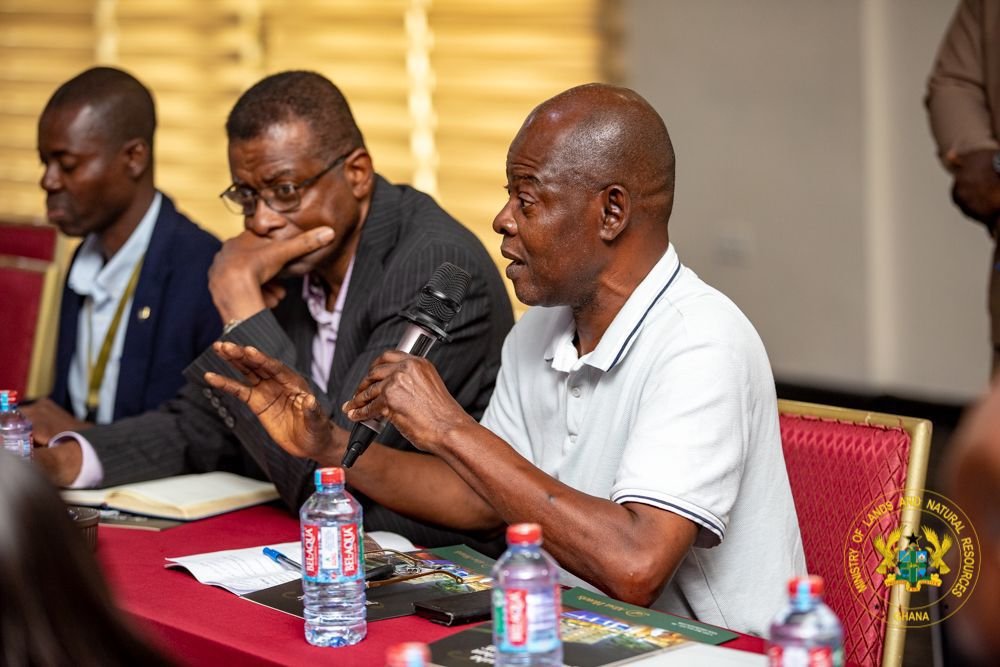
Managed at the district level through a dedicated local management committee, this newer apparatus was tasked with pursuing the precise socioeconomic mandate already assigned to traditional systems.
Consequently, this fragmented arrangement splits state oversight, fostering institutional conflict and increasing fiscal leakages that ultimately deny marginalized communities their rightful share of extractive wealth.
As a result of this fragmented architecture, Dr. Emmanuel Steve Asare Manteaw noted that multiple state institutions are concurrently executing identical duties at the cost of the taxpayer:
The Economic Impact of Decentralized Administrative Duality
The presence of overlapping administrative institutions creates an unsustainable fiscal burden that actively undermines the host communities’ developmental aspirations.
When two separate entities the Office of the Administrator of Stool Lands and the Mining Community Development Scheme simultaneously handle distinct portions of the exact same royalty stream, institutional efficiency plummets.
This institutional fragmentation inflates administrative overhead costs, as both frameworks maintain separate secretariats, local management committees, and operational logistics.
Every cedi diverted to fund duplicate bureaucracies represents a direct deduction from potential investments in crucial community infrastructure, localized healthcare systems, and schools.
Furthermore, this structural division significantly impairs the long-term planning capabilities of local government units and traditional authorities.
Rather than operating under a transparent, unified ledger, mineral wealth distribution remains unpredictable, split across different regulatory pipelines with varying governance standards.
By harmonizing these disparate frameworks under a singular official nomenclature, the state can drastically curb unnecessary spending.
Eliminating these structural redundancies directly redirects vital financial resources toward establishing tangible, self-sustaining economic projects that outlive the lifespans of nearby mining operations.
Reforming Strategic Pipelines to Protect Mining Host Communities
To ensure that mineral wealth genuinely translates into permanent, intergenerational benefits, Ghana must thoroughly rethink its subnational distribution mechanisms.
A unified governance framework will create a synchronized development model, preventing situations where different committees inadvertently fund overlapping or conflicting projects within the exact same district.
This systemic consolidation increases transparency, making it substantially easier for civic groups, independent auditors, and community members to track royalty inflows from the initial corporate payment down to the localized expenditure level.

Moreover, institutional harmonisation establishes a reliable blueprint for sustainable resource governance.
When administrative processes are consolidated, local management committees can better pull resources together for large-scale, high-impact regional interventions rather than scattering small funds across minor, short-term projects.
This strategic shift not only fortifies local economic structures against the volatility of global commodity markets but also restores deep public trust in the state’s capacity to manage natural resources responsibly.
Protecting the financial integrity of these royalty allocations is paramount to lifting mining enclaves out of poverty and fostering inclusive growth.
Structural Pathways Toward Long-Term Institutional Efficiency
Achieving a highly optimized, single-window disbursement model requires a decisive legislative alignment of Ghana’s primary natural resource laws.
Lawmakers must actively reconcile the distinct legal mandates governing traditional land secretariats and modern mineral funds to eliminate jurisdictional friction.
By embedding rigid legislative boundaries that unify revenue collection and project execution, the state can ensure complete tracking of mineral wealth.

A singular, cohesive administrative path eliminates bureaucratic delays, providing local governments with the predictability required to execute major regional development projects effectively.
Ultimately, GHEITI’s urgent call to reform the country’s mineral royalty matrix underscores a fundamental principle of natural resource economics: transparency must always be backed by structural efficiency.
The true measure of successful mining governance is not merely the volume of royalties collected, but the precision and care with which those funds are converted into life-changing public goods.
By abolishing parallel institutions and embracing a unified, transparent architecture, Ghana can set a powerful regional precedent, ensuring that its rich mineral endowments serve as a real catalyst for permanent national and local development.
READ ALSO: Wa MCE Cites Consultation And Directive In Tindamba School Demolition