
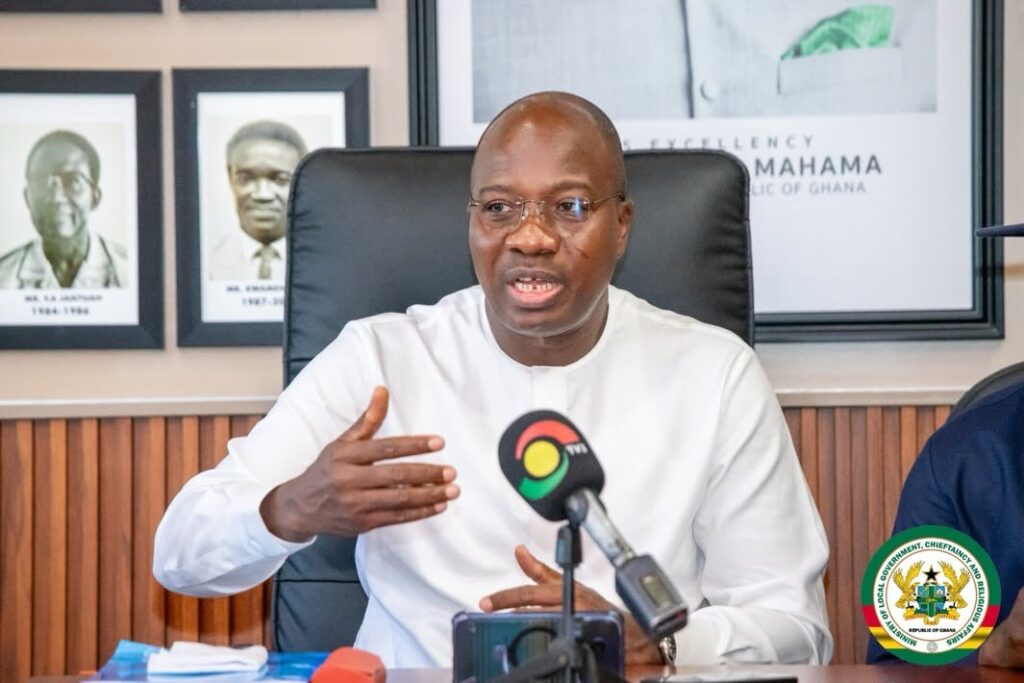
Households in Greater Accra could soon sort their rubbish into red and green bins and pay collection fees through mobile money under a sweeping waste management overhaul. The plan dominated a strategic policy engagement between the Minister for Local Government, Hon. Mahama Ayariga, and policy think tank IMANI Africa on Friday, September 18, 2026.
Mr Ayariga, the ministry’s Chief Director and the Chairperson of Parliament’s Committee on Local Government, met an IMANI team led by Founding President Franklin Cudjoe, alongside Vice President Selorm Branttie, Technology Associate John Sitsofe Mensah and Research Associate Ransford Brobbey.
On waste, the proposals aim to cut long haulage distances, end cash handling and hold households directly accountable for how they dispose of rubbish.
Greater Accra Divided Into Three Waste Management Blocks
The reform begins with geography. Greater Accra will be partitioned into three operational blocks, each served by its own landfill and incineration site, to streamline collection across the region.
The engagement identified locations near Central University and Kasoa as examples of such sites. Placing disposal facilities within each block is intended to reduce the long journeys collection trucks currently make across the city, saving time and fuel.
Land and spatial planning teams will then map each block into zones with a five-kilometre radius. Every zone will host a small transfer station occupying no more than two plots of land, where tricycle operators will offload waste directly into large collection trucks.
Two-Bin System and Penalties for Households
Source separation sits at the heart of the plan. Households will adopt a strict two-bin system, using red bins for organic waste and green bins for non-organic waste.
Compliance will not depend on inspectors knocking on doors. Collection apps will digitally track how households sort their waste, and those who mix organic and non-organic rubbish will receive automated penalty notifications. The engagement cited fines of 150 to 200 cedis as an example of the penalties envisaged.

The approach marks a shift from public appeals toward enforceable rules backed by technology, placing responsibility for clean neighbourhoods at the household level.
Electric Tricycles and Night Collection to Ease Congestion
The ministry is also looking to modernise the equipment that moves waste through the city. Plans include procuring and deploying thousands of self-loading, self-tipping electric tricycles, commonly known as aboboyaa, to handle residential pickups more efficiently.
Larger collection trucks will be restricted to nighttime movement. The measure is designed to keep heavy waste vehicles off the roads during the day and prevent them from worsening the gridlock that already slows movement across Accra.

To finance the expansion, the ministry is working to secure a US$50 million line of credit from financial partners, with Vadian named among them.
Cashless Waste Collection Through Mobile Money
The reform also targets how residents pay for waste services. The plan eliminates cash transactions by integrating collection fees with mobile money platforms.
Automated weighing scales at transfer stations will calculate and verify fees based on the actual volume of waste collected. Each weighing will trigger a mobile money deduction and send a notification to the resident, creating a digital record of every payment.
By removing cash from the system, the ministry hopes to close room for leakages and disputes over charges, while giving households a clear view of what they pay and why.
What Comes Next for Waste Management Reform
The engagement did not set a start date for the three-block system, nor did it indicate how households will acquire the red and green bins. It also did not specify how residents without smartphones will interact with the digital tracking system.

Those details are expected to take shape through a task force process agreed at the meeting. Members will reconvene in two weeks to review policy papers, coordinate data collection and align implementation plans across the thematic areas discussed.
If the reforms move from paper to practice, Greater Accra residents will face a fundamentally different relationship with their rubbish, one defined by sorting at home, digital payments and consequences for those who fail to comply.
READ ALSO: TOR Debt Relief Opens New Refining Reset