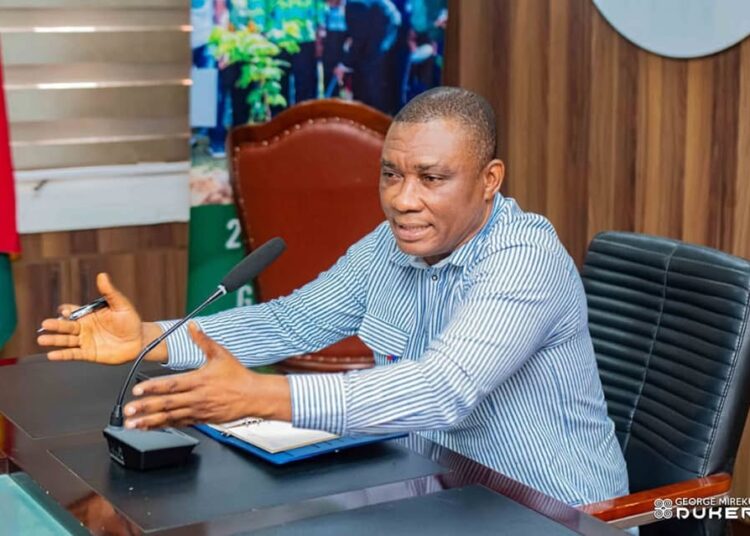
Hon. George Mireku Duker, the former Deputy Minister of Lands and Natural Resources, has openly challenged the proposed 3% resource allocation cap earmarked for host communities affected by mining operations, questioning whether current constitutional review efforts genuinely seek to serve the public interest or satisfy political expediency.
In an interview with The Vaultz News, the former minister raised critical concerns over how statutory reforms treat mineral-rich communities that bear the environmental and social burdens of extraction.
His critique highlights growing discomfort among key extractive industry stakeholders regarding statutory allocations that fall short of ensuring tangible development for areas directly impacted by large-scale mining activities across the country.
“Did the committee itself also consider expert views on these ratification processes? Where there is a recommendation for a 3% assigned to the communities that find themselves in the operations of these mining companies? That cap is also worrying. Why 3%? Why not more? Why not more than that? Why 3%?”
Hon. George Mireku Duker
Expanding on the debate, Hon. Mireku Duker stressed that constitutional and statutory amendments must prioritize the long-term well-being of the sovereign public over short-term partisan gains.
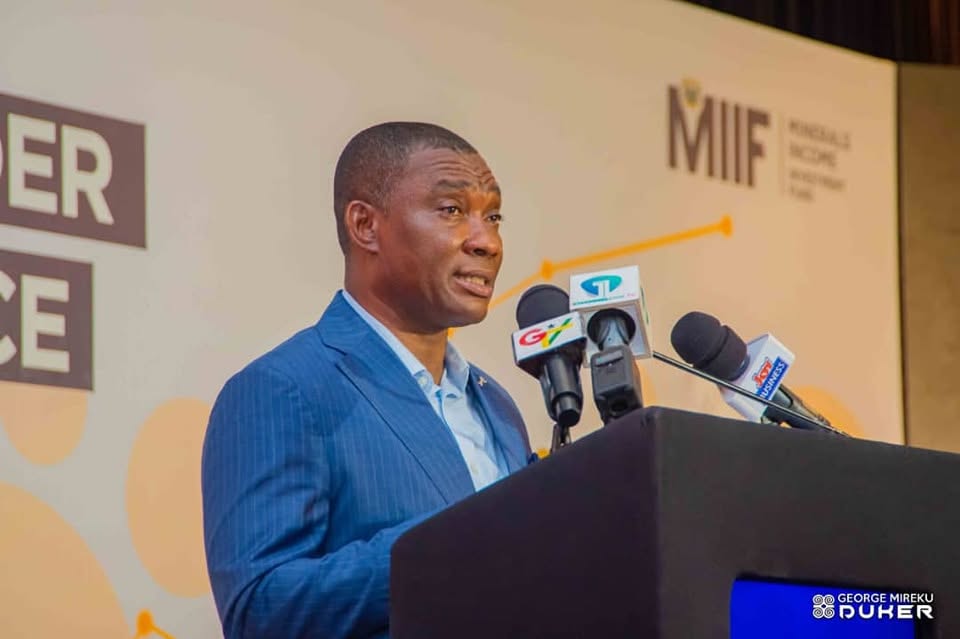
He questioned why government constitutional reform committees selectively adopted only 22 out of 147 expert recommendations while retaining restrictive caps on local development funds.
Drawing comparative policy insights from major mining jurisdictions such as Australia and South Africa, he noted that statutory parliamentary ratification processes and arbitrary percentage ceilings often fail to deliver optimal benefits to host communities.
According to him, unless Ghana shifts its national attitude and legislative focus toward equitable natural resource governance, host communities will remain trapped in economic disparity despite housing immense mineral wealth.
Assessing Policy Caps in Mineral Revenue Distribution
The urge to re-evaluate the 3% cap stems from a long-standing structural deficit in how extractive revenues are managed and distributed at the grassroots level.
Traditionally, host mining communities in Ghana suffer significant land degradation, water pollution, and socio-economic displacement, yet receive a fraction of the gross mineral royalties paid to the central government.
While instruments like the Minerals Development Fund (MDF) were created to bridge this equity gap, rigid financial caps and legislative bottlenecks have historically restricted the flow of direct capital to local traditional authorities and municipal assemblies.
Extending direct allocations beyond arbitrary percentage limits ensures that host communities can build resilient infrastructure, fund alternative livelihoods, and mitigate ecological damages long after mine closure.

Furthermore, relying solely on minor constitutional tweaks without expanding community equity share perpetuates systemic underdevelopment in mining enclaves.
Hon. Mireku Duker pointed out that Ghana’s legislative framework surrounding concession ratification which was subsequently emulated by countries like Liberia must be critically evaluated to determine if it truly yields superior national return.
He argued that instead of burdening the 1992 Constitution with rigid percentage figures, policymakers should explore dynamic, negotiable frameworks similar to international best practices.
“Can we situate the needs of these communities in the provisions of absolute loot? Instead of even bringing it to the constitution?” he asked, warning against creating legislative arrangements that restrict future community bargaining power.
Comparative Governance and National Conscience Reforms
Examining global mineral governance structures reveals that top-tier resource nations prioritize direct community benefit agreements (CBAs) over blanket constitutional caps.
In jurisdictions such as Australia, resource companies negotiate tailored development agreements directly with indigenous landholders, ensuring revenue distribution matches the specific scale and impact of the extraction project.
In contrast, rigid statutory limits run the risk of capping community growth while mining conglomerates extract high-value commodities.
Addressing these structural imbalances requires a fundamental mindset shift among public administrators and lawmakers to ensure natural resource contracts reflect true commercial and social value for the citizenry.
The former Deputy Minister cautioned political actors against utilizing parliamentary majorities to pass piecemeal constitutional amendments that fail to address fundamental governance flaws.
He argued that hasty reforms enacted simply because a ruling government holds legislative dominance set a dangerous precedent for future administrations.
“Because we have the majority, we may say yes, we’ll want and we’ll get what we want,” he noted, adding that “another government may come tomorrow and also say that we have the overwhelming majority and we are also amending.”
True structural reform, he emphasized, demands amending national attitudes, fostering political consensus, and prioritizing equitable resource governance.
Institutional Frameworks for Sustainable Resource Extraction
Building a sustainable extractive framework requires harmonizing statutory regulations with real-world community expectations.
To achieve lasting socio-economic stability in mining regions, regulatory bodies and government ministries must transition from top-down revenue allocations to transparent, impact-based development funding mechanisms.

Establishing decentralized development funds with robust oversight ensures that resource yield directly translates into healthcare facilities, quality education, clean water systems, and industrial diversification for host enclaves.
Such structural changes eliminate the reliance on arbitrary percentages and safeguard mining areas against economic collapse when non-renewable resources are finally exhausted.
Ultimately, the call to re-examine resource allocation policies serves as a pivotal challenge to Ghana’s extractive sector leaders. Reforming the natural resources architecture must go beyond constitutional text to touch the core of political will and public accountability.
As Parliament and sector experts review ongoing legislative recommendations, aligning policy outputs with the genuine needs of host communities remains the definitive test of natural resource stewardship.
Without a collective commitment to fair distribution and conscience-driven governance, constitutional amendments will remain superficial exercises rather than instruments of real economic transformation for the sovereign people.
READ ALSO: Planned US$120m TOR Debt Relief Raises Fiscal Questions