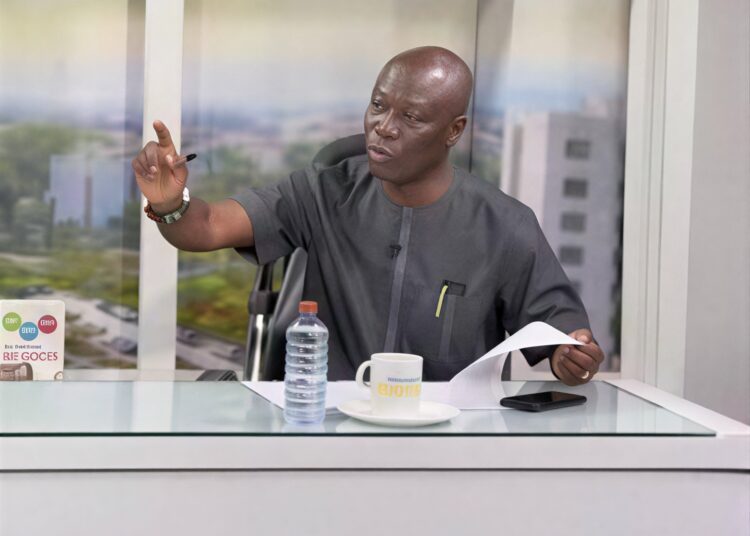
The Former National Coordinator of District Road Improvement Programme, Edwin Nii Lante Vanderpuye has recounted how the DRIP initiative transformed access to essential services in remote communities across Ghana. He stated that the programme brought visible relief to residents who had long struggled with poor road connectivity.
Discussing his experience as coordinator, he said the role gave him rare access to communities often overlooked in national development conversations. Mr. Vanderpuye noted that these visits deepened his understanding of rural hardship and infrastructure inequality.
He recalled travelling to villages where residents spent hours reaching markets, schools and healthcare facilities. The Former Coordinator added that many of these journeys involved exhausting travel through inaccessible roads.
Mr. Vanderpuye also linked those struggles to his own upbringing. He said his childhood experiences made it easier to identify with residents living in isolated farming communities.
“I used to walk five kilometres to school, so when I see these villages, I understand their struggle. This journey shaped how I viewed this work. I appreciated the opportunity to note that these communities used to spend two hours accessing their district capitals, but today, through DRIP, they are able to do so in 15 to 30 minutes.”
Edwin Nii Lante Vanderpuye

Moreover, he cited regions including Upper West, Upper East, Savannah, Northern, Western North, Western and Ashanti as clear examples of DRIP’s impact. Mr. Vanderpuye said the transformation in these areas demonstrated the programme’s practical value. He recounted visiting parts of the Ashanti Region where residents willingly surrendered cocoa and orange farms to create road access.
According to Mr. Vanderpuye, some communities had previously travelled through two districts before reaching their own district capital. He said the absence of road access had slowed economic activity and delayed healthcare delivery.
Furthermore, residents actively supported construction efforts once work began. Former Coordinator noted that some communities fed machine operators and contributed funds for diesel to sustain road works.
“The people gave their land and supported the workers. They understood what access meant for their future. Their lives depended on that road.”
Edwin Nii Lante Vanderpuye
He emphasised that such sacrifices revealed the deep value communities place on infrastructure. Mr. Vanderpuye remarked that DRIP became more than a road programme because it restored mobility, dignity and opportunity.
Funding Gaps Influence Regional Road Performance Nationwide
The Former National Coordinator of District Road Improvement Programme, Nii Lante Vanderpuye disclosed that DRIP reshaped nearly 11,400 kilometres of roads across Ghana during his tenure. He said the progress highlighted both strong regional performance and persistent funding constraints.
Addressing national output, Former Coordinator explained that the road works covered all 261 districts. Mr. Vanderpuye indicated that reshaping feeder roads remained the programme’s core focus.
He also identified regional performance rankings. He pointed Ashanti Region as the strongest performer, followed by Upper West, Upper East, Bono, Bono East, Western, Central and Volta.
In contrast, Greater Accra recorded slower progress. Mr. Vanderpuye acknowledged that his home region lagged behind many others despite its strategic importance. On addressing financing, The Former Coordinator stated that assemblies largely depended on Internally Generated Funds to sustain operations, creating significant limitations.

He explained that road maintenance requires fuel, lubricants, servicing and spare parts. Without steady funding, he said, even available equipment becomes difficult to operate effectively.
“Managing these machines depends on funding. Without resources, operations slow down quickly. This is the reality facing many assemblies.”
Edwin Nii Lante Vanderpuye
Moreover, he credited Ashanti Region’s success to strong local mobilisation. Mr. Vanderpuye said the regional minister, chiefs, district coordinators and residents worked deliberately to support road expansion.
Communities in some regions contributed diesel and gravel to keep projects moving. He noted that this shared responsibility accelerated road delivery in underserved areas.
Former Coordinator stated that performance in regions such as Ashanti carried electoral significance, encouraging local leaders to prioritise road infrastructure. He further noted that some Members of Parliament, especially in Upper West, directly financed DRIP activities. Their intervention, he said, helped bridge gaps left by limited assembly revenue.
Greater Accra, however, faced structural complications linked to road classification. Mr. Vanderpuye explained that the presence of highways and urban roads often restricted assembly intervention because DRIP primarily handles feeder roads.
The emphasis therefore remained on improving untarred access routes in deprived communities. Mr. Vanderpuye remarked that sustained funding and coordinated local support would determine the programme’s long term success.
READ ALSO: NDC Gave Me More Than I Returned —Vanderpuye