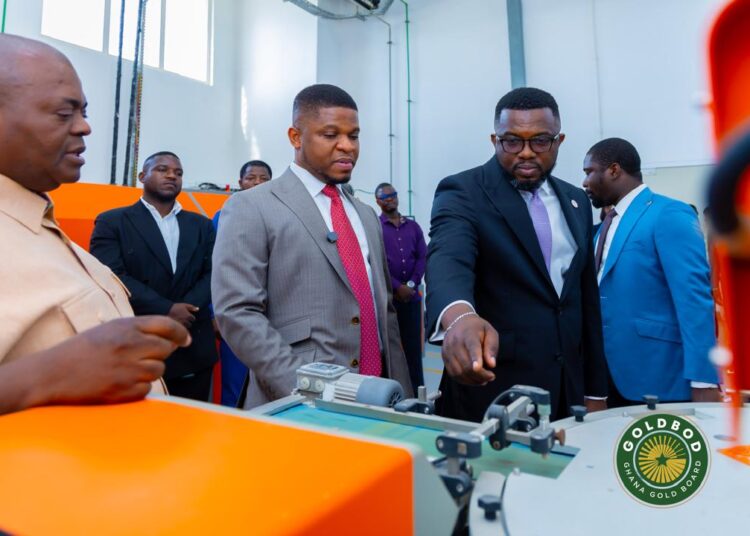
Deputy Chief Executive Officer of the Ghana Gold Board (GoldBod), Mr. Richard Nunekpeku, has announced a major policy shift aimed at channeling all gold purchased from both large-scale and artisanal small-scale mining (ASM) sectors exclusively into domestic refineries to build local capacity.
Speaking at the Mining for Development Forum (MDF) held under the theme “Strategic Mining: Value Retention and Development,” Mr. Nunekpeku revealed that this strategic allocation is engineered to fast-track indigenous refineries toward securing international validation.
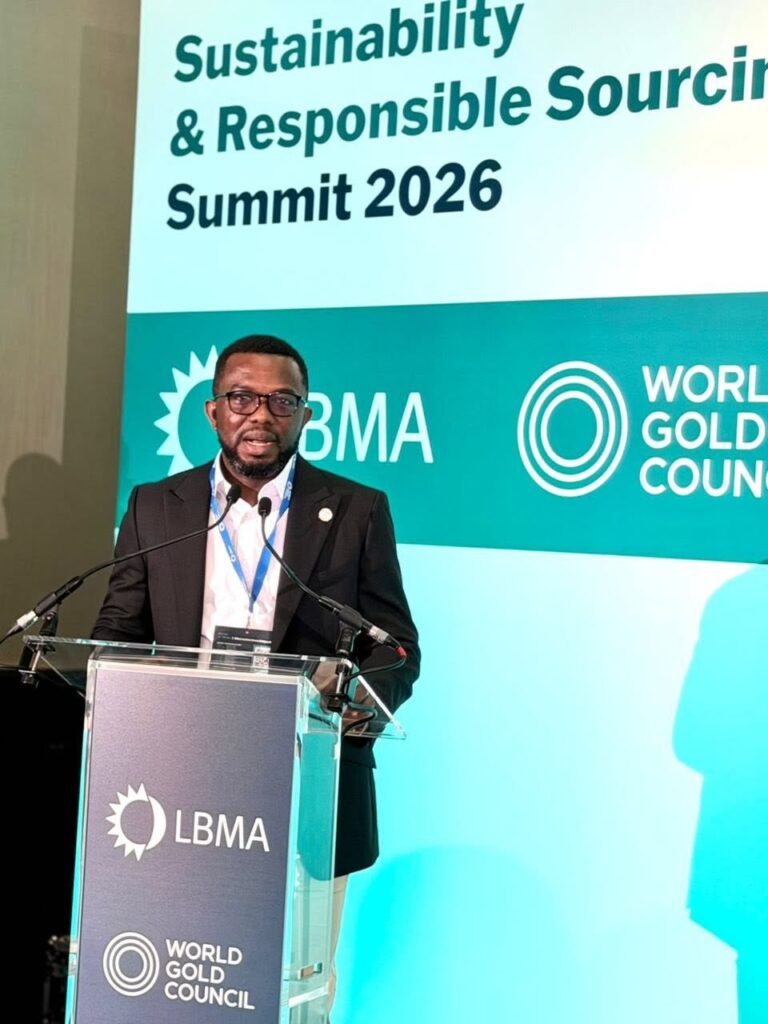
The primary objective behind this directive is to establish robust trace-of-origin frameworks that will elevate domestic refining facilities to London Bullion Market Association (LBMA) accreditation standards within the next three to five years.
“Our objective is to use the opportunity to build local capacity for these local refineries and put them on the track to becoming LBMA accredited refineries over the next three to five years. Because we believe that with traceable gold, as we will get as far as large-scale mining outputs are concerned, these refineries will be able to attain the LBMA requirement of proof of where the gold is coming from. And we are happy to note that some of these refineries have taken initiative of also engaging in their own partnerships.”
Mr. Richard Nunekpeku

This policy marks a critical expansion for GoldBod, which is leveraging its new mandate of large-scale mine onboarding and national reserve accumulation to guarantee a steady, traceable supply of gold to local plants.
By utilizing fully verifiable large-scale mining outputs, GoldBod plans to resolve the stringent proof-of-origin challenges that historically blocked local refiners from meeting global standards.
To ensure the success of this transition, domestic entities are aggressively pursuing international standard technical partnerships, exemplified by the Gold Coast Refinery’s ongoing collaboration with Rand Refinery the sole LBMA-accredited refining facility on the African continent to systematically absorb world-class operational capacities.
Forging Traceability Across ASM and Large-Scale Sectors
To achieve international compliance, GoldBod is heavily involved in aligning local operational frameworks with global benchmarks.
The board is actively working with domestic refineries to translate the stringent responsible mining and sourcing objectives outlined under the Organisation for Economic Co-operation and Development (OECD) guidelines into actionable practices, particularly within the historically informal ASM sector.

By bridging the gap between small-scale miners and certified refineries, GoldBod is establishing a comprehensive data-led chain of custody.
This uniform application of OECD benchmarks guarantees that every ounce of gold passing through the domestic system is free from conflict financing and environmental exploitation, satisfying the core risk-management parameters demanded by global bullion markets.
Technical Partnerships as Catalysts for Local Value Retention
The integration of international technical expertise is driving a rapid modernization of Ghana’s downstream gold architecture.
The operational partnership between Ghana’s Gold Coast Refinery and South Africa’s Rand Refinery serves as the foundational blueprint for this capacity-building agenda.
Through structured knowledge transfer, local technicians are being trained in advanced assaying methodologies, chemical refining processes, and strict environmental mitigation protocols.

This commercial ecosystem ensures that the value addition processes remain entirely within Ghanaian borders.
Consequently, instead of exporting unrefined dore gold and losing vital processing margins to overseas entities, the state is successfully retaining refining fees, minimizing purity losses during transit, and fostering highly skilled industrial employment.
Macroeconomic Sovereignty and Global Market Integration
Securing LBMA accreditation for domestic refineries fundamentally transforms Ghana’s economic relationship with its natural resources.
Certified local refining allows the Bank of Ghana to directly accumulate high-purity, investment-grade bullion reserves without relying on external third-party processors, directly strengthening national macroeconomic sovereignty and stabilizing the local currency.
Furthermore, an LBMA certification eliminates the “African discount” often applied to unrefined or non-certified gold, allowing local institutions to trade directly on global markets at spot prices.
By controlling the entire value chain from extraction to certified bar production, Ghana positions itself not merely as a top raw exporter, but as the premier hub for compliant, sustainable gold commerce in West Africa.
READ ALSO: Mahama Orders Release of GHS 300m for Flood Prevention and Relief