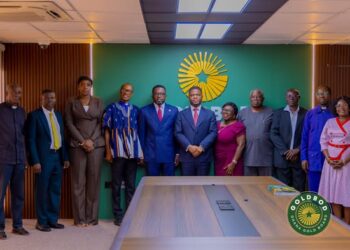
Mr. Richard Nunekpeku, the Deputy Chief Executive Officer of the Ghana Gold Board, has announced a sweeping set of downstream industrial interventions aimed at satisfying President John Dramani Mahama’s directive to eliminate raw gold exports by 2030.
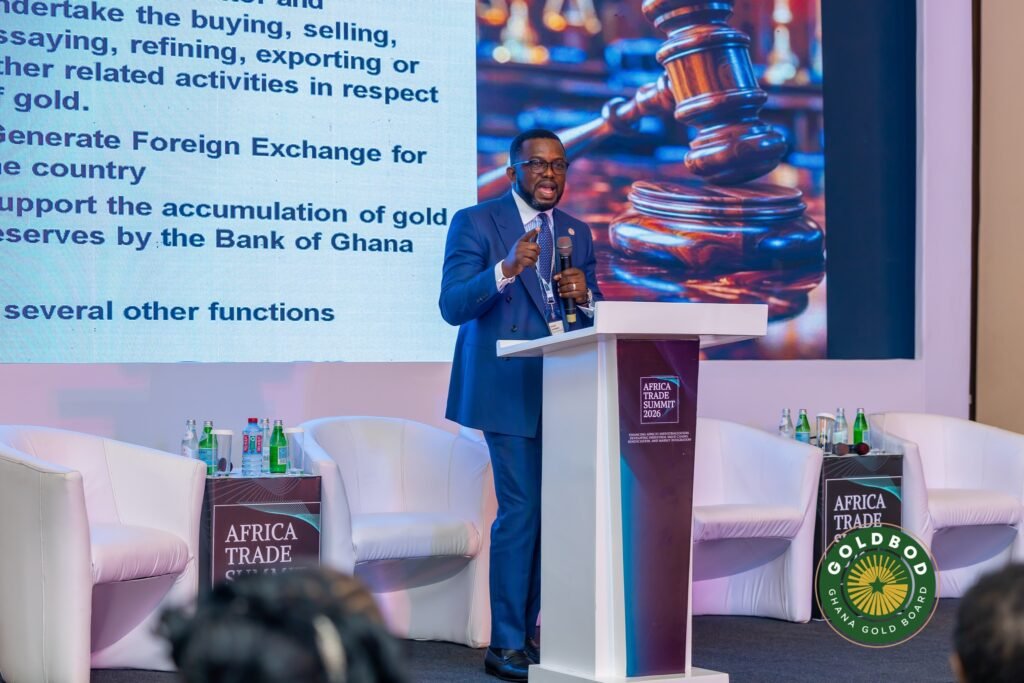
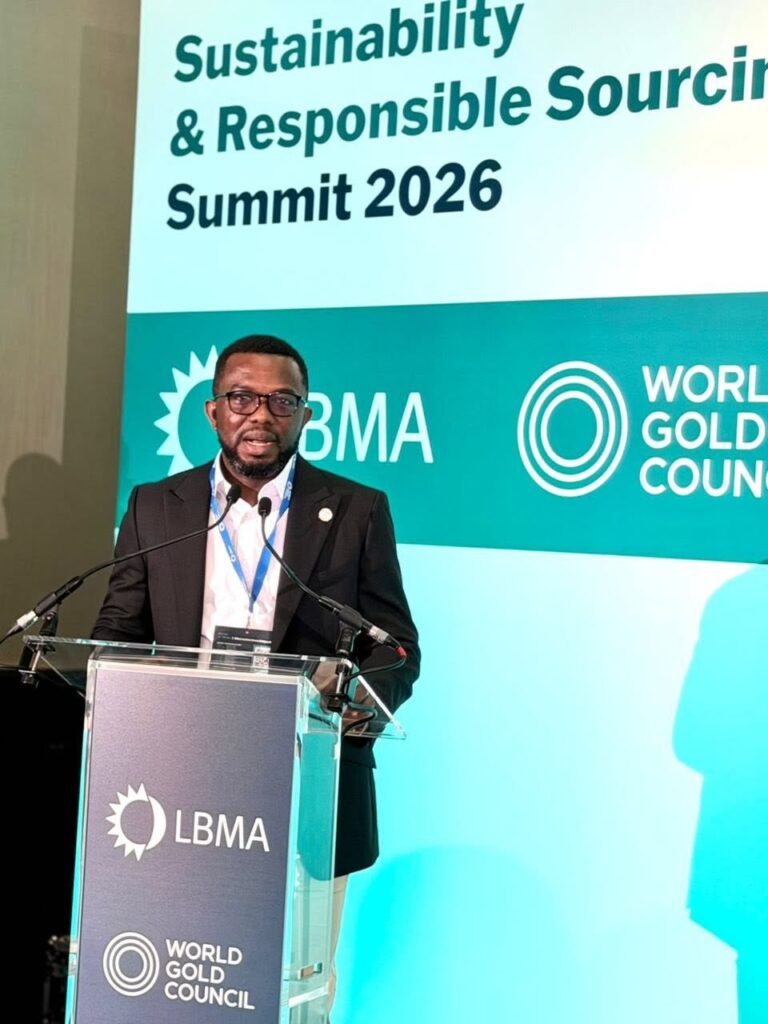
Speaking at the Mining for Development Forum (MDF) held under the theme “Strategic Mining: Value Retention and Development,” Nunekpeku outlined how the state regulator is aggressively shifting from a legacy of raw resource exportation to advanced local value addition.
This strategic shift is designed to expand domestic capacity, integrate state-of-the-art manufacturing technologies, and reshape Ghana’s mineral economy into a self-sustaining powerhouse before the end of the decade.
“We’ve invested significantly into rebranding the showroom and also advertising and marketing of the products of the company. So if you look at all these things that we are doing and also tying it into the vision of his excellency, the president John Dramani-Mahama, that has given us a charge to ensure that by 2030, all gold outputs that are produced locally are not exported in the raw form. So we have also begun the conversation around how we can more or less situate new refining capacities within the gaps that we have currently.”
Mr. Richard Nunekpeku
To translate this national vision into reality, the Ghana Gold Board has significantly boosted capital injections into its subsidiary, Gold Board Jewellery, over the past twelve months.

These investments are specifically directed toward upgrading technical skill sets, building modern production facilities, and standardizing local fabrications including custom ornaments and legal-tender gold coins to meet rigorous international benchmarks.
Alongside physical manufacturing upgrades, the board has executed a comprehensive commercial transformation, which includes rebranding regional showrooms and rolling out aggressive marketing campaigns to elevate the global and domestic market appeal of Ghanaian-fabricated products.
Driving Downstream Industrialization with Modern Technology
The core of the Gold Board’s strategy rests on moving beyond primary extraction to capture the lucrative midstream and downstream margins of the global precious metals supply chain. According to Nunekpeku, the substantial capital deployed over the past year serves as a foundation for a fully modernized jewelry fabrication industry.
By supporting its subsidiary company to set up new production units, the Gold Board is addressing a historical gap where domestic artisans lacked access to industrial-grade technology.
By integrating modern tooling and automated fabrication processes, the local industry can scale up production without compromising on precision.
This technological transition ensures that domestic jewelry and gold coins are indistinguishable from those produced in major refining hubs like Dubai or Zurich.
This capacity building is synchronized with market-facing initiatives, acknowledging that structural manufacturing upgrades must be paired with high-impact rebranding and strategic advertising to successfully capture premium consumer segments.
Bridging the Refining Gap Through Private Sector Synergy
A critical bottleneck in achieving full value retention is Ghana’s massive annual gold production, which comfortably exceeds 200 metric tonnes.
While the nation possesses localized refining capabilities, they are profoundly inadequate for processing the sheer volume of material hauled from large-scale and artisanal mines across the country.
To address this deficit, the Gold Board has initiated high-level consultations with private sector players to construct new, high-capacity refineries capable of processing the entirety of Ghana’s aggregate gold output.

This collaborative approach leverages private capital and international technical expertise to bridge state infrastructure deficits. By building scalable refining facilities, Ghana can systematically phase out the exportation of unrefined doré bars.
This structural evolution complies directly with the regulatory obligations set forth by the Gold Board Act, creating a closed-loop system where gold is mined, purified, and certified within national borders before entering international trade channels.
Macroeconomic Transmutations: Retaining Wealth and Resolving Disputes
On a macroeconomic level, transitioning to total local refining unlocks deep financial and socio-economic advantages that have historically eluded the country.
When raw gold is exported, valuable by-products like silver and copper are lost to foreign refiners; local refining alters this dynamic by reclaiming these secondary metals to fuel domestic fabrication and industrial workflows.
Furthermore, keeping the refining process in-country expands the corporate tax base and generates substantial transactional revenues that flow directly into public coffers.
Perhaps most crucially, establishing comprehensive local refining capacities provides a definitive solution to long-running systemic discrepancies regarding the true valuation of Ghana’s mineral exports.
Assaying and refining gold locally eliminates administrative vulnerabilities and ensures absolute transparency over the purity and weight of the commodity.
Ultimately, this paradigm shift validates the country’s true asset valuations, secures optimal sovereign returns, and ensures that Ghana’s mineral wealth directly funds long-term domestic development.
READ ALSO: World Bank Raises Ghana’s 2026 Growth Forecast to 4.8%