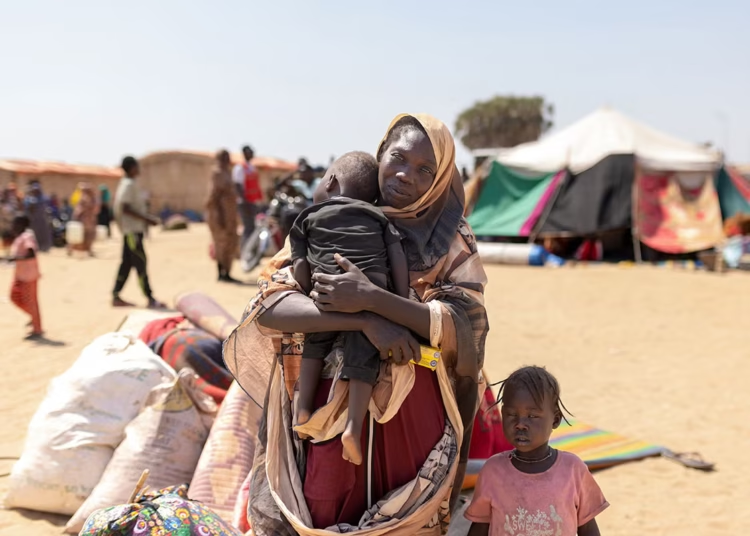
UNICEF has warned that children in Sudan continue to bear the heaviest burden of the country’s devastating conflict, as the war becomes increasingly deadly for the nation’s youngest citizens amid escalating violence across several regions.
According to UNICEF, at least 330 children were killed or injured during the first six months of 2026, underscoring the growing humanitarian catastrophe unfolding in a country where millions of children are already struggling to survive amid conflict, displacement and collapsing public services.
UNICEF reported that the Darfur and Kordofan states continue to record the highest number of child casualties, with strikes increasingly hitting homes, schools, healthcare facilities and other civilian infrastructure that should remain protected under international humanitarian law.
The deteriorating security situation in and around Al Obeid, the capital of North Kordofan State, has drawn special attention since increasing attacks have put hundreds of thousands of residents in danger.
In North Kordofan alone, drone strikes and other acts of armed violence are said to have killed around 35 children since May 2026. UNICEF stated at least 18 children have been killed, while more than 17 others have experienced injuries, with victims ranging in age from barely two months old to 17 years.
The agency noted that drone operations were responsible for almost 60 % of these child casualties, underlining the expanding significance of unmanned aircraft attacks in the conflict and their terrible repercussions for civilians.
The mounting toll reflects an increasingly dangerous phase of Sudan’s conflict, where advanced methods of warfare are being used in populated areas, exposing children to life-threatening risks regardless of where they seek refuge.
Beyond the immediate human cost, repeated drone strikes and shelling have severely damaged essential civilian infrastructure, further undermining already fragile humanitarian conditions.
Homes, schools, hospitals, water systems and local markets have all sustained damage in recent months, disrupting access to healthcare, education, clean water and food supplies. Critical transport routes have also been affected, making it increasingly difficult for humanitarian organisations to reach vulnerable communities with lifesaving assistance.
UNICEF estimates that approximately 500,000 civilians living in and around Al Obeid and across North Kordofan remain at immediate risk if fighting continues to intensify.
The agency warned that any further deterioration in security could expose even greater numbers of children to death, injury, forced displacement and other serious protection risks.
According to UNICEF Representative for Sudan, Sheldon Yett, “children are being caught in a relentless cycle of violence, displacement and deprivation.”
“For many children, there is no safe place left. They are being killed and injured in their homes, on the roads, in markets, and while attempting to access essential services such as education and healthcare. Children must never be a target. Their lives, rights and futures must be protected.”
Sheldon Yett
UNICEF Calls for Civilian Protection as Humanitarian Crisis Deepens

More than 800 children have been released since start of 2018. An estimated 19,000 children continue to serve in the ranks of armed forces and groups in South Sudan.
Moreover, UNICEF indicated that the violence continues to have profound psychological consequences for children, many of whom have endured repeated bombardments, displacement and the loss of loved ones.
The constant threat of attacks has created an environment in which fear, anxiety and trauma have become part of daily life for countless children living in conflict zones.
Beyond the immediate risk of death and injury, UNICEF warned that Sudanese children remain vulnerable to a range of grave violations associated with armed conflict.
These include the recruitment and use of children by armed groups, abduction, conflict-related sexual violence, attacks on schools and hospitals, and the denial of access to essential humanitarian assistance.
Such violations not only threaten children’s immediate safety but also jeopardise their long-term development, education and prospects for rebuilding their lives once the conflict eventually ends.
The growing use of drone warfare has further complicated efforts to protect civilians, particularly in densely populated areas where distinguishing between military objectives and civilian infrastructure becomes increasingly difficult.
Aid organisations have repeatedly stressed that attacks on homes, schools, hospitals and other civilian facilities violate international humanitarian law and further compound the humanitarian emergency.
UNICEF is urging all parties involved in the conflict to uphold their obligations under international law by protecting civilians and civilian infrastructure from attack.
The agency also called for safe, rapid and unimpeded humanitarian access to communities affected by the fighting so that lifesaving assistance can reach children and families in urgent need.
In addition, UNICEF appealed to all parties to take every possible measure to prevent further harm to children and ensure that their rights are respected throughout the conflict.
As violence spreads throughout Sudan, humanitarian organisations fear that the number of child casualties may climb considerably unless hostilities cease and stronger safeguards are put in place.
READ ALSO: Traditional Leaders Back Calls for 30% Royalties Retention for Mining Communities