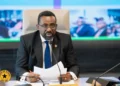
The Member of Parliament for New Juaben South and Ranking Member for the Trade, Industry and Tourism Committee, Honourable Michael Baafi Okyere has advocated a stronger shift in Ghana’s industrial policy through the development of sector specific economic enclaves. He argued that targeted zones remain critical to accelerating industrial growth and improving investor confidence in the national economy.
Addressing issues surrounding the Tema Integrated Park and free zones framework, he described economic enclaves as a central pillar for modern industrial expansion. In addition, he explained that clustering businesses within specialised zones enables shared infrastructure and improves operational efficiency.

Building on that point, Honourable Okyere indicated that free zones and smart industrial parks have proven successful across several global economies. He added that Ghana’s industrial approach must align with evolving international models that prioritise structured clustering.
Highlighting the expectations around the Tema Integrated Park, he stated that initial assumptions pointed towards a focus on specific value chains, particularly aluminium and its related industries. The MP noted that such a targeted structure would have strengthened value addition within a clearly defined sector.
Furthermore, the Ranking Member stressed that industrial clustering requires precision in design to achieve maximum impact. He emphasised that sector focused zones enhance productivity while improving monitoring and coordination systems.
“We believed that this concept should have been carved as a sector specific enclave focusing on aluminium and its value chain. That is where the real transformation in industrial development begins.”
Honourable Michael Baafi Okyere
In relation to implementation partners, Honourable Okyere highlighted the role of ARISE Integrated Industrial Platforms in the project. He explained that the company’s experience in developing industrial parks strengthens confidence in the long term viability of the initiative.

Additionally, he pointed out that ARISE’s linkage with Afreximbank improves funding prospects for industrial infrastructure development in Ghana. He further noted that government participation is largely facilitative, particularly through land provision and regulatory coordination.
Expanding the institutional dimension, the MP mentioned that agencies such as the Tema Development Company, Ghana Investment Promotion Centre and the Ministry of Lands are involved in the framework. He stressed that such inter institutional cooperation remains essential for successful industrial park delivery.
Honourable Okyere expressed optimism that Ghana stands to gain significantly from ARISE’s technical expertise and investment capacity. He added that similar partnerships in other African countries demonstrate the firm’s established track record.
Nevertheless, he underscored that his principal reservation centres on the absence of a strictly sector based design for the proposed enclave. He explained that a broader configuration risks diluting focus and weakening the full potential of industrial clustering.
Free Zones Model Under Scrutiny Amid Structural Reform Calls
Honourable Michael Baafi Okyere called for a comprehensive review of Ghana’s free zones framework, describing the existing model as outdated and increasingly misaligned with global industrial development trends. He made these remarks during discussions on national industrial policy and investment attraction strategies.
Explaining further, he stated that modern economic development now prioritises specialised industrial parks that target clearly defined sectors. He added that countries such as the United Arab Emirates have successfully implemented sector based zones to drive efficiency and global competitiveness.
He reinforced this position by referencing Dubai’s industrial architecture, noting the presence of dedicated zones for media, logistics and manufacturing. In his view, such segmentation enables governments to better monitor performance while supporting sector specific growth needs.
Additionally, Honourable Okyere argued that Ghana’s current free zones structure has drifted away from global best practice. He noted that the existing framework remains overly integrated and lacks the precision required to attract high value investors.
“The free zones concept in Ghana has become archaic and does not attract the scale of investment seen in other jurisdictions where sector specific zones generate billions in annual inflows.”
Honourable Michael Baafi Okyere
From this standpoint, he observed that incentive structures within the current system are no longer competitive enough to draw major global investors. He explained that modern investors prioritise environments defined by sector clarity and strong investment branding.

Moreover, he stressed that Ghana must transition from export processing zones to full special economic zones. He clarified that such a shift would allow both export oriented and domestic market focused enterprises to benefit from industrial incentives.
In addition, he pointed to existing regulatory practices, including licensing systems for commercial operators, as areas requiring reform. He stated that inconsistent frameworks could hinder the long term success of emerging industrial enclaves.
He further indicated that uncertainty in policy direction weakens investor confidence and reduces large scale inflows. He explained that investors consistently prefer jurisdictions with stable, clearly defined and sector focused industrial systems.
He highlighted that global investment competition requires Ghana to reposition its industrial strategy. He noted that countries now compete aggressively for multi-billion dollar investments anchored on specialised infrastructure.
Finally, he observed that Ghana’s free zones have not consistently attracted comparable capital inflows relative to other jurisdictions. He urged policymakers to prioritise legislative review of the Free Zones Act to align with contemporary economic realities and strengthen long term industrial transformation.
READ ALSO: Nkokɔ Nkitinkiti Initiative Boosts School Feeding Programme – Hon. Eric Opoku