The extradition of Frederick Kumi, popularly known as Abu Trica, has renewed public discussion over Ghana’s role in tackling transnational cybercrime and strengthening cooperation with international law enforcement agencies. The development has also drawn attention to the legal procedures governing extradition and the country’s growing efforts to combat organised financial crimes.
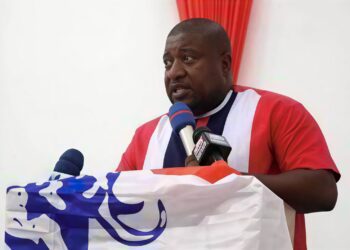
The former BNI Operative and Security Analyst, Richard Kumadoe, asserted that the extradition process was carried out in accordance with the law after all the necessary judicial and administrative requirements had been satisfied. The Security Analyst explained that officers at the point of departure would only permit an extradition after verifying a valid court order and confirming that every required authorisation had been completed.

According to Mr Kumadoe, the Attorney General, the Minister for the Interior and security officers stationed at the airport would have ensured that every legal requirement had been fulfilled before Frederick Kumi boarded the aircraft. From his perspective, any legal proceedings still pending before the courts could continue even in the absence of the accused because the extradition order had already taken effect.
“The officers at the point of departure look out for two things. There has to be a court order and every relevant procedure must be affirmed before the person is put on the flight.”
Richard Kumadoe
Turning to the wider investigation, the Former BNI Operative observed that the case demonstrated the growing collaboration between Ghanaian institutions and international investigative bodies. He noted that the Federal Bureau of Investigation led the operation with support from the Economic and Organised Crime Office, the Attorney General’s Department, the Ghana Police Service, the Cyber Security Authority, the Narcotics Control Commission and the National Intelligence Bureau.

In another development, Mr Kumadoe remarked that the multinational nature of the investigation suggested that additional arrests could emerge as inquiries continue across several jurisdictions. He added that cooperation among local and foreign security agencies has become increasingly important in addressing crimes that extend beyond national borders.
The Security Analyst further argued that Ghana has gradually become an origin, destination and transit point for several forms of organised criminal activity, particularly romance fraud, cybercrime and digital financial offences. He pointed to intelligence gathered over recent years which indicated that criminal networks involving some Ghanaians have been linked to activities affecting the United Kingdom, France, Canada and the United States.
Against this backdrop, Richard Kumadoe cautioned that such developments carry significant implications for Ghana’s international reputation and financial risk profile. He indicated that sustained cooperation between domestic institutions and foreign partners would remain essential as authorities intensify efforts to disrupt organised cybercrime and protect the country’s standing within the global financial system.
United Front Against Cybercrime Tightens Net Around Fraud Networks
The former BNI Operative and Security Analyst, Richard Kumadoe, argued that weak enforcement mechanisms have created opportunities for financial crimes to thrive over the years. Mr Kumadoe explained that gaps in compliance, limited prosecutions and inadequate asset recovery have collectively encouraged criminal enterprises to expand.
From his perspective, one of the major weaknesses lies in the reduced effectiveness of financial compliance systems established to monitor suspicious transactions. The Security Analyst observed that the Financial Intelligence Centre and the Bankers Compliance Association were created to strengthen oversight, although compliance standards later declined in several areas.
Furthermore, Richard Kumadoe contended that many investigations reach completion without progressing to prosecution, creating the impression that offenders are unlikely to face justice within the country. He remarked that this explains why foreign jurisdictions often seek extradition in cases involving international financial crimes.
“You investigate the matter all right, yet prosecutions never take place. That is why the Americans would want the suspects extradited to face justice.”
Richard Kumadoe

An equally significant issue, according to the Former BNI Operative, is the limited confiscation of assets acquired through criminal activity. He explained that proceeds from money laundering and related offences should be seized consistently to weaken organised criminal operations and remove the financial incentives behind such crimes.
The Security Analyst indicated that many victims of romance scams are elderly individuals living abroad who are deliberately targeted through carefully planned schemes. He added that criminal groups continue to improve their technical capabilities, allowing them to stay ahead of victims while making investigations more complex.
Meanwhile, Richard Kumadoe acknowledged that Ghana’s security environment has evolved through stronger cooperation among state institutions. He credited the Cyber Security Authority, the National Intelligence Bureau, the Ghana Police Service, the Criminal Investigations Department and the Economic and Organised Crime Office for strengthening intelligence sharing and coordinated investigations.
“The environment has changed, the times have changed and it is becoming very difficult for those involved in these crimes.”
Richard Kumadoe
Addressing the international dimension of such operations, Mr Kumadoe explained that foreign agencies such as the Federal Bureau of Investigation usually become publicly visible only after extensive groundwork has already been completed by local intelligence officers. He added that security agencies frequently monitor suspects, share intelligence with international partners and determine the most appropriate jurisdiction for arrests before coordinated operations are carried out.
Drawing attention to previous international arrests involving Ghanaians, the Former BNI Operative observed that security intelligence operations often extend across multiple countries and remain confidential until enforcement action begins. He emphasised that the combined efforts of domestic and foreign agencies now present greater challenges for organised criminal networks, signalling a stronger determination to protect Ghana’s reputation and strengthen confidence in its financial and security institutions.