National Security has imposed an immediate, sweeping ban on all mining operations within the Nweneso Number 1 and 2 communities, located inside the Atwima Kwanwoma District of the Ashanti Region, to aggressively arrest worsening ecological degradation.
The directive comes directly from the national secretariat following repeated security breaches where state-backed land restoration zones were systematically compromised by unauthorized actors.
To protect local resources, authorities have deployed a coordinated joint task force to clear out transient workers and establish a tight physical perimeter across the affected agricultural enclaves.
“This is agricultural land, but the extensive destruction caused by illegal mining has put the lives and livelihoods of residents at risk. We awarded the land to a contractor for reclamation, yet illegal miners have returned to destroy the reclaimed areas. Any machinery seized during this operation will not be returned.”
Ashanti Regional Deputy Security Coordinator, Alhaji Nje

The Ashanti Regional Deputy Security Coordinator, Alhaji Nje, confirmed the implementation of the enforcement strategy during an emergency site evaluation, revealing that the state had previously commissioned an extensive 100-acre land reclamation contract to restore topsoil integrity.
While the assigned environmental engineers successfully rehabilitated the initial 10 acres of degraded terrain, standard operating schedules were upended when localized illegal syndicates aggressively re-invaded the newly secured pastures, entirely reversing the physical restoration work.
In response to this recurring crisis, the regulatory freeze will remain fully active for a definitive two-week window, with official provisions already in place to extend the deployment indefinitely if local compliance is not sustained.
Heavy Penalties and State Seizures
As part of the stringent security protocols under this intervention, the regional security council has altered its standard asset management rules to permanently confiscate any heavy machinery operationalized during the current ban.
Alhaji Nje issued a direct legal advisory to regional operators, explicitly stating that “anyone found engaging in mining activities during the period would face the full rigours of the law” with zero opportunity for asset reclamation.
This regulatory adjustment targets the economic drivers of illegal excavation by ensuring that high-value capital assets, specifically hydraulic excavators and industrial wash plants, are permanently stripped from non-compliant corporate and individual owners.
By raising the financial risk of non-compliance, the state intends to establish a functional deterrent capable of shielding vulnerable river basins and agricultural corridors from speculative, nocturnal extraction cycles.
Contractors Face Invasions Amid Reclamation Work
The technical operations managing the vegetative and geographical restructuring of the territory face severe operational headwinds due to continuous, hostile territorial incursions by small-scale mineral extractors.
Robert Dambo, the Operations Manager of Danmark Prime Company Limited the specialized firm managing the land engineering project explained that the cyclical nature of these illegal incursions severely devalues their engineering milestones.

“We reclaim one section and move to another, only to return and find that illegal miners have destroyed the areas we have already restored,” Dambo noted, emphasizing that industrial soil remediation is highly vulnerable to premature mechanical disruption.
Despite the company successfully restoring 10 full acres since its initial mobilization nearly a year ago, project supervisors insist that achieving their broader year-end environmental targets remains fully contingent on sustained, uninterrupted security protection from the state.
Environmental Restoration and Soil Remediation Pathways
To fully understand how this enforcement action aids ecosystem recovery, it is crucial to analyze the specific soil remediation protocols designed for the Nweneso terrain.
When illegal mining teams excavate deep alluvial pits, they strip away the essential organic topsoil layer, completely destroying the sub-surface microbial networks that are critical for supporting local crop production.
The immediate enforcement ban halts this mechanical topsoil removal, allowing Danmark Prime Company Limited to implement deep-tier mechanical leveling without the constant threat of new, deep pits being dug nearby.
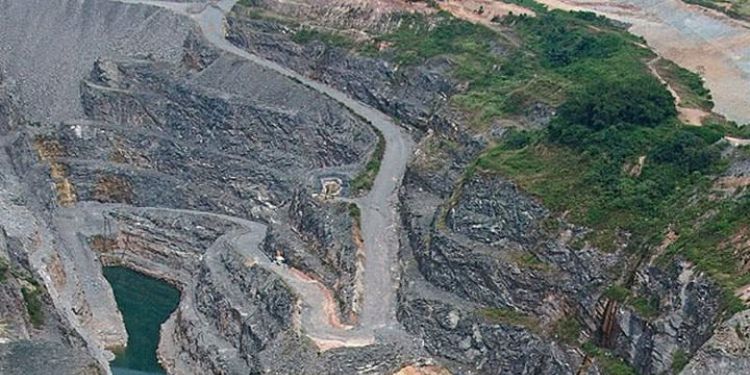
Once the physical landscape is leveled, agricultural engineers can introduce vital organic matter to rebuild the nutrient profiles of the land, slowly returning the soil to a state where it can support traditional food crops.
Furthermore, halting unauthorized operations is vital for preventing heavy metals from leaching into the local water table and nearby river basins.
Alluvial gold extraction typically relies heavily on the unregulated use of liquid mercury to separate fine gold particles from dense river sediments, which frequently leads to toxic runoff entering agricultural irrigation streams.
By strictly enforcing the two-week ban and permanently seizing active heavy machinery, the joint task force effectively cuts off the supply of toxic chemicals flowing into the Nweneso water system.
This strict protection window gives the surrounding aquatic ecosystems and local vegetation a critical chance to begin filtering out remaining contaminants, paving the way for a full, long-term environmental recovery.
READ ALSO: Ghana Wins Bid to Host Prestigious 2026 African Cashew Summit