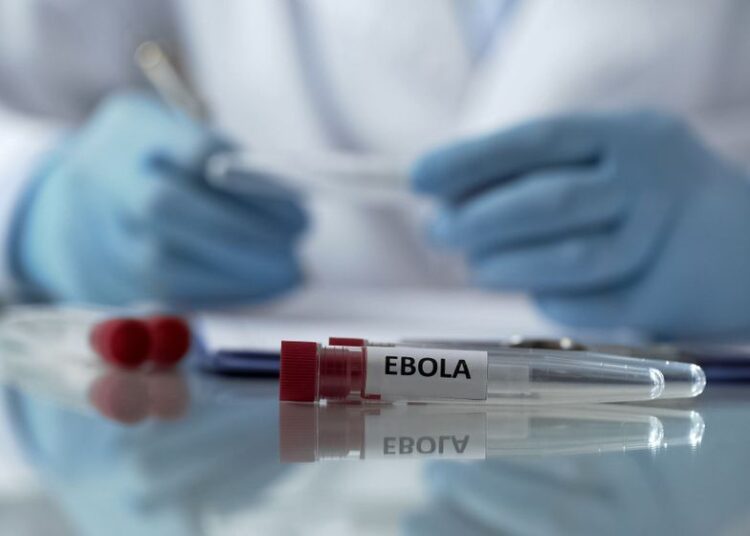
A new Ebola vaccine developed by scientists at the University of Oxford has moved closer to deployment after UK regulators approved human trials, marking a major step in efforts to combat a deadly outbreak of the virus in the Democratic Republic of Congo (DRC).
The vaccine is the first of four experimental vaccinations aimed at the epidemic to go into clinical trials. Researchers started working on it just eight weeks after a public health emergency was proclaimed on May 17. The action being taken as health officials battle to contain an Ebola outbreak that is concentrated in the eastern Democratic Republic of the Congo, where population mobility, violence, and displacement have made disease control measures more challenging.
625 persons have died as a result of the outbreak thus far, and 1,792 cases with laboratory confirmation have been reported. It is brought on by the Bundibugyo species of Ebola, which has produced outbreaks in the past but for which there are presently no licensed vaccines or targeted treatments.
According to scientists, the particular difficulties presented by the outbreak are reflected in the urgent need for a vaccine. There are six distinct species of Ebola, which scientists refer to as “sisters rather than twins” because, despite their similarities, each one calls for a different approach to treatment and vaccination.
The most recent outbreak is occurring in a region where there is insecurity, which makes it more difficult for medical professionals to identify contacts, administer treatment, and implement preventative measures. Fears that the virus could spread further in the absence of effective action have grown due to the mix of conflict, population migration, and restricted access to healthcare.
The Oxford vaccine trial will initially involve 50 healthy adults aged between 18 and 55 in the United Kingdom, with the first doses expected to be administered within weeks. Researchers are also working with partners in Uganda to prepare for possible clinical trials in Africa.
Dr Katrina Pollock, chief investigator of the trial at the University of Oxford, noted that the rapid development of the vaccine demonstrates the importance of preparing medical solutions before emergencies occur.
“We’re doing phase one (early stage) trials of new vaccines all of the time, precisely to be ready for exactly this kind of outbreak.”
Dr Katrina Pollock
Participants in the trial will be monitored for one year, allowing researchers to evaluate both the vaccine’s safety and its ability to trigger the desired immune response. Scientists expect to learn relatively quickly whether the vaccine is generating the protective reaction needed to defend against Ebola.
The rapid progress has been made possible because researchers are using the same vaccine platform that helped produce the Oxford/AstraZeneca Covid-19 vaccine during the coronavirus pandemic.
The technology uses a harmless chimpanzee cold virus, known as a viral vector, which has been genetically modified so it cannot cause infection. Scientists insert a small piece of genetic material from the target virus into the vector, allowing the body’s immune system to recognise and respond to the threat.
The Bundibugyo species of Ebola provides the genetic material used in the Ebola vaccine.
The vaccine cannot infect people with Ebola since it does not contain live Ebola virus. Rather, the genetic instructions stimulate the production of a single Ebola protein, which teaches the immune system to identify the virus and mount a defence prior to actual encounter.
Researchers liken the procedure to altering a letter’s contents while utilising the same delivery envelope.
The vaccine has already undergone successful testing in lab experiments with macaque monkeys and mice. The Serum Institute of India is producing it in accordance with clinical standards and has accumulated about 620,000 doses for possible future usage.
Following assessments of safety and early effectiveness data, the UK’s Medicines and Healthcare products Regulatory Agency (MHRA) approved the move into human testing.
Scientists Race Against Time as Ebola Vaccine Development Accelerates
The rapid creation of the Oxford vaccine represents a significant achievement in global health research, particularly because traditional vaccine development can take many years.
Vaccine researcher Alex Sampson indicated that the urgency of the Ebola outbreak allowed scientists to accelerate their work without removing key safety steps.
“As soon as we heard there was an outbreak, we were able to scale up really, really quickly.”
He stressed that the speed of development does not mean standards have been lowered.
“We’re doing all the same tests that we would normally do, just we’re able to do them in parallel, so it means a lot of teams working in lots of different places around the clock, but we’re still doing everything that we would normally.”
Alex Sampson
The approach mirrors the lessons learned during the Covid-19 pandemic, when international cooperation, advanced technology and simultaneous research processes helped scientists develop vaccines in record time.
The Oxford Covid vaccine was estimated to have saved millions of lives during the first year of global use, although concerns were raised over rare blood clotting events linked to the vaccine. Researchers acknowledge that similar risks must be carefully monitored during Ebola vaccine trials.
However, scientists warn the hazards of vaccine must be balanced against the dangers posed by the Bundibugyo type of Ebola, which kills approximately one-third of affected people.
Dr Pollock stated that researchers had carefully studied the ethical implications of testing a vaccination on healthy volunteers.
“Severe side effects are very rare,” she said, adding that scientists had thought “very deeply” about the consequences of conducting trials among people who are not infected.
“I want to stress that the Covid AstraZeneca vaccine was given to millions of people safely.”
Dr Katrina Pollock
The Oxford candidate is not the only vaccine under development for Bundibugyo Ebola. Three more vaccines are in the works, one of which is being developed by biotechnology company Moderna and uses its mRNA technology.
The International AIDS Vaccine Initiative and Public Health Vaccines, both located in the United States, are researching another vaccine strategy based on technology that has previously showed promise against a different Ebola species, though researchers say it will take longer to make.
READ ALSO: US, Iran Trade Attacks Over Strait Of Hormuz