

Vice President Professor Jane Naana Opoku-Agyemang has called on Ghana’s security agencies to adopt a friendlier approach toward citizens, stressing that public cooperation depends on trust rather than intimidation. She made the remarks during a familiarisation visit to the Ministry of Interior and its agencies.
Addressing officials at the Ministry, the Vice President said security personnel must communicate clearly with the public about the reasons behind their actions, particularly when dealing with citizens who fall outside the law.
“We must be friendly. We must put ourselves out there for them to know that it’s for their benefit that we exist. So I just want to put out there, so we don’t exploit people, we don’t intimidate people unnecessarily, but we explain the basis of our actions so that those of us who fall outside of the regulations will know that we deserve some kind of treatment”
Vice President Professor Jane Naana Opoku-Agyemang
Security as the Foundation of Development
The Vice President described security as a fundamental requirement for national progress, arguing that other development goals depend on a stable and secure environment. She referenced the government’s 24-hour economy agenda as an example of an initiative that relies on a secure foundation to succeed.

She acknowledged the sensitive nature of security work, noting that the actions of officers have a direct and personal impact on the lives of ordinary citizens. “My friends, your work is very, very important, and your work affects us in very, very intimate ways. But we know that you will rise to the occasion,” she said.
Law Alone Cannot Shape Public Behaviour
Turning to the limits of legislation, the Vice President argued that laws alone cannot instill discipline or good conduct among citizens. She said the country must invest in public education to complement legal enforcement, pointing to the difference in behaviour Ghanaians often display when living abroad compared to at home.
“Whatever it is, you know, I hear the rule of law a lot. Yes, we can legislate many, many things, but you and I know that we will not be able to legislate morality. How do you do that? So that’s why I’m raising the issue of public education”.
Vice President Professor Jane Naana Opoku-Agyemang
She challenged the tendency to generalise negatively about Ghanaian conduct, suggesting that behaviour is shaped by environment and systems rather than fixed national character.
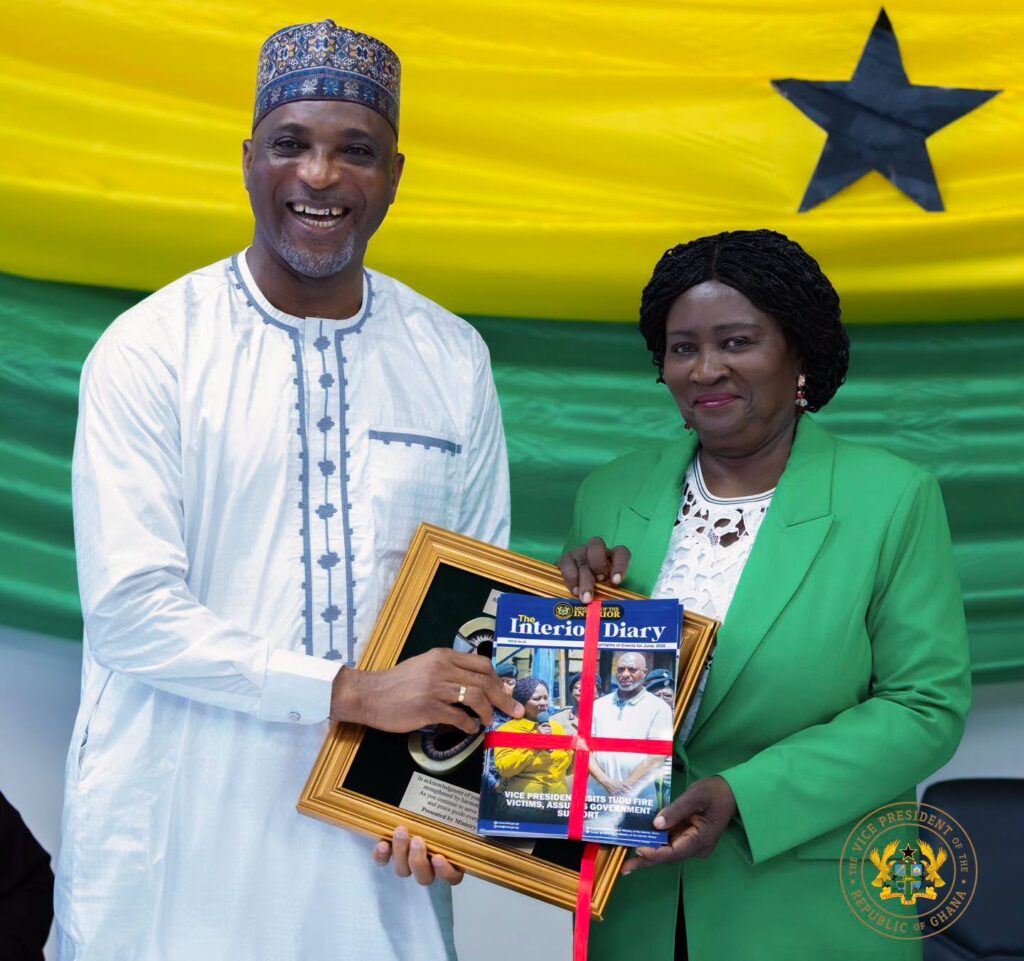
“Every time we say, oh, you know, Ghanaians are this or Ghanaians are that, take the same Ghanaians to another country. Why do you think they behave well? So we can do the same at home, and we need all of us to come on board”.
Vice President Professor Jane Naana Opoku-Agyemang
A Call for Collective Effort
The Vice President closed her remarks by commending the work already done by the Ministry of Interior and its agencies, while pledging government’s continued backing for their operations. She framed the relationship between government and security agencies as one of mutual support in pursuit of a shared national goal.
“We want you to understand that we are here. We will hold your back. We will support you. You will also support us. We are all in this together to realize the vision of our president and to drive the mission of our country”.
Vice President Professor Jane Naana Opoku-Agyemang
She thanked officials for their engagement during the visit and expressed confidence in the direction of the country’s security sector.
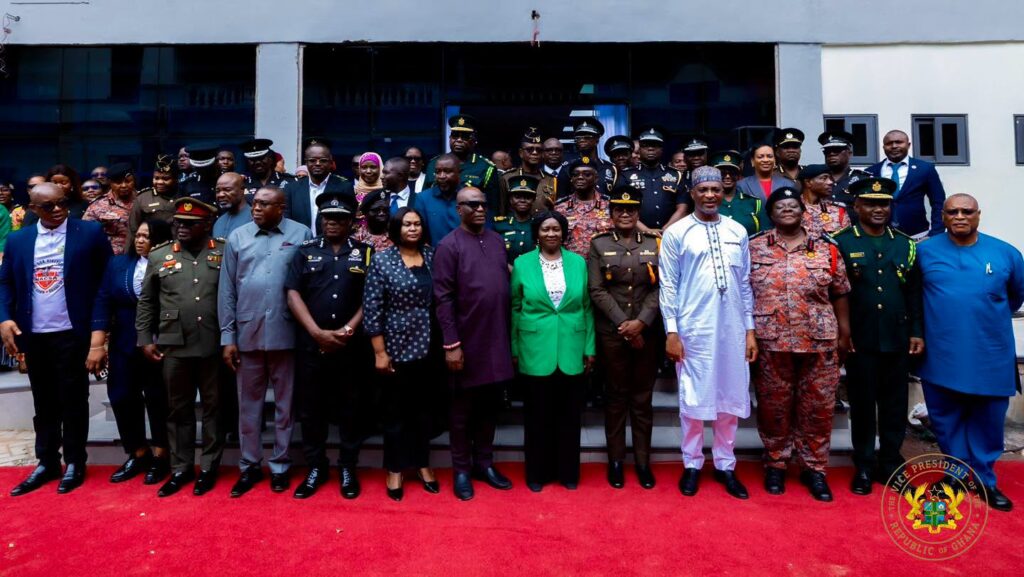
The Vice President’s remarks came during a broader familiarisation visit to the Ministry of Interior, where Interior Minister Muntaka Mubarak Mohammed had earlier detailed significant logistical support given to security agencies over the past year, including new vehicles, equipment upgrades and expanded operational capacity across the Police, Prisons, Fire, Immigration and Narcotics Control services.
Her call for a more community-oriented approach to policing suggests government intends to pair its logistical investments with a renewed emphasis on public trust and behavioural reform, positioning both enforcement and education as central pillars of its security strategy going forward.