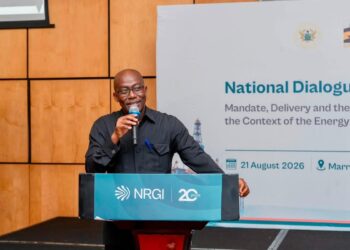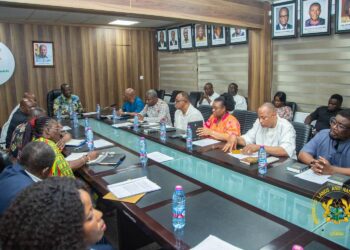
The Ghana Gold Board (GoldBod) has presented a cheque of GH¢12.65 million to the Narcotics Control Commission (NACOC) as a reward for the agency’s pivotal role in a massive, high-risk security operation that took place in 2025.
This significant financial presentation represents exactly 50% of the total proceeds realized from the public sale of 17 high-purity gold bars, which were successfully confiscated from a network of illicit mineral traders.
The collaborative milestone not only highlights the growing integration between Ghana’s resource regulators and national security apparatus but also marks a turning point in the state’s aggressive strategy to disrupt underground networks that bypass local mineral processing and formal tax channels.
“This presentation underscores GoldBod’s unwavering commitment to rewarding credible intelligence, strengthening collaboration with state security agencies, and protecting Ghana’s gold resources through effective enforcement. Together, we are safeguarding Ghana’s gold for the benefit of present and future generations.”
Ghana Gold Board (GoldBod)

GoldBod Chief Executive Officer, Sammy Gyamfi, Esq., explained during the official presentation ceremony that this massive payout was executed in strict alignment with GoldBod’s established internal reward policy, which is engineered to incentivize both citizen whistleblowing and institutional bravery.
Under this regulatory framework, 10% of the gold sale proceeds is directly allocated to the primary informant whose credible, timely intelligence initiated the entire interdiction.
The remaining portion of the 50% institutional allocation is divided evenly; the GoldBod Board of Directors approved 20% to go directly to the individual NACOC officers who put their lives on the line during the high-stakes tactical raid, while the final 20% was presented to NACOC as a corporate entity to offset the operational wear and tear on its vehicles, intelligence assets, and personnel.
Direct Security Incentives and Institutional Mobilization
The financial windfall presented to NACOC represents a critical shift from traditional top-down budgetary models to a self-sustaining, performance-based enforcement paradigm.
In the security landscape of West Africa, state agencies are frequently constrained by severe logistical deficits, including a lack of off-road tactical vehicles, specialized communication systems, and modern forensic tools.

By directly funneling 20% of the recovery proceeds straight back into NACOC’s corporate accounts, GoldBod is effectively transforming law enforcement from a drain on state resources into an agency capable of self-funded expansion.
Furthermore, the direct 20% allocation to the active-duty tactical officers addresses a fundamental vulnerability in resource security: the high temptation of bribery.
Securing illicit gold shipments of this magnitude often places front-line officers face-to-face with wealthy cartels offering massive payoffs to look the other way.
Directly rewarding the officers who “risked their lives during the operation” with formal, legal, and life-changing financial payouts sets a powerful precedent.
This policy aligns the personal financial welfare of the officers with their professional integrity, dramatically boosting morale and building an organizational culture that rejects corruption in favor of state-backed rewards.
Dismantling Illicit Cartels Through Intelligence Networks
The third pillar of this reward framework the 10% cut allocated to the confidential informant is perhaps the most lethal weapon against the illicit gold trade.
Illicit gold networks are notoriously insular, relying on tight-knit circles of trust to move heavy assets across borders undetected. Breaking into these networks using standard patrol methods is incredibly difficult and highly inefficient; success relies almost entirely on human intelligence.
By publicly demonstrating that a single high-quality tip can yield over a million Cedis in legal, tax-free rewards, GoldBod is effectively weaponizing the cartels’ own networks against them.

This policy creates an environment of intense paranoia within smuggling rings, as any associate, driver, or warehouse worker could instantly become a multi-millionaire by reporting the operation to GoldBod.
The resulting distrust slows down illegal transactions, increases the cost of smuggling logistics, and makes the entire underground gold trade in Ghana highly volatile and deeply insecure for criminal operators.
Strengthening Inter-Agency Synergy in Resource Protection
This high-profile hand-over represents a highly successful blueprint for inter-agency cooperation in Ghana’s broader economic defense strategy.
Historically, resource regulators and narcotics enforcement agencies operated in isolated silos, occasionally clashing over jurisdictional boundaries.
By linking mineral conservation with NACOC’s tactical enforcement capabilities, the state has forged a formidable joint-force model.
This structural synergy allows the regulatory oversight of GoldBod to be seamlessly backed by the armed, rapid-response capabilities of national security forces.

As Major General Maxwell Obuba Mantey pointed out, this sustained synergy is vital to “continue working closely with GoldBod to combat illegal gold trading.”
Moving forward, this collaborative template can be scaled across other sectors of the economy, such as logging, maritime fishing, and cocoa farming, where illicit actors continuously bleed the state of tax revenue.
By turning confiscated illegal goods into direct, liquid funding for the very agencies that seize them, Ghana is building a highly resilient, self-financing cycle of national resource protection.
READ ALSO: School Connect To Bring New Era Of Programme Monitoring — GSFP Coordinator