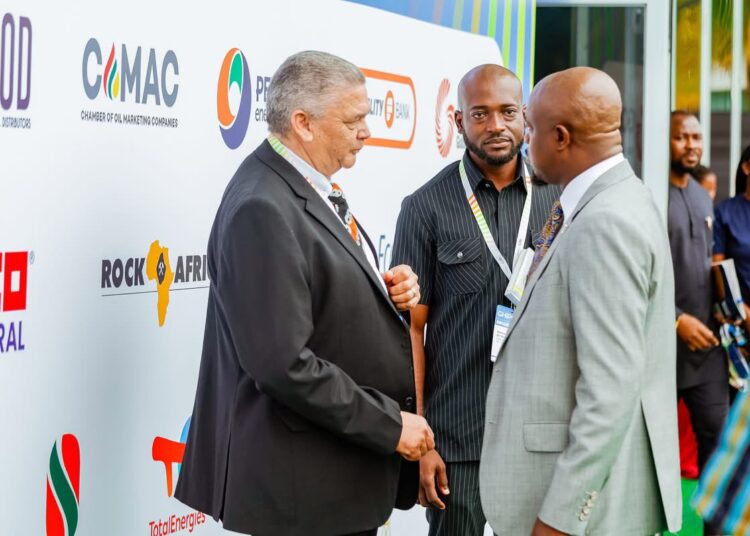
Industry leaders rally behind investment, local value addition and regional energy integration. Ghana’s ambition to position itself as West Africa’s leading energy and petroleum hub took centre stage today as policymakers, regulators, investors and industry executives convened in Accra for the opening of the two-day Ghana International Petroleum Conference (GHiPCON) 2026.
Held at the Palms Convention Centre, the conference has brought together senior government officials, petroleum regulators, international oil companies, development partners and private sector players to deliberate on the future of Ghana’s upstream and downstream petroleum industries at a time when the country is pursuing sweeping reforms across the energy sector.
The event comes amid renewed efforts by the government to reverse declining crude oil production, deepen local refining capacity, attract fresh investment into petroleum infrastructure and position Ghana as a strategic energy gateway for the West African sub-region.
Delivering the welcome address, Chief Executive Officer of the National Petroleum Authority (NPA), Godwin Edudzi Tameklo, Esq., said the conference represented more than an industry gathering, describing it as an opportunity to strengthen collaboration and shape the future of Ghana’s petroleum sector.
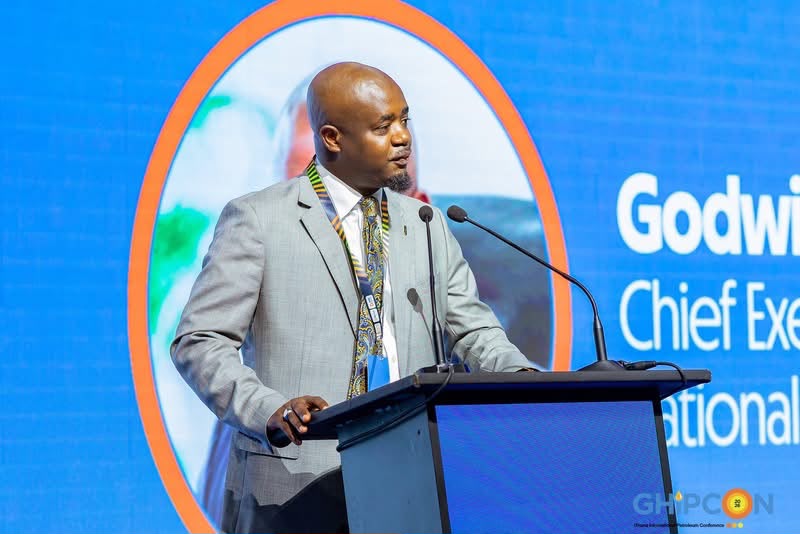
Our greatest resource is not only in the petroleum products we regulate but the human capital that drives the industry.
Mr. Godwin Edudzi Tameklo, Chief Executive Officer of the National Petroleum Authority
The NPA Chief Executive stressed that sustainable growth in the petroleum sector would depend not only on infrastructure and investment but also on strengthening institutions, technical expertise and regulatory capacity across the industry.
Government outlines regional energy vision
The opening session also featured remarks from the Minister for Energy and Green Transition, Dr. John Abdulai Jinapor, who outlined government’s broader strategy to transform Ghana into a regional energy and petroleum centre capable of serving both domestic and neighbouring markets.
According to the Minister, Ghana’s energy transformation agenda extends beyond increasing production to creating an integrated petroleum value chain that generates greater economic value within the country.
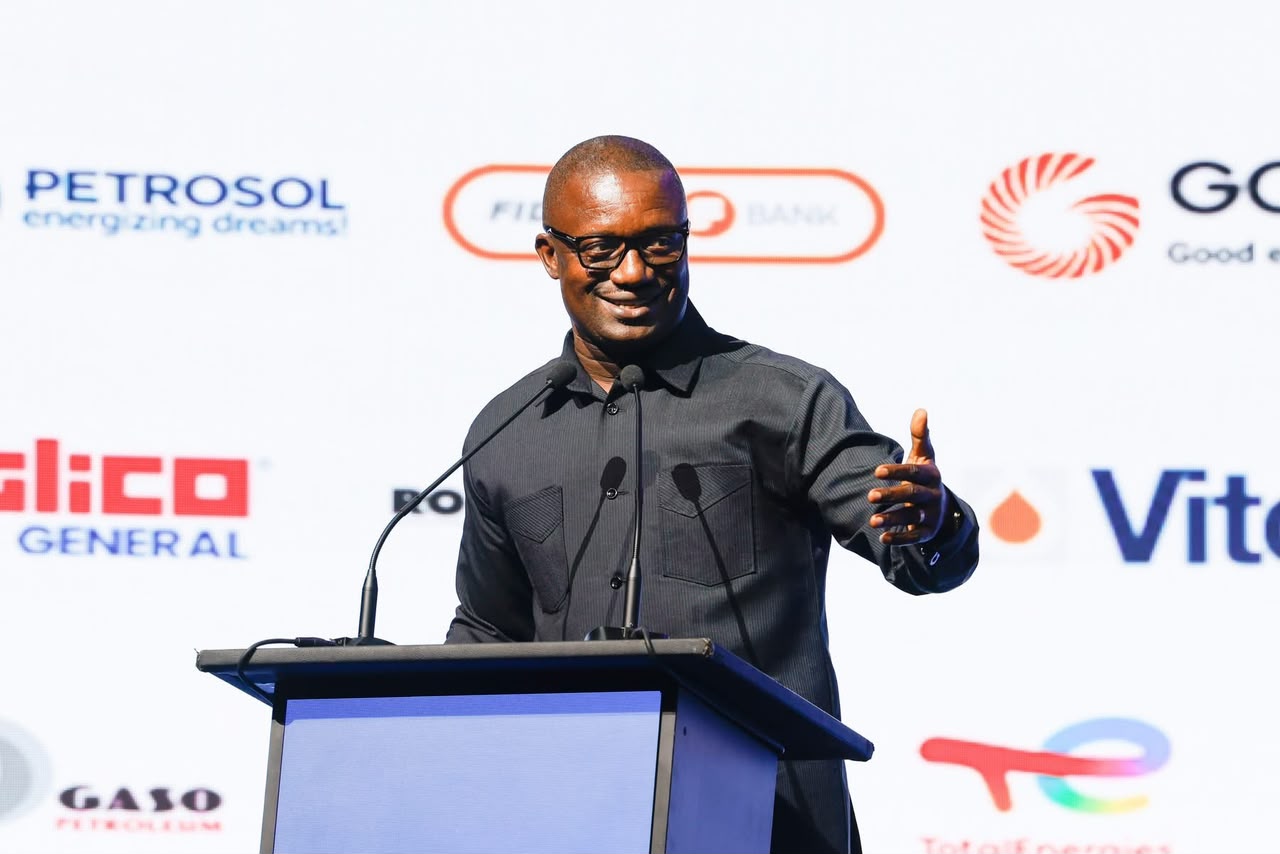
Together, we can position Ghana as the energy and petroleum hub of choice in West Africa.
Dr. John Abdulai Jinapor
His remarks reinforce the government’s recent policy direction, which has placed increasing emphasis on expanding domestic refining capacity, encouraging value addition and strengthening energy infrastructure to support industrialisation and regional trade.
The Minister has repeatedly argued that Ghana must maximise the economic benefits of its hydrocarbon resources by processing more petroleum products locally rather than relying heavily on imports of refined fuels.
That strategy has gained momentum following government decisions to allocate Jubilee crude for domestic refining while supporting expansion plans at existing refining facilities and private-sector investments in downstream infrastructure.
Industry meets at a critical moment
This year’s conference comes at a pivotal time for Ghana’s petroleum industry.
The country is attempting to reverse years of declining crude oil production while simultaneously pursuing energy transition policies that promote renewable energy without undermining the role of petroleum in supporting economic growth and energy security.
Government has also announced plans to accelerate investment in gas infrastructure, renewable energy, electricity transmission and downstream petroleum development as part of its wider industrialisation agenda.

Industry observers note that attracting long-term investment into exploration, production, refining and storage infrastructure will require continued regulatory certainty and stronger collaboration between government agencies and private investors.
Against that backdrop, GHiPCON provides a platform for discussions on investment opportunities, policy reforms, technological innovation, financing and regional cooperation.
The conference also offers an opportunity for Ghana to showcase ongoing reforms aimed at improving investor confidence across the petroleum value chain.
Local value addition takes centre stage
One of the recurring themes emerging from government policy over recent months has been the need to retain more value from Ghana’s petroleum resources within the domestic economy.
Officials have increasingly argued that producing crude oil alone is insufficient if refining, petrochemicals, logistics and associated industries continue to develop elsewhere.
Instead, policymakers are seeking to build an integrated petroleum ecosystem capable of supporting industrial growth, creating skilled employment and reducing dependence on imported refined products.
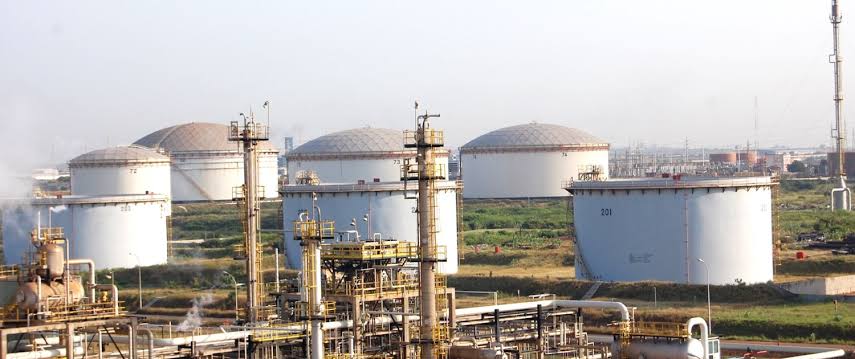
That vision aligns with broader efforts to develop new refining capacity, expand petroleum storage infrastructure and strengthen Ghana’s position as a distribution centre for petroleum products across West Africa.
Industry experts believe achieving those objectives will require significant capital investment alongside regulatory stability and improved regional connectivity.
Regional collaboration expected to dominate discussions
The conference is also expected to examine the growing importance of regional energy cooperation.
As African countries pursue greater energy security and intra-African trade under the African Continental Free Trade Area (AfCFTA), petroleum infrastructure is increasingly viewed as a strategic asset capable of supporting regional economic integration.

Participants are expected to discuss issues including fuel supply security, regulatory harmonisation, petroleum financing, gas utilisation, local content development and investment opportunities across the energy value chain.
For Ghana, these discussions are particularly significant given ongoing efforts to strengthen ties with neighbouring countries while positioning the country as a preferred destination for energy investment.
Platform for investment and policy dialogue
Beyond technical discussions, GHiPCON serves as one of Ghana’s flagship petroleum industry gatherings, bringing together decision-makers responsible for shaping the future direction of the country’s energy sector.
The presence of senior government officials, regulators, international investors and petroleum executives reflects growing recognition that collaboration will be essential to addressing the sector’s evolving challenges.
While global energy markets continue to navigate geopolitical uncertainty, financing constraints and the transition towards lower-carbon energy systems, Ghana is seeking to balance energy transition commitments with the need to maximise the value of its existing petroleum resources.
The conversations taking place at this year’s conference are therefore expected to influence policy thinking around investment, regulation, infrastructure development and regional energy cooperation in the months ahead.
With government reaffirming its ambition to make Ghana the energy and petroleum hub of West Africa, the outcomes of GHiPCON 2026 are likely to shape not only the country’s petroleum industry but also its broader industrial and economic development agenda.
READ ALSO: Healthcare Is a Serious Challenge in Juapong – Torgbe, Agbohla VI