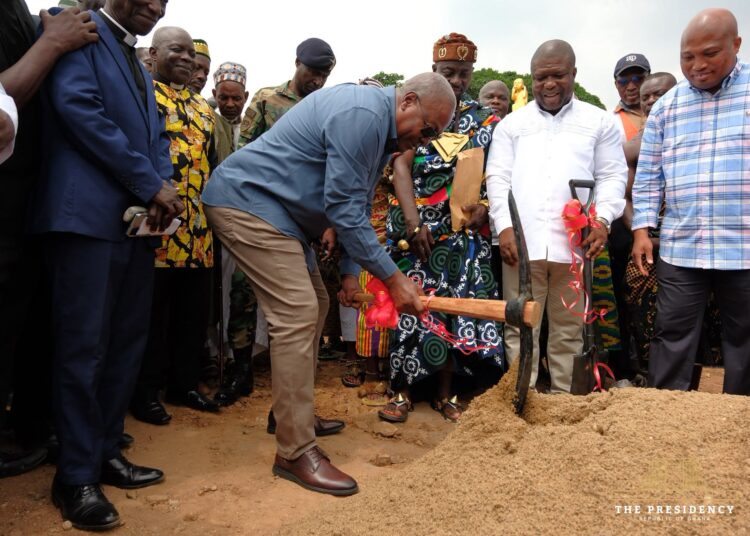
President John Dramani Mahama has cut the sod for the construction of a modern 24-hour economy market at Juapong in the North Tongu District, marking the opening project of his ResettingGhana Tour through the Volta Region.
The President described the town as a longstanding centre of industry, agriculture and commerce, positioned strategically along the Volta River as a gateway for trade and investment.
Speaking at the ceremony, President Mahama highlighted the agricultural strength of communities surrounding Juapong, noting their role in producing maize, cassava, rice, vegetables and other food crops that contribute significantly to national food security.
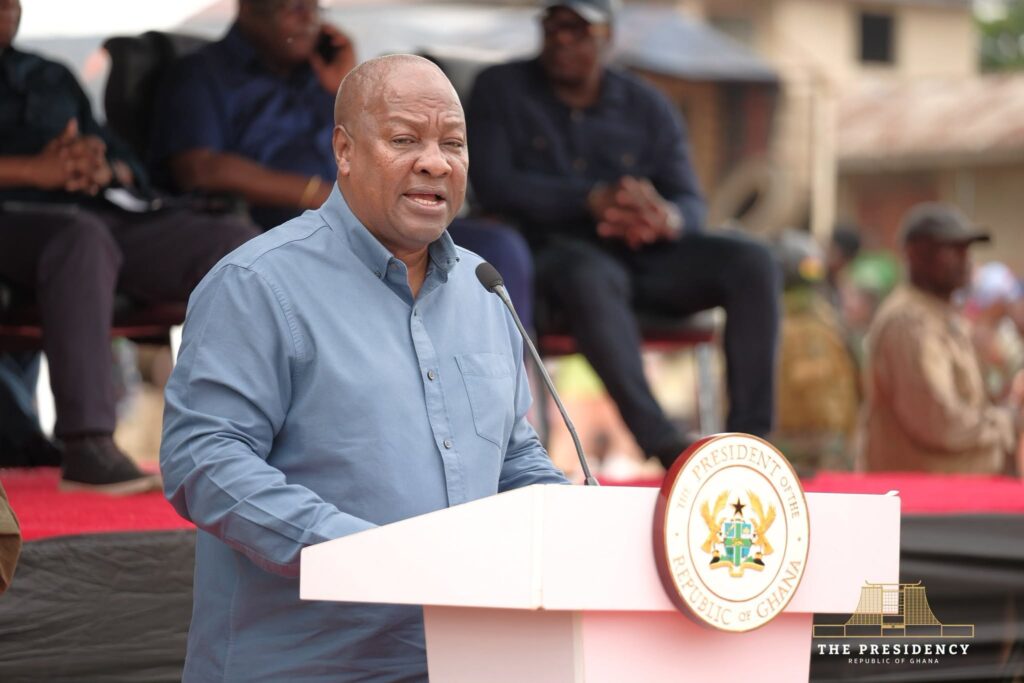
The President explained that the facility being constructed goes far beyond a conventional trading space. He described it as a modern enterprise hub designed to support aggregation, storage, processing, packaging, financial services, digital commerce and efficient distribution.
“The market whose construction we are beginning today has been conceived as far more than a place for buying and selling.
“It is being developed as a modern enterprise hub that will support aggregation, storage, processing, packaging, financial services, digital commerce, and efficient distribution, creating the conditions for businesses to expand, become more competitive, and generate sustainable employment”.
President John Dramani Mahama
He explained that the facility would directly benefit farmers by improving access to organised markets and reducing post-harvest losses, while giving traders a cleaner and more efficient environment to operate within.
He added that transport operators, artisans, food processors and other service providers would also gain from increased commercial activity generated by the project.
Part of a Nationwide 261-District Rollout
The Juapong project forms part of a larger national programme to construct 24-hour economy model markets across all 261 districts in Ghana, ensuring that every district gains the infrastructure needed to support production, trade and enterprise.
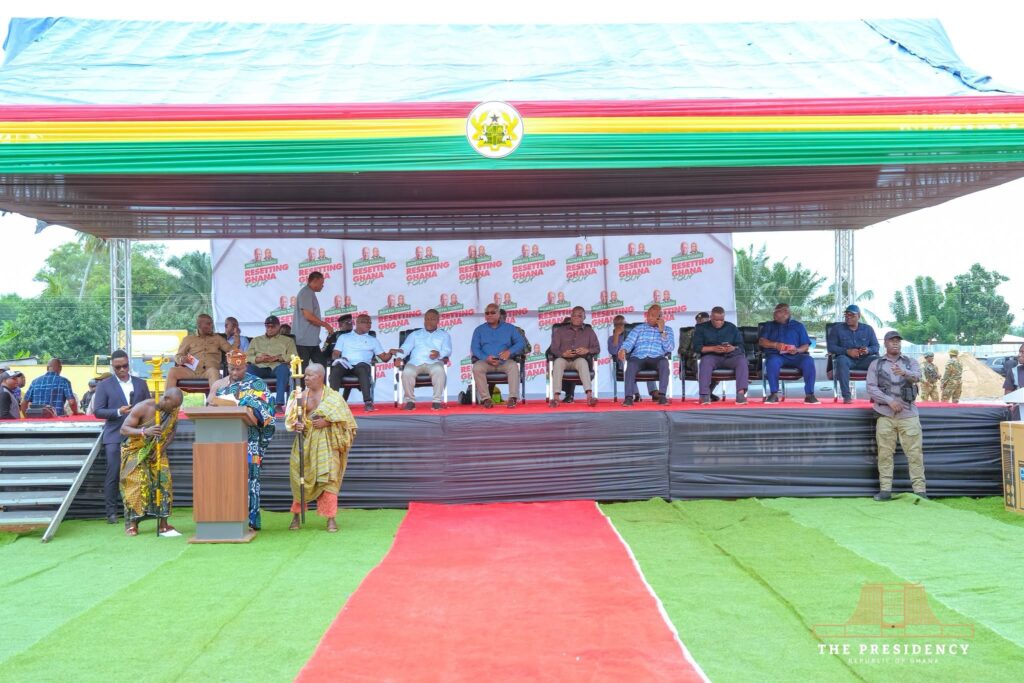
Within the Volta Region alone, all 18 districts are set to benefit from the initiative, with the Juapong ceremony marking the beginning of the regional rollout.
According to the President, these markets will eventually form an integrated commercial network connecting producers to markets, strengthening local value chains, promoting inter-regional trade, and reinforcing the Volta Region’s position as a major centre of agricultural commerce and industrial growth.
Citing remarks from the Minister of Local Government and Religious Affairs, Hon Ahmed Ibrahim, President Mahama noted that Juapong’s market ranks among the largest under the initiative.
The markets are classified into four categories, with Category 4 typically reserved for metropolitan assemblies due to their population size. Juapong, despite not holding metropolitan status, has been designated to receive a Category 4 facility. “I’m happy to announce that Juapong, even though not a metropolitan assembly, is getting a Category 4 market,” he said.
A Facility Built for Every Kind of Trader
The President walked residents through the extensive features planned for the market, beginning with 100 lockable stores and 150 sheds or stalls to accommodate different scales of business.
Security and emergency services will operate permanently within the complex, with a dedicated police post staffed around the clock and a fire station providing on-site protection.
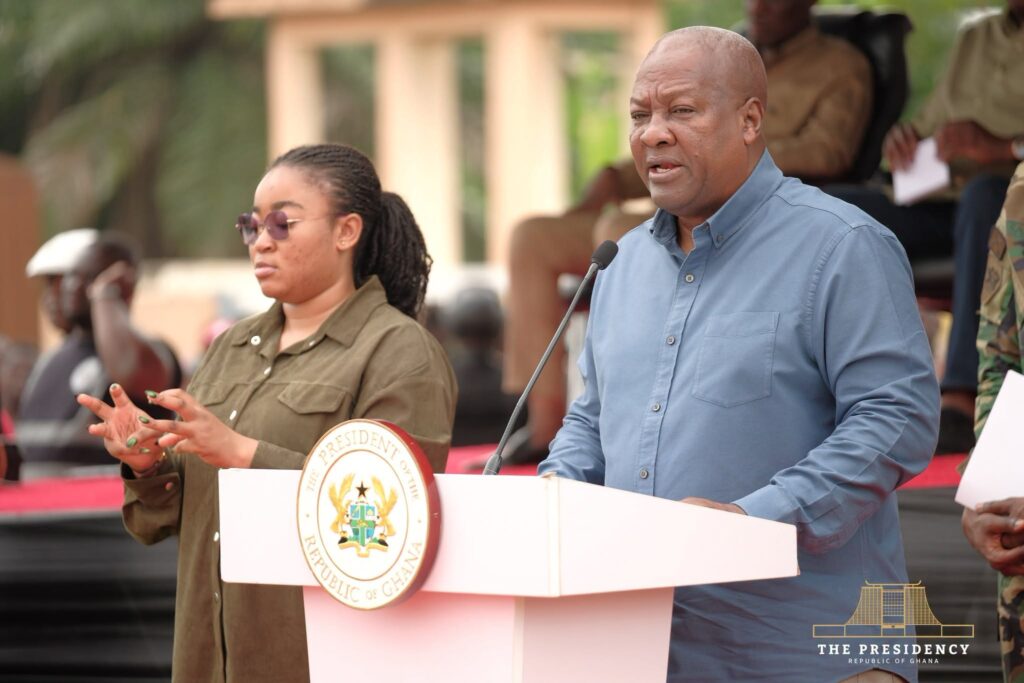
Social services have also been built into the market’s design. A daycare centre will allow traders with young children to continue working without disruption, while a clinic staffed with nurses and health professionals will attend to anyone who falls ill, supported by an on-site pharmacy for prescriptions.
A branch of the Women’s Development Bank will also operate within the market, alongside washrooms, toilets and shower facilities for traders. Storage and specialised trading needs have not been overlooked.
Ten warehouses will allow traders to securely store unsold goods overnight, while a dedicated butcher shop and cold store will serve meat traders, allowing unsold stock to be preserved for the following day.
A modern restaurant will offer a more formal dining option, complemented by ten food courts modelled on the traditional chop bar experience for those preferring more affordable options.
Beyond trading and dining, the market will house a supermarket, six guest rooms for traders unable to travel home after a long day, and a livestock bay designed for Fulani herders bringing cattle to sell.
Administrative functions will be handled from a dedicated office space, where a market administrator and staff will oversee cleanliness and enforce market regulations. A designated waste yard will support organised sanitation, ensuring garbage collected daily is properly managed rather than left scattered across the premises.
For traders unable to afford a stall or lockable shop, the market will also include an open retail area, allowing individuals to bring umbrellas and small tables to conduct business informally within the same organised space.
Measuring Success Beyond Working Hours
President Mahama used the occasion to clarify the underlying philosophy behind the 24-hour economy policy, stressing that its success would not be judged by how many hours people work but by tangible economic outcomes.
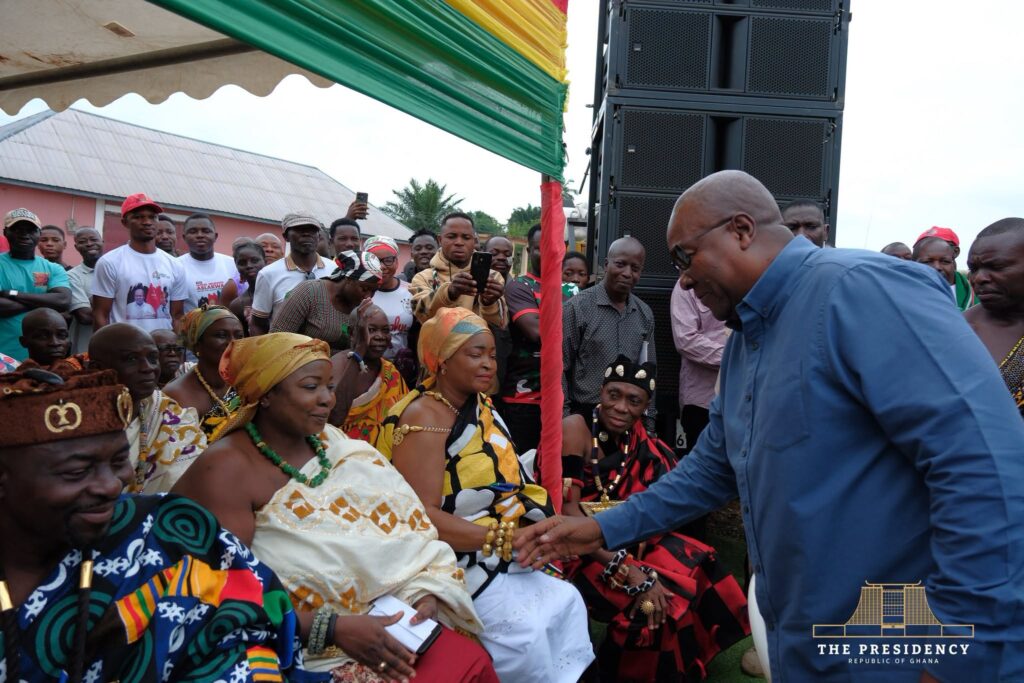
“The success of this policy will not be measured by the number of hours people work. It will be measured by the number of businesses that expand, the number of young people who secure meaningful employment, the number of farmers who earn better incomes, and the number of Ghanaian products that successfully compete within regional and international markets.”
President John Dramani Mahama
He described the initiative as an effort to remove bottlenecks preventing business growth by improving infrastructure, strengthening logistics chains, supporting agro-processing, expanding market access and encouraging investment across strategic sectors of the economy.
As construction begins in Juapong, the project stands as an early test case for how these model markets will function once completed across the Volta Region’s remaining 17 districts.
With its combination of trading infrastructure, social services and specialised facilities for different trader groups, the Juapong market reflects a broader government attempt to reimagine local markets as comprehensive economic hubs rather than simple trading grounds, setting a template for similar projects expected to follow across the country’s 261 districts.
READ ALSO: BoG Denies Direct Forex Interventions Throughout 2025