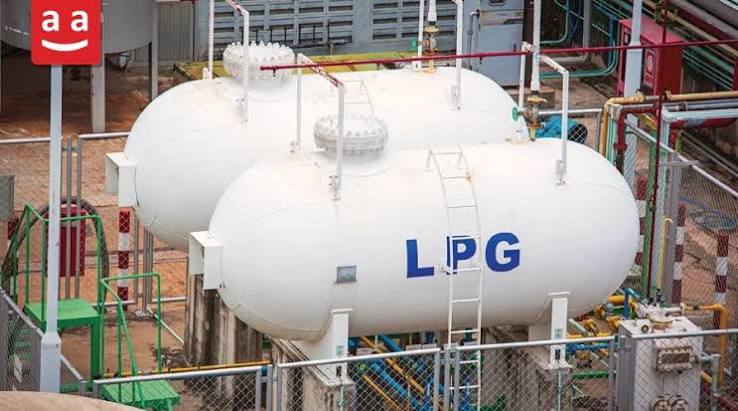
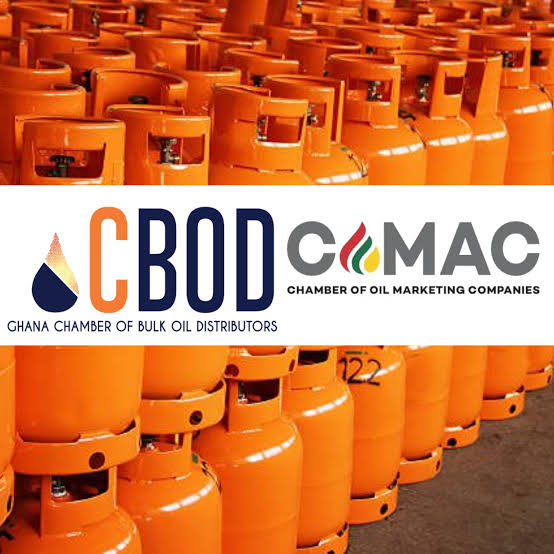
Higher liquefied petroleum gas (LPG) prices are once again placing Ghana’s clean cooking agenda under scrutiny, with the Chamber of Oil Marketing Companies (COMAC) urging government to review taxes on the product as households prepare for another increase in fuel costs.
The industry body argues that while international market forces continue to influence domestic prices, government retains control over one critical component of LPG pricing, taxes and levies, and should use that policy space to make the fuel more affordable for ordinary Ghanaians.
The renewed appeal comes as oil marketing companies prepare to adjust pump prices for the second pricing window of July. According to COMAC’s latest pricing outlook, petrol is expected to increase by between 3.79 and 5.31 per cent, diesel is projected to rise to about GH¢16.00 per litre, while LPG is expected to increase by between 1.10 and 1.30 per cent per kilogramme.
Although the projected increase in LPG prices is relatively modest compared to petrol and diesel, industry stakeholders warn that even marginal increases have significant implications for household energy choices, particularly among low-income families that are already struggling with the rising cost of living.
For Ghana, the debate extends beyond fuel pricing. It raises broader questions about whether fiscal policy is supporting, or inadvertently slowing, the country’s transition to cleaner household energy.
Clean cooking ambitions meet fiscal realities
Successive governments have promoted LPG as a cleaner alternative to charcoal and firewood, positioning it as a critical component of Ghana’s energy transition strategy.
Increased LPG adoption has been linked to reduced indoor air pollution, improved public health, lower pressure on forest resources and better living conditions, particularly for women and children who bear the greatest burden of traditional cooking methods.
However, COMAC believes the current tax structure undermines those objectives.
Chairman of the Chamber of Oil Marketing Companies, Gabriel Kumi, has consistently argued that governments across West Africa are sending mixed signals by encouraging cleaner cooking while imposing taxes that make LPG increasingly difficult for vulnerable households to afford.

LPG was introduced to reduce the cutting of trees for charcoal, but governments have rather imposed multiple taxes that have made the product expensive for consumers.
Gabriel Kumi, Chairman, Chamber of Oil Marketing Companies
Industry players argue that unless affordability improves, many households will continue to rely on charcoal and firewood despite the environmental and health risks associated with those fuels.
The concern comes at a time when Ghana continues to pursue ambitious climate commitments, including reducing emissions and promoting cleaner energy technologies across different sectors of the economy.
Global pressures, local decisions
The latest price adjustments reflect developments beyond Ghana’s borders.
According to COMAC, renewed geopolitical tensions, rising international petroleum prices and a slight depreciation of the cedi combined to reverse earlier expectations that fuel prices would decline during the second pricing window of July.
The Chamber noted that the exchange rate weakened from GH¢11.4333 to GH¢11.4970 to the US dollar during the pricing period, representing a 0.55 per cent depreciation.
International crude oil markets also experienced renewed volatility following heightened tensions around the Strait of Hormuz, one of the world’s busiest oil shipping routes.
Brent crude prices, which had previously declined, rebounded above US$84 per barrel amid renewed concerns over global supply disruptions.
Refined petroleum products also recorded increases on international markets, with diesel experiencing the largest jump, followed by petrol.
These developments inevitably filter into Ghana’s pricing formula, where international petroleum prices and exchange rates remain key determinants of domestic fuel prices.
However, industry experts argue that taxes remain one element entirely within government’s control.
According to cited reports, COMAC believes reviewing taxes on LPG could help cushion consumers from global market shocks while reinforcing national clean cooking objectives.
Affordability remains the missing link
Unlike petrol and diesel, LPG occupies a unique position within Ghana’s energy mix.
While transport fuels primarily support mobility and commercial activity, LPG has increasingly become a public health, environmental and social development issue.
Its affordability influences household welfare, cooking practices, forest conservation and indoor air quality.
The Chamber estimates that between 60 and 70 per cent of Africans still depend on firewood and charcoal for cooking.
In Ghana, COMAC maintains that LPG remains largely accessible to middle-income households, leaving many lower-income families unable to sustain regular cylinder refills.
The implications extend beyond household budgets.
When LPG becomes unaffordable, families rarely stop using fuel altogether.
Instead, they revert to charcoal and firewood, fuels that government has spent years attempting to replace through clean cooking initiatives.
Environmental experts warn that such behavioural shifts can increase pressure on forest reserves while slowing progress towards national climate goals.
The challenge therefore lies not simply in reducing fuel prices, but in ensuring that fiscal policy aligns with broader environmental and energy transition objectives.
Balancing revenue with energy transition
Government faces a difficult policy dilemma.
Fuel taxes contribute significantly to public revenue at a time when fiscal pressures remain intense.
Reducing taxes on LPG could affect short-term government revenues.
On the other hand, maintaining relatively high tax burdens on clean cooking fuel may undermine longer-term gains associated with reduced deforestation, improved public health and increased energy access.
Industry observers suggest the debate should move beyond calls for blanket tax removal towards a more targeted review of levies imposed specifically on LPG.
Such an approach could preserve critical regulatory and safety-related charges while reassessing taxes that primarily serve revenue-generation purposes.
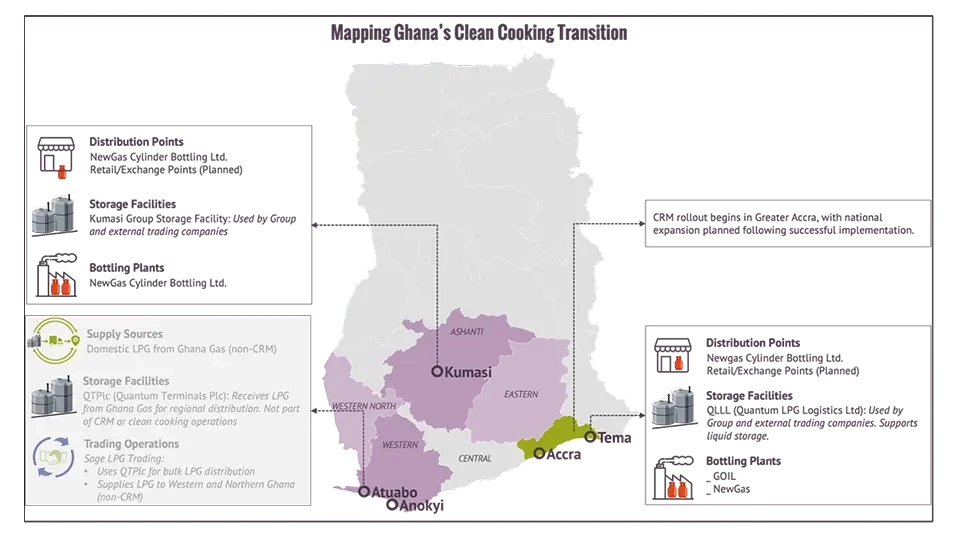
It could also complement ongoing efforts to strengthen Ghana’s Cylinder Recirculation Model, improve rural LPG distribution networks and expand access to cleaner cooking technologies.
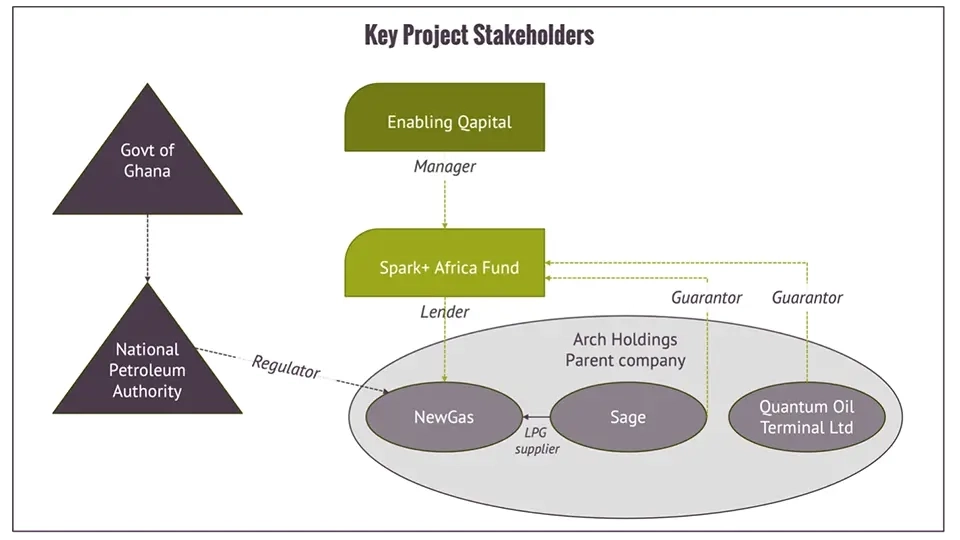
The National Petroleum Authority’s revised price floors reinforce expectations of higher fuel prices nationwide.
For the second pricing window of July, the Authority increased petrol and diesel price floors while also adjusting the LPG floor upward.
The adjustments underscore the continuing influence of global market conditions on domestic pricing.
Yet industry stakeholders insist that Ghana’s clean cooking strategy cannot depend solely on international price movements.
It must also be supported by deliberate domestic policy choices.
As Ghana accelerates its broader energy transition through renewable energy expansion, electric mobility and industrial decarbonisation, household energy deserves equal policy attention.
The success of the country’s clean cooking agenda will ultimately depend not only on awareness campaigns or environmental commitments, but also on whether ordinary households can consistently afford the cleaner fuels government encourages them to use.
For COMAC, the latest price adjustments have reopened a debate that extends far beyond petroleum pricing.
They have renewed questions about whether Ghana’s fiscal framework is adequately supporting its long-term energy transition goals, or making them increasingly difficult for many households to achieve.
READ ALSO: Banks Dump GH¢883.7 Million in Bad Loans