Parliament has given the green light to a $300 million credit facility between the Government of Ghana and the International Development Association (IDA) of the World Bank Group, unlocking financing aimed at reshaping access, quality and outcomes in the country’s secondary education system.
The facility, valued at US$300 Million will finance the Secondary Education for Transformation, Access, Relevance and Results for Jobs Project, known as STAR-Jobs, a wide-ranging initiative designed to expand access to quality secondary education while sharpening its relevance to the demands of the modern labour market.
Committee Chair Details Scope of the Facility
Presenting the report of the Finance Committee to the House, the Committee’s Chairman, Hon. Isaac Adongo, explained that the facility is structured to increase equitable access to secondary education across the country while tackling some of the sector’s most persistent structural challenges.
“The facility aims to increase equitable access to secondary education and eliminate the double-track system.”
Hon. Isaac Adongo
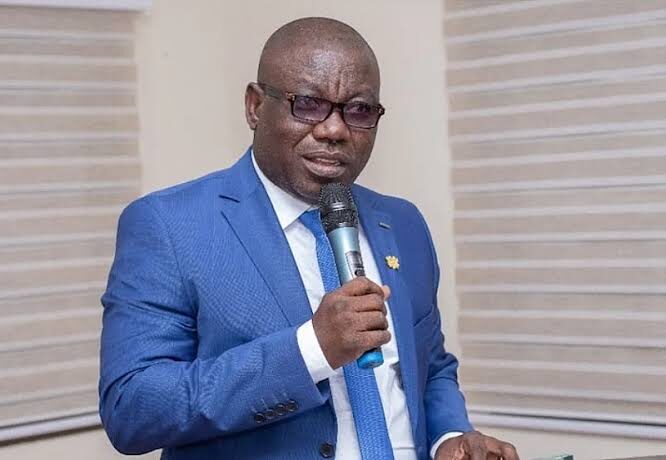
Hon. Adongo told the House that one of the project’s central objectives is the elimination of the double-track system, a scheduling arrangement introduced to manage overcrowding in secondary schools that has drawn criticism over its impact on instructional time and student welfare. Beyond addressing access, he said the facility would also work to improve the quality of teaching and learning delivered in classrooms nationwide.
He further explained that the intervention extends to Technical and Vocational Education and Training, noting that part of the funding is earmarked for strengthening the relevance of both secondary and TVET programmes so that they align more closely with what employers actually need.
“This intervention is expected to expand educational infrastructure, enhance learning outcomes, and equip students with practical skills needed for employment and entrepreneurship.”
Hon. Isaac Adongo
According to the Committee Chairman, the expected outcomes go beyond simply building more classrooms. He indicated that the project is designed to leave a lasting mark on how students transition from school into the workforce, with an emphasis on equipping graduates with skills that translate directly into jobs or self-employment opportunities.
Education Minister Welcomes Parliamentary Backing
Following the Committee’s presentation, the Minister for Education, Hon. Haruna Iddrisu, express appreciation for the approval, describing it as a significant step toward strengthening the country’s education architecture.
Iddrisu used the opportunity to reaffirm the government’s broader commitment to reforming the education sector, tying the newly approved facility to ongoing efforts to modernise how secondary education is delivered across Ghana.
“This funding will play a critical role in improving educational infrastructure and ensuring that students receive training that aligns with the needs of the modern economy.”
Minister for Education, Hon. Haruna Iddrisu
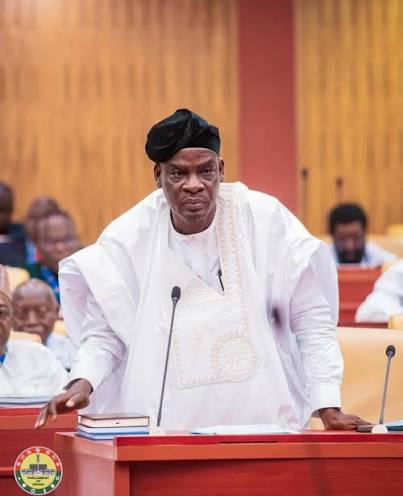
The Minister’s remarks framed the facility not as an isolated funding arrangement but as one component of a wider push to align Ghana’s education outputs with the realities of a fast-changing job market, where technical skills and adaptability are increasingly valued alongside traditional academic qualifications.
A Broader Push for Equitable Access
Taken together, the Committee’s report and the Minister’s remarks point to a project with ambitions that stretch well beyond infrastructure alone. By targeting the double-track system directly, the facility addresses a scheduling model that has affected millions of students since its introduction, often cited as a source of lost contact hours and strain on both learners and teachers.
The project’s focus on TVET also signals an attempt to shift perceptions of technical and vocational training, historically viewed by many Ghanaian families as a secondary option to purely academic pathways, into a more credible route toward stable employment.

With Parliament’s approval now secured, attention will likely turn to how quickly implementation begins and how the funds are distributed across the various components of the STAR-Jobs Project, from infrastructure upgrades to curriculum realignment and teacher support.
For now, both the Finance Committee and the Ministry of Education have signalled confidence that the facility represents a meaningful step toward a more equitable and job-ready secondary education system for the country.
READ MORE: Mahama Meets Wisconsin Governor to Strengthen Trade Partnerships