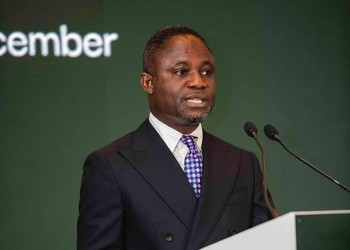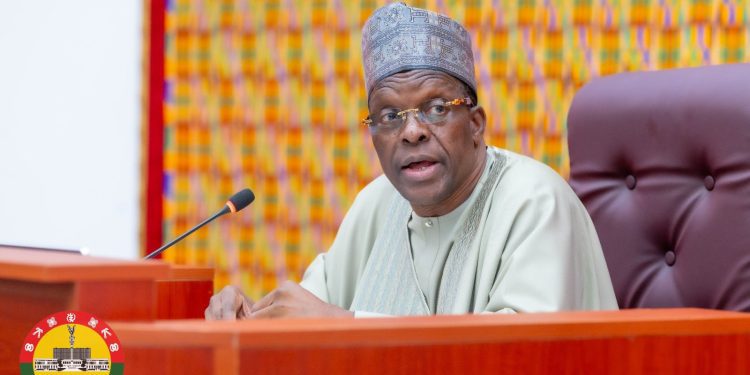
Speaker of Parliament, Rt. Hon. Alban Sumana Kingsford Bagbin, has called for urgent efforts to end the poverty of Ghana’s judiciary to enable the courts to meet the growing demands of constitutional democracy. Speaking at the Supreme Court’s anniversary lecture, Rt. Hon. Bagbin linked the strength of Ghana’s constitutional order to the ability of judicial institutions to function effectively and respond to the demands of a changing society.
The Speaker praised the Supreme Court for its contribution to Ghana’s constitutional development since the adoption of the 1992 Constitution. He credited the Court’s jurisprudence with strengthening constitutional supremacy, protecting fundamental rights and helping to preserve democratic stability.
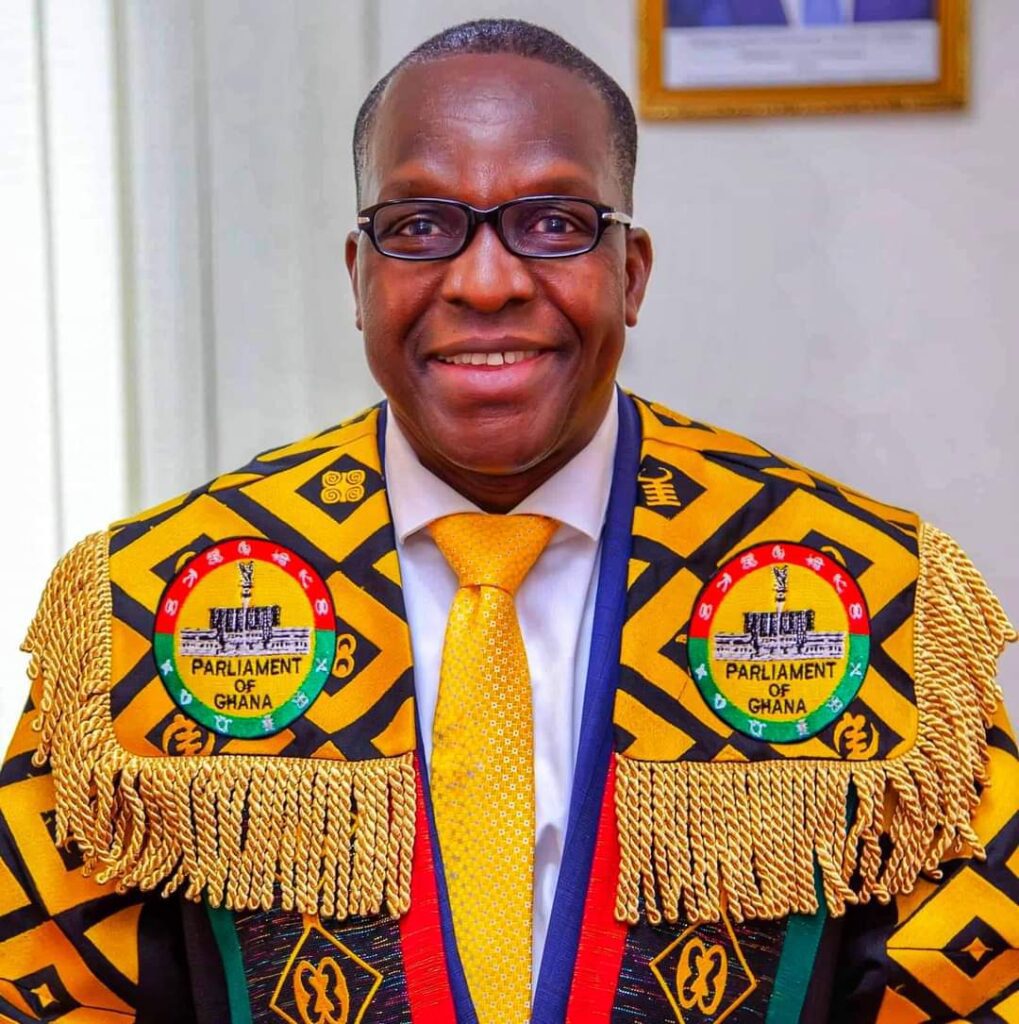
According to him, the Supreme Court has also played an important role in defining the relationship between the arms of government. Its decisions, he added, have helped reinforce public confidence in constitutional governance and clarified the responsibilities of state institutions.
Rt. Hon. Bagbin, however, pointed to the growing pressure on the Supreme Court as a matter requiring institutional attention. He explained that Parliament introduced reforms under its new Standing Orders to create mechanisms that could help deal with certain matters before they reached the apex court.
“They don’t want more; they want less. Yet every day, their cap in hand, going before the Supreme Court for handouts.”
Rt. Hon. Alban Sumana Kingsford Bagbin
The Speaker disclosed that Parliament has established a Human Rights Committee supported by a technical department comprising experienced legal professionals. He also disclosed plans to appoint a Commissioner on Ethics and Standards with qualifications equivalent to those required of a Court of Appeal judge.
These measures, he indicated, have been designed to provide additional institutional support and create a buffer for the Supreme Court. The reforms would also help ensure that every matter arising within the country did not automatically become a case for the highest court.
Rt. Hon. Bagbin placed the parliamentary reforms within the wider development of Ghana’s constitutional system. He argued that the work of strengthening democracy required cooperation among the different institutions responsible for protecting the constitutional order.
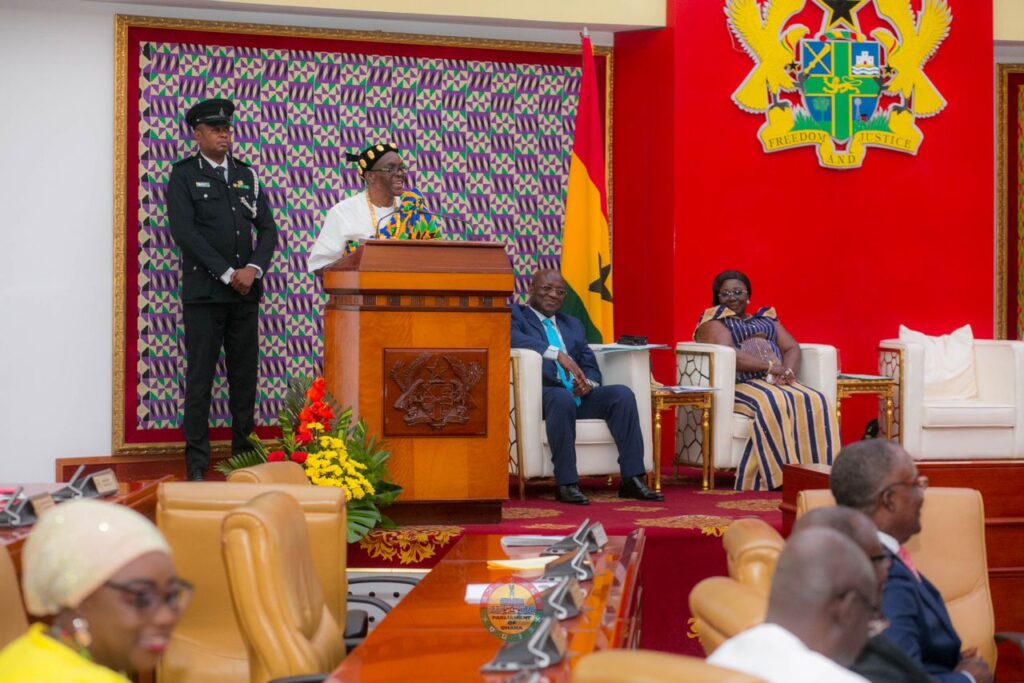
The Speaker also recognised the contribution of the Supreme Court to the survival of constitutional democracy. He noted that the Court had confronted difficult constitutional questions with openness, wisdom and courage while continuing to adapt to the demands of institutional renewal.
His assessment placed the Supreme Court at the centre of Ghana’s democratic journey. Through its interpretation of the Constitution, the Court has helped shape the boundaries of state power and protect the principles upon which constitutional government rests.
Future Challenges Demand Stronger Courts And Constitutional Renewal
Rt. Hon. Alban Sumana Kingsford Bagbin, also added that Ghana’s judiciary requires stronger institutional support as emerging technologies and new social challenges create complex constitutional questions. He argued that the Supreme Court of the future would face issues that the framers of the 1992 Constitution could scarcely have anticipated.
The Speaker identified artificial intelligence, digital governance, cybersecurity and data protection among the areas likely to generate new legal questions. Biotechnology, environmental justice, climate change, regional economic integration and cross border commerce, he added, would also test the ability of constitutional institutions to respond to rapidly changing realities.
Rt. Hon. Bagbin argued that each generation carries a responsibility to hand constitutional institutions to the next generation in a stronger condition. He therefore urged Ghanaians to view constitutional anniversaries as opportunities for renewal and preparation for the challenges ahead.
The Speaker connected the future of the judiciary to the wider question of constitutional responsibility. He argued that the Supreme Court would have to interpret the Constitution in relation to issues that were largely unknown when the current constitutional order emerged.

That responsibility, he noted, would require the Court to remain faithful to its central mission. The judiciary, he explained, must continue to safeguard the rule of law, preserve the constitutional order and administer justice impartially.
Rt. Hon. Bagbin also appealed for greater support for the judiciary. He argued that inadequate resources could weaken the ability of judicial institutions to carry out their constitutional responsibilities effectively.
“The poverty of the judiciary must end if we actually want them to perform. This is another time for us not to blink, but to make sure we set the rule of law right.”
Rt. Hon. Alban Sumana Kingsford Bagbin
The call for increased support placed the judiciary’s financial and institutional needs at the centre of the discussion. Rt. Hon. Bagbin urged political leaders to recognise the demands facing the courts and respond with the resources required for effective justice delivery.
He also cautioned against attacks on the judiciary when judges perform their constitutional duties. The Speaker argued that institutions entrusted with interpreting and enforcing the Constitution must be allowed to carry out that responsibility within the framework of the rule of law.
READ ALSO: Court Dismisses Dame’s Bid to Strike Down Hanan Charge Sheet