
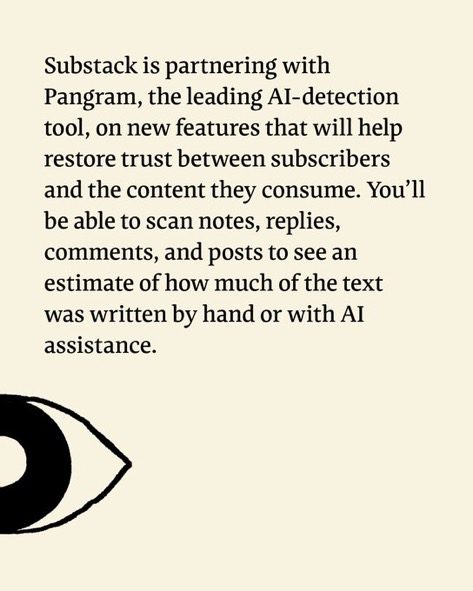
In a significant move to preserve authenticity in online publishing, Substack has integrated an AI detection feature powered by Pangram, allowing readers to scan posts, notes, comments, and replies for signs of artificial intelligence assistance.
The initiative, announced by CEO Chris Best in his essay “Against Claude fishing,” addresses growing concerns about AI-generated content flooding digital spaces and eroding trust between writers and audiences.
Best articulated the company’s measured philosophy in a recent conversation with journalist Taylor Lorenz. “We have these values we believe in. We think this problem is really important. We’re going to build a version of this that we think is sort of a good first step,” he stated, underscoring a pragmatic, iterative approach rather than claiming a definitive solution.
The timing reflects escalating challenges in the AI era. Estimates suggest that as much as 40% of text on some social platforms may be AI-generated, leading to “soulless slop” that dilutes meaningful discourse. Best distinguishes between helpful AI assistance used thoughtfully by creators and “Claude fishing,” a term evoking catfishing, where authors pass off machine-generated work as purely human without disclosure.
The core issue, he argues, is the mismatch between reader expectations and reality, which undermines the human connections central to Substack’s mission as an economic engine for independent writers.
Substack’s new tool works on content longer than 100 words published after July 21, 2026. Readers can request an analysis showing an estimate of human-written versus AI-assisted text. Importantly, the feature is opt-in for scans and creators can disable detection on their work or add statements explaining their process.
Pangram, touted as a leading detector with strong accuracy in independent evaluations, focuses solely on text generation patterns-it cannot assess the human intent, editing, or ideas behind the content.
This transparency-first strategy positions Substack differently from platforms overwhelmed by synthetic media. Best emphasizes that Substack is not anti-AI; the company uses it internally for coding, research, and features.
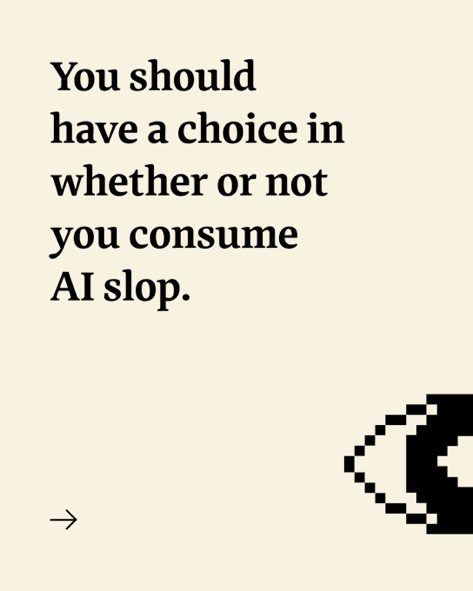
Writers remain free to leverage tools for drafting, editing, or ideation, as long as audiences understand the provenance. “Not everything made with AI is slop, and not all slop is made with AI,” Best notes. The goal is informed choice, preventing a race to the bottom where low-effort generated content drowns out genuine voices.
Public Reactions
Reactions have been mixed. Supporters praise the move for safeguarding writer livelihoods and platform integrity. Taylor Lorenz, who has analyzed AI prevalence on Substack using Pangram, has engaged positively with the tool and Best’s vision.
Critics worry about false positives, potential stigma against legitimate AI-assisted creativity, and whether detection tech is mature enough. Some creators view it as an unnecessary purity test, arguing that final human judgment and accountability matter more than the drafting method.
The launch comes amid broader debates. Earlier analyses by Lorenz revealed varying AI usage among top Substack publications, with many bestsellers remaining predominantly human.
Yet isolated viral hoaxes such as fabricated celebrity debates highlight risks when undisclosed AI content spreads unchecked. By embedding detection directly in the app (initially iOS and web, with Android support forthcoming), Substack aims to foster better norms without heavy-handed bans.
Future plans may include community-specific AI preferences in reply rules, enhanced creator disclosure tools, and reader customization options. Best invites feedback, framing this as an evolving experiment in the “strange new world” of abundant AI. “Human perspective is the essential ingredient of culture,” he writes, “and this will be true no matter how powerful AI becomes.”
For independent publishing, the stakes are high. Substack has built its reputation on direct creator-audience relationships, where trust drives subscriptions and engagement. As generative models grow more sophisticated, platforms must balance innovation with authenticity.
Over-reliance on AI without transparency risks commoditizing attention, turning feeds into noise rather than conversation.
This “good first step” by Substack reflects a broader industry reckoning. Unlike social networks optimized for virality at all costs, newsletter platforms like Substack prioritize depth and sustained relationships. Detection tools won’t solve every edge case- AI-assisted work with substantial human oversight can still carry profound meaning, while purely human text can lack insight.
Yet providing signals empowers users to navigate the shift.
As AI capabilities expand, questions of authorship, effort, and value will intensify. Substack’s bet is that transparency strengthens rather than restricts creative freedom. By choosing incremental progress aligned with core values-human connection, writer empowerment, and reader trust-the company hopes to model responsible adaptation.
READ ALSO:President Mahama Currently Losing The Galamsey Fight — Dr Zaato