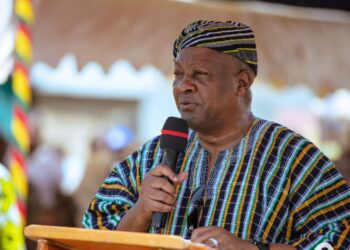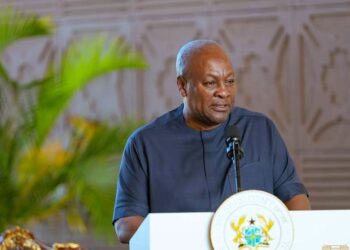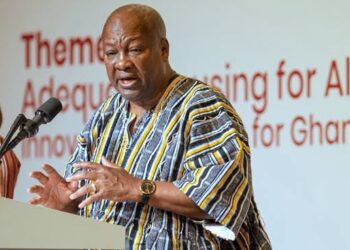
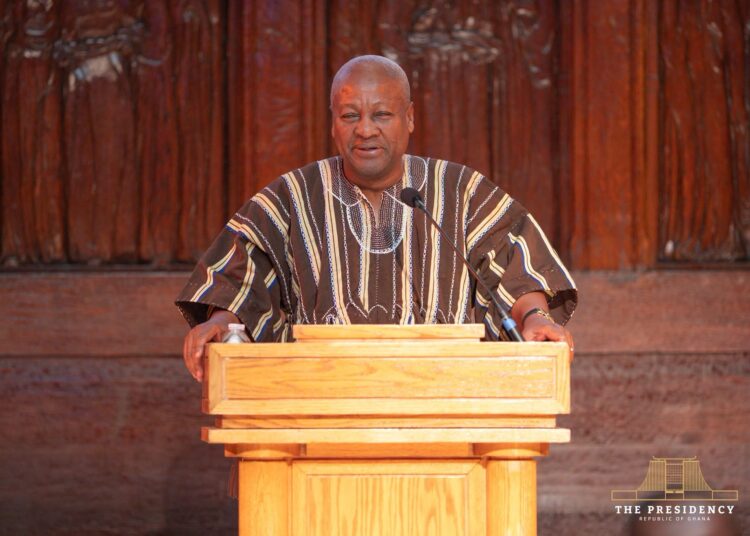
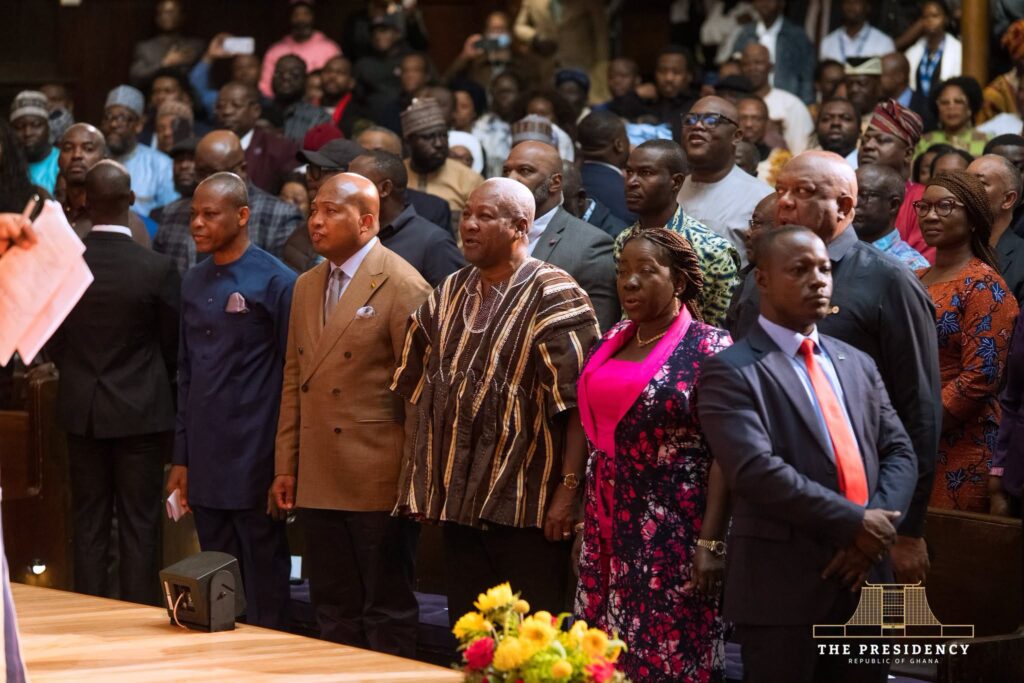
President John Dramani Mahama has given Ghanaians abroad an upbeat account of conditions at home, telling them the state of Ghana is good. He delivered the assessment at a town hall meeting with the Ghanaian community in New York on Friday, 25 September 2026, at the close of a week of engagements around the 81st United Nations General Assembly.
He tempered the verdict with a reminder that the project is generational rather than personal, saying no single leader can complete it and that those who follow must hold the same course.
The President also invited the diaspora home for the seventieth anniversary of independence in March, and set out why such meetings still matter in an age when Ghanaians abroad often learn the news before he does.
The State Of The Country
President Mahama opened with humour before turning to substance. “I’m pleased to tell you that Ghana is safe; it hasn’t shifted geographically, it’s still where it was when I last left it,” he said.
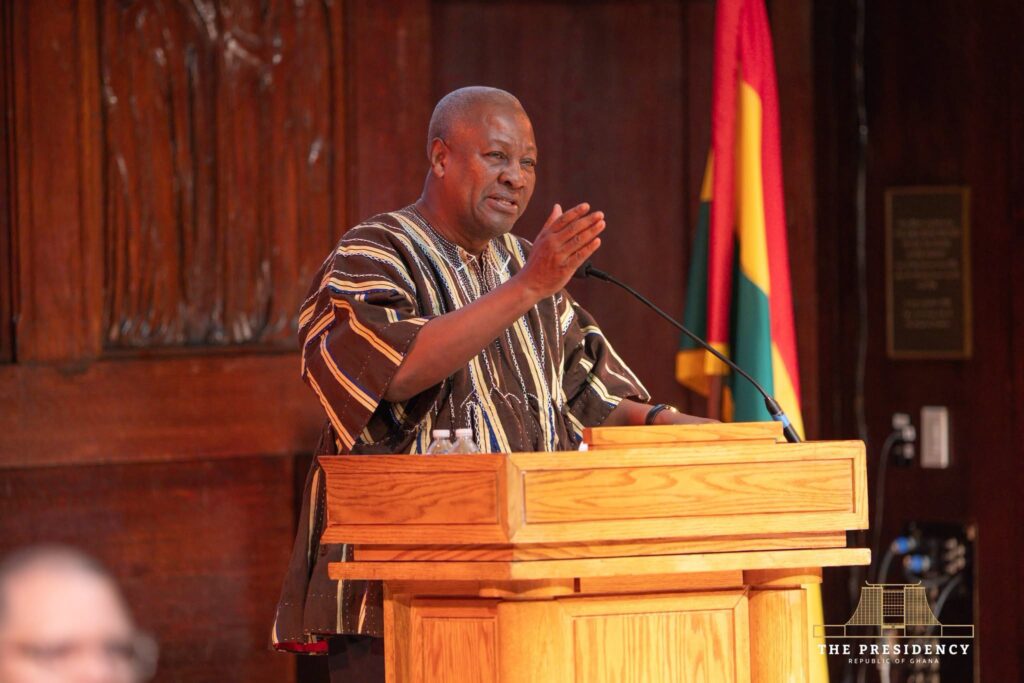
His assessment was measured rather than triumphant. “We’re not there yet, but after 70 years of independence, we can see the direction and the light at the end of the tunnel,” he said, arguing that maintaining the current course would make Ghana one of the greatest countries in Africa, as its founders intended.
On that point, he was explicit, describing his own position as holding a mandate from the people of Ghana and suggesting those who come after him must continue in the same direction.
That framing matters for a leader serving a second, non-consecutive term. A programme presented as generational rather than personal is also a programme that survives a change of government, which is the argument he has been making to international audiences all week about the Resetting Ghana agenda.
Seventy Years And An Invitation
The anniversary gives the visit its forward-looking note. Ghana marks seventy years of independence on 6 March 2027, having become the first country in sub-Saharan Africa to break from colonial rule.
President Mahama disclosed that a planning committee would publish the programme of events, and urged those able to travel to join the celebrations. “I wish to extend an invitation to all of you to come and let us celebrate Ghana,” he said.
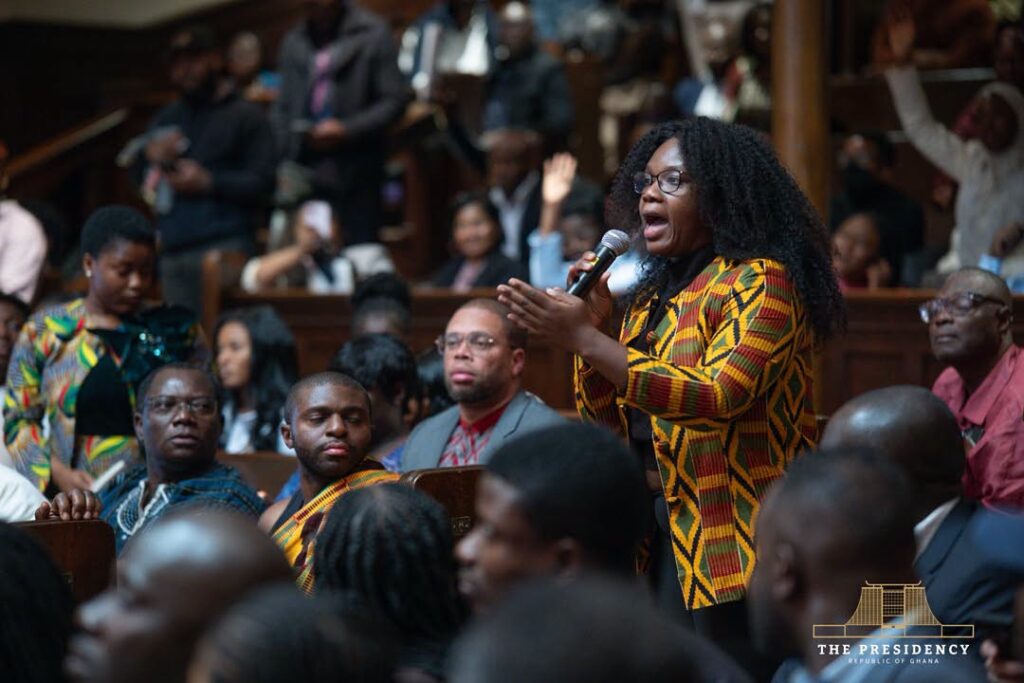
The invitation carries commercial logic alongside the sentiment. Ghana’s most successful diaspora initiative, the Year of Return in 2019, converted a historical commemoration into a measurable surge in arrivals, hotel bookings and investment interest, and the seventieth anniversary offers a similar opening.
From Graphic And Times To Instant News
President Mahama traced the town hall format to an earlier era of Ghanaian diplomacy. He recalled serving as a young minister in President Jerry John Rawlings’ administration, when delegations travelling abroad routinely met Ghanaian communities to brief them on developments at home.
The reason then was scarcity. Unless a traveller arrived carrying copies of the Daily Graphic and the Ghanaian Times, he said, communities abroad had no reliable way of knowing what was happening in the country.
He acknowledged that the position has reversed. Having spent the week occupied with United Nations engagements, he told the audience they were probably better informed about the latest news from Ghana than he was.
Communication Integrity And Misinformation
That reversal produced his argument for continuing the practice. The problem is no longer the absence of information but the quality of it. “We are in an age where communication integrity is important,” he said, noting that alongside genuine news from home there is a great deal of misinformation.

His conclusion placed a duty on office holders. As accountable leaders, he said, it is important to give Ghanaians, wherever they are, the opportunity to understand why the government is pursuing a particular policy, so they can separate what is true from what is not.
The reasoning is sound, though it also describes a communications advantage. A government that explains its own policies directly to a receptive audience shapes how that audience reads coverage of those policies, which is one reason diaspora town halls have become a fixture of presidential travel.
Why The Diaspora Matters
Ghanaians abroad constitute a constituency that successive governments have courted with increasing seriousness. Remittances are among the country’s most dependable sources of foreign exchange, arriving steadily through periods when export earnings and investment flows have fluctuated sharply.
The community also carries political weight. Legislation extending voting rights to Ghanaians abroad has existed since 2006, but implementation has been slow and contested, leaving a large and engaged population with limited formal say in the elections that decide who addresses them at these meetings.
That gap explains part of the appetite for town halls. Absent a ballot, direct access to the President is the clearest form of participation available to most Ghanaians outside the country. What the seventieth anniversary produces will depend on more than attendance.
President Mahama described a country that knows its direction but has not arrived, which is a considerably more modest claim than governments usually make to audiences abroad. The measure of it will be whether those who accept his invitation in March find the direction he described visible on the ground.
READ ALSO: GNPC Supplies TOR With 950,000 Barrels Of Sankofa Crude