President John Dramani Mahama has announced plans for Ghana to sign agreements for 1,200 megawatts of additional gas-fired thermal generation capacity before the end of the year, as government moves to strengthen electricity supply while accelerating reforms in the energy sector.
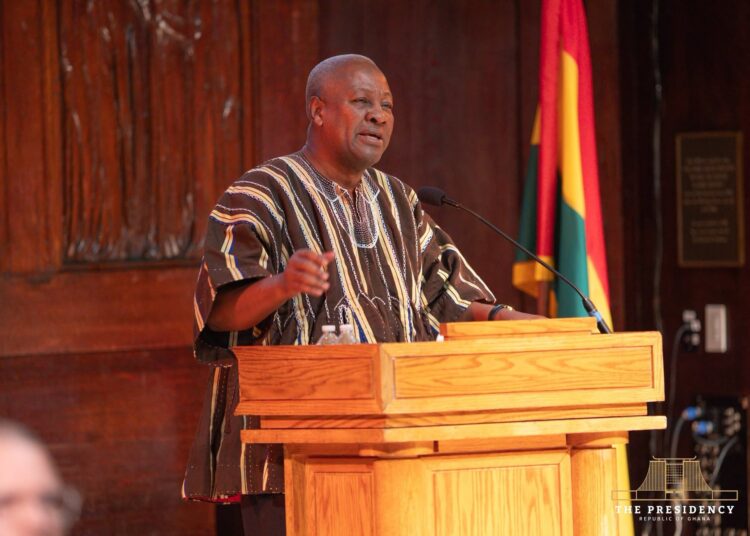
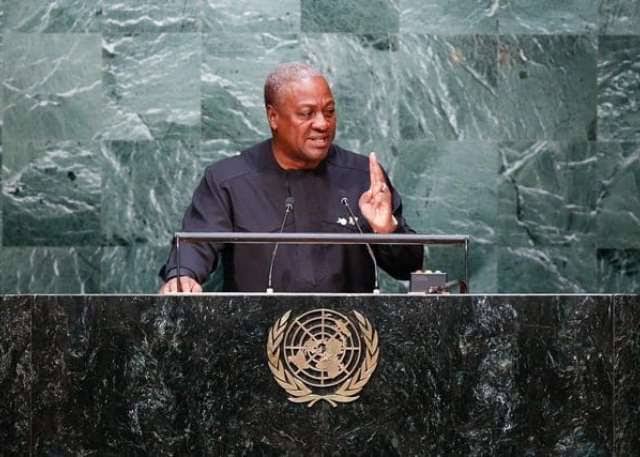
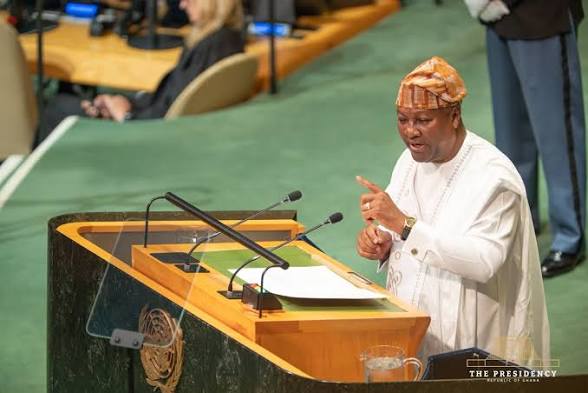
Speaking at a townhall meeting with the Ghanaian diaspora in New York, President Mahama said the planned capacity would be financed without new borrowing, with government relying on its own resources to fund the expansion.
“Before the end of this year, we’re going to sign 1,200 megawatts of gas thermal power. Before the end of this year, we’re not borrowing a dime to do it, we’re doing it with our own money. We’re paying for it with our own money.”
President John Dramani Mahama
The announcement comes as government seeks to reposition Ghana’s electricity system around stronger payment discipline, increased domestic gas utilisation and additional thermal capacity.
Energy Debt Reform Takes Centre Stage
President Mahama said the administration inherited an energy sector facing significant financial pressure, including outstanding obligations to independent power producers (IPPs).
According to him, the payment situation has since improved, with government having paid off the energy debt and begun catching up on current obligations.
He attributed the improvement partly to changes in how revenues within the electricity distribution system are prioritised.
The President said the Electricity Company of Ghana (ECG) had been reorganised to ensure that payments to power generators receive priority before other expenditures.
“We are paying the IPPs first, and then after that ECG can invest in whatever it needs to keep our power stable.”
President John Dramani Mahama
The approach represents a shift towards treating generator payments as a core requirement for maintaining electricity supply rather than allowing competing procurement needs to take precedence.
President Mahama cited purchases such as cables and streetlights as examples of expenditures that, under the revised approach, would be measured against the more immediate need to sustain electricity generation.
Government Turns To Gas For New Capacity
The planned 1,200MW expansion places natural gas at the centre of Ghana’s near-term electricity strategy.
For Ghana, gas-fired generation provides dispatchable capacity that can complement hydropower and renewable sources, particularly when variable renewable generation is unavailable or hydrological conditions constrain hydro output.
President Mahama said the government’s objective is to build substantial thermal capacity while ensuring that the investment does not create unnecessary long-term liabilities.
The announcement also comes against the President’s broader argument that Ghana must manage the energy transition carefully to avoid investing heavily in assets that could become economically unviable as the global energy system shifts towards cleaner technologies.
Transition Raises Stranded-Asset Concerns
President Mahama linked the planned thermal expansion to the wider global transition towards renewable energy and electric mobility.
He noted that electric vehicles are becoming increasingly common and that countries are accelerating renewable-energy deployment.
For Ghana, he said the transition makes the timing and structure of energy investments particularly important.
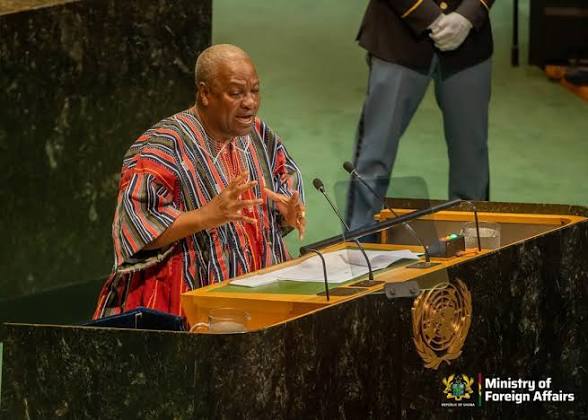
“We must work fast so that in what they call energy parlance, you don’t have stranded assets, because there’s not oil in the ground, there’s gas in the ground.”
President John Dramani Mahama
The comment highlights a tension at the centre of Ghana’s energy policy: the country needs additional reliable electricity capacity while simultaneously preparing for a future in which fossil-fuel demand could change.
The government’s decision to focus on gas rather than additional liquid-fuel-based generation also reflects the role of domestic gas in reducing exposure to imported fuel costs, although the long-term economics of new thermal assets will depend on gas availability, utilisation rates and the pace of renewable-energy deployment.
Oil And Gas Investment Targeted For Recovery
Beyond electricity generation, President Mahama used the engagement to outline efforts to revive investment in Ghana’s upstream petroleum sector.
He said the administration inherited a sector affected by declining production and weakened investor confidence, citing the movement of Eni’s operations to Côte d’Ivoire under the previous administration.
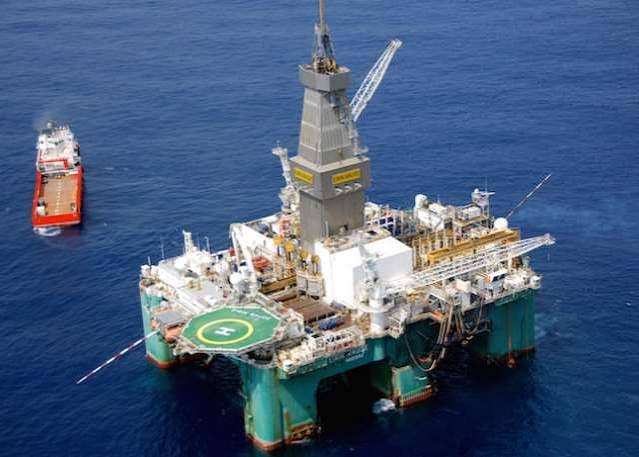
He said government’s efforts to rebuild investor interest are now beginning to produce results.
“Jubilee Field, their partners are investing another $2 billion to drill 20 new wells to increase oil production. Already oil production has risen by almost 38% since 2025.”
President John Mahama
The President also disclosed that Eni is investing another $1.5 billion to bring the remainder of its Sankofa-related development into operation.
He presented the renewed investment interest as part of a broader effort to increase oil and gas production, strengthen government revenues and secure the gas required to support Ghana’s thermal generation fleet.
Domestic Gas Supply Becomes More Strategic
The link between upstream investment and power generation is becoming increasingly important for Ghana.
Additional gas production can provide fuel for thermal plants, while stronger domestic gas availability can reduce reliance on imported liquid fuels for electricity generation.
This makes upstream investment relevant not only to petroleum revenues but also to electricity-sector cost and supply security.
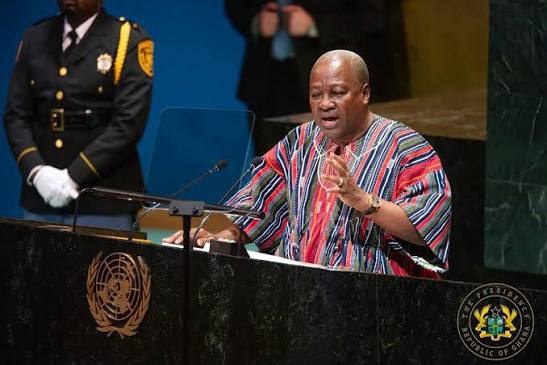
President Mahama said reviving the oil and gas sector was therefore necessary to ensure Ghana could maximise the value of its existing petroleum resources before the global energy transition changes the economics of hydrocarbon development.
He also pointed to interest from major international energy companies, saying ExxonMobil, Shell and others were seeking opportunities in Ghana.
The President characterised the renewed interest as a positive signal for the country’s upstream sector.
At the same time, the planned gas-fired capacity will require adequate and reliable fuel supply if it is to contribute meaningfully to electricity security.
That makes the development of domestic gas resources, processing capacity and associated infrastructure increasingly important alongside the construction of new generation assets.
Balancing Security With Energy Transition
Ghana’s immediate energy challenge is therefore being framed around two parallel priorities: securing enough reliable electricity to support economic activity while avoiding investments that could become stranded as the global energy mix changes.
The government’s approach, as outlined by President Mahama, is to use gas as a bridge while expanding renewable energy and managing the transition over time.
The proposed 1,200MW thermal programme could strengthen Ghana’s generation base, but its effectiveness will ultimately depend on whether the country can maintain reliable gas supply, improve the financial position of the electricity market and invest sufficiently in transmission and distribution infrastructure.
For the upstream sector, increased drilling and new investment could provide additional crude and gas production, but sustained investor interest will depend on regulatory certainty and the commercial attractiveness of Ghana’s petroleum resources.
President Mahama’s announcement therefore points to a broader energy strategy in which electricity-sector financial reform, gas development and upstream investment are increasingly being treated as interconnected rather than separate policy challenges.