

The Parliamentary Select Committee on Economy and Development has reaffirmed the strategic importance of the National Petroleum Authority (NPA) to Ghana’s economy, describing effective regulation of the downstream petroleum industry as indispensable to sustaining fuel security, supporting economic activity and maintaining confidence in one of the country’s most critical sectors.
The endorsement came during a working visit by members of the Committee to the NPA headquarters, where lawmakers engaged the Authority’s leadership on its regulatory responsibilities, ongoing reforms and operational systems that underpin Ghana’s downstream petroleum industry.
The visit also offered Parliament an opportunity to assess how the regulator is responding to emerging challenges in fuel supply, market stability, safety compliance and industry expansion at a time when the downstream petroleum sector continues to play an increasingly significant role in national economic growth.
Downstream Sector Underpins Economic Activity
Fuel remains the backbone of Ghana’s transport, manufacturing, mining, agriculture and commercial sectors, making the effectiveness of downstream regulation central to broader economic performance.

The NPA oversees licensing, pricing oversight, petroleum distribution, consumer protection, operational safety and compliance across the downstream value chain, responsibilities that directly influence the availability and movement of petroleum products nationwide.
Speaking during the engagement, Chairman of the Parliamentary Select Committee on Economy and Development, Hon. Eric Afful, acknowledged the Authority’s contribution to keeping the economy functioning while highlighting its growing relevance to Ghana’s development agenda.
The NPA is crucial to Ghana’s economy in terms of keeping the economy running and contributing significantly to the Gross Domestic Product.
Hon. Afful
His remarks reflect growing recognition within Parliament that an efficiently regulated downstream petroleum sector extends beyond fuel retailing to support industrial productivity, revenue mobilisation and investor confidence.
Parliament Positions Visit as Collaborative Oversight
Unlike routine parliamentary scrutiny often associated with investigations or compliance reviews, the Committee emphasised that its visit was intended to strengthen institutional cooperation rather than fault-finding.
Hon. Afful explained that lawmakers were following up on previous engagements while seeking first-hand verification of information concerning the Authority’s operations.
“We are not here as policemen,” he told management, adding that the Committee’s objective was to collaborate with the Authority and better understand its work.
The approach signals Parliament’s increasing preference for evidence-based oversight, allowing legislators to engage directly with institutions responsible for implementing key national policies before making legislative or policy recommendations.
NPA Opens Its Operations to Parliamentary Scrutiny
Receiving the delegation, Chief Executive of the NPA, Mr. Godwin Kudzo Tameklo, described the visit as an important demonstration of Parliament’s continued interest in strengthening Ghana’s downstream petroleum sector.
He said the Authority welcomed the opportunity to present its achievements, explain ongoing reforms and allow lawmakers to independently assess its operations.

Today the Authority is honoured to receive the members of this august committee of Parliament. I have always maintained that the work of Members of Parliament is not a joke, and so today we open our doors for verification, so it does not become the CEO’s words only.
CEO, NPA, Mr Godwin Tameklo
He reiterated the Authority’s commitment to maintaining a petroleum sector that remains safe, resilient and efficient while adapting to evolving market conditions and emerging industry demands.
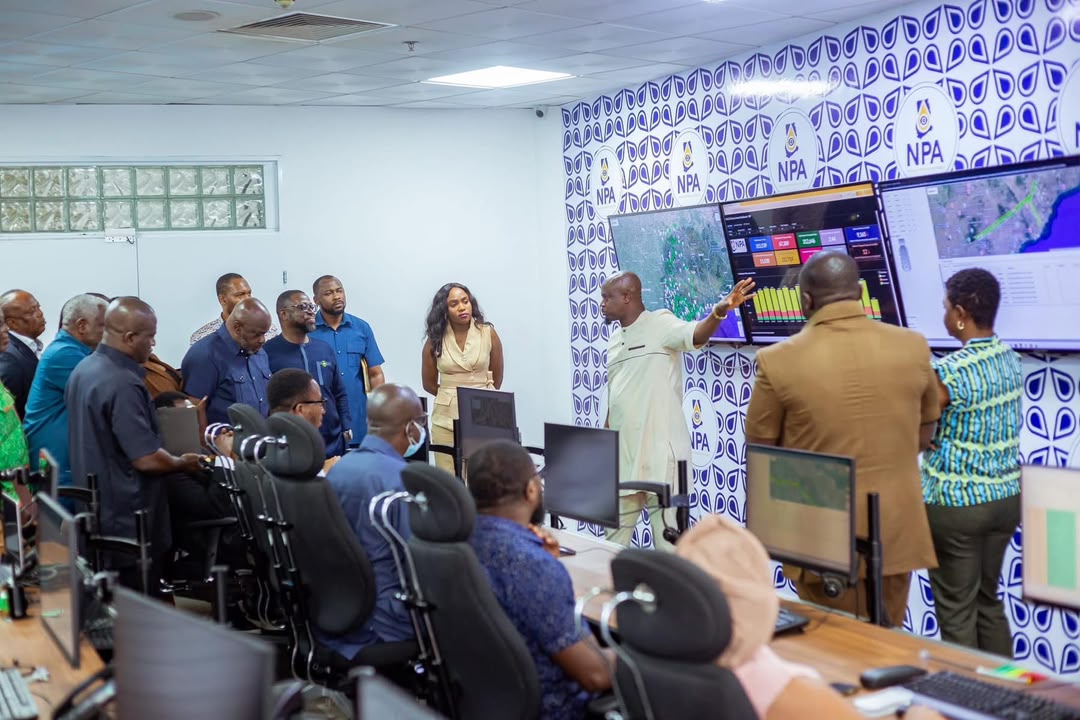
The parliamentary delegation subsequently toured several operational units within the Authority, where officials demonstrated the technical systems supporting licensing, monitoring, compliance enforcement and broader regulatory oversight.
Oversight Matters Beyond Regulation

The engagement comes at a period when Ghana’s downstream petroleum sector is undergoing significant transformation.
Government has expanded implementation of the 24-Hour Economy pilot within the petroleum industry, while regulators continue to strengthen fuel quality monitoring, improve market surveillance and support investments in storage and distribution infrastructure.
These developments place increasing responsibility on the NPA to balance industry growth with consumer protection and operational safety.
Parliamentary oversight therefore serves a broader purpose than institutional accountability.
It helps ensure that regulatory frameworks evolve alongside industry expansion while providing legislators with a clearer understanding of operational realities before considering future policy interventions.
Strong Institutions Support Energy Security
The Committee’s endorsement also reinforces an important lesson within Ghana’s energy governance landscape: energy security depends not only on electricity generation and upstream oil production, but equally on the effectiveness of institutions regulating fuel distribution and market operations.
A well-regulated downstream sector reduces supply disruptions, enhances investor confidence, protects consumers and strengthens national resilience during periods of global market volatility.

Recent geopolitical tensions and fluctuations in international petroleum markets have underscored the importance of maintaining strong domestic regulatory institutions capable of responding quickly to changing market conditions.
In that regard, Parliament’s engagement with the NPA represents more than a routine institutional visit.
It reflects growing appreciation that governance, regulation and oversight remain as important to Ghana’s energy future as investments in infrastructure and production capacity.
As Ghana continues modernising its petroleum sector and positioning itself as a regional energy hub, stronger collaboration between Parliament and regulators could help ensure that policy reforms are supported by institutions capable of delivering stability, transparency and long-term confidence across the downstream petroleum industry.
READ MORE: Fitch Predicts Ghana’s Construction Growth Slowdown Ahead