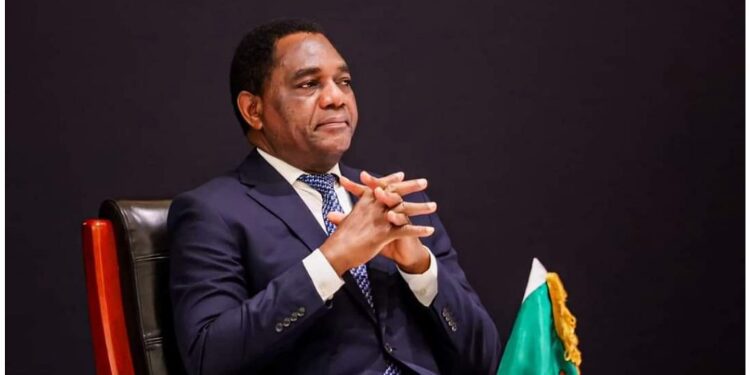
Zambians have begun voting in a closely watched national election that is expected to hand President Hakainde Hichilema a second term.
President Hichilema entered the election seeking to build on what his administration presents as a significant economic recovery since he took office in 2021.
His government has overseen a restructuring of Zambia’s debt following the country’s sovereign default in 2020, while inflation has fallen sharply and international investment has increased, particularly in the country’s strategically important copper sector.
Yet behind those economic gains lies a more complicated picture. For many Zambians, improvements in inflation, government finances and investment have not necessarily translated into greater financial security.
The rising cost of food, household necessities and other basic goods remains a dominant concern, giving the opposition an opening to challenge Hichilema’s record despite his strong position in the presidential race.
Hichilema’s administration inherited an economy struggling under the weight of heavy debt after Zambia became the first African country to default on its sovereign debt during the COVID-19 era. Since then, the government has pursued debt restructuring while attempting to restore investor confidence and stabilise the economy.
Annual inflation has fallen from 24.6% in July 2021 to about 6.5%, while primary and secondary education became free in 2022. Zambia has also attracted increasing international interest because of its vast copper reserves, with the metal playing a central role in the global transition towards renewable energy and electric technologies.
Average annual income increased from $1,127 in 2021 to $1,318 in 2025, according to World Bank data. But the improvement has been accompanied by substantial increases in prices, leaving many households questioning whether headline economic growth is translating into meaningful improvements in their daily lives.
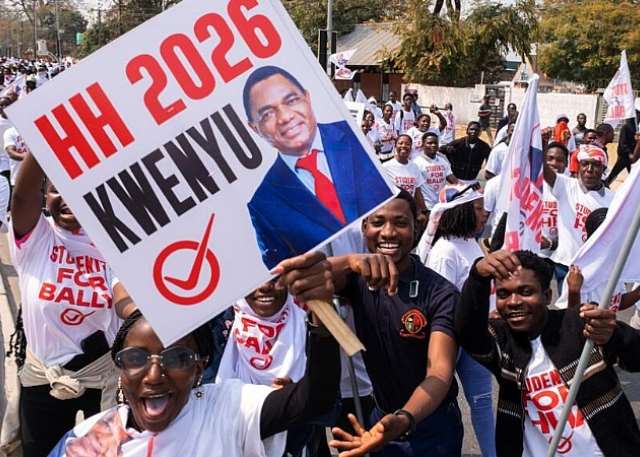
According to Mputa Ngalande of the Fight Inequality Alliance, “what people are asking is: ‘If we are doing well economically, why are we not feeling impact on the ground?,” adding, “because you will find on the ground that it is very difficult to access three meals a day.”
That disconnect could prove important in an election in which nearly 8.8 million registered voters are also choosing members of parliament and local councillors.
Hichilema’s main challenger is Brian Mundubile, a 55-year-old experienced parliamentarian and former government chief whip under the late former president Edgar Lungu.
Mundubile is contesting the presidency for the first time as leader of the Tonse Alliance, an opposition coalition that draws significant support from Lungu’s former political base.
The opposition is expected to perform particularly strongly in Lusaka and the Copperbelt Province, two areas with large numbers of registered voters. The ruling United Party for National Development is expected to retain stronger support in rural areas.
Lungu’s Shadow Looms Over Hichilema’s Re-election Bid
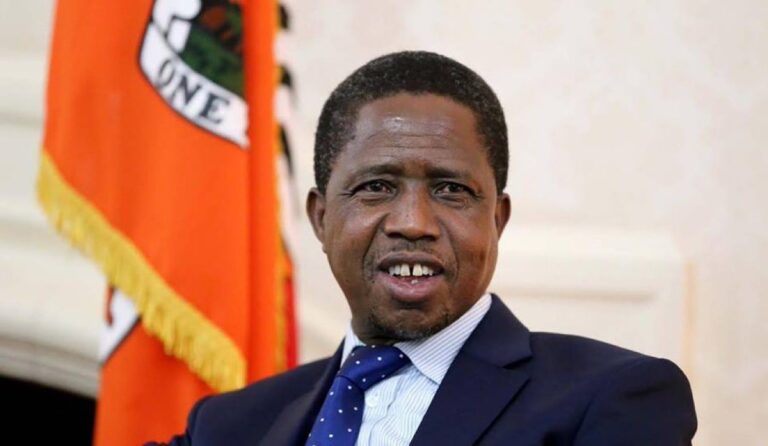
Although the election is formally a contest between Hichilema and his political opponents, the legacy of former President Edgar Lungu has remained deeply embedded in Zambia’s political arena.
Hichilema defeated Lungu by a landslide in 2021 after years of rivalry between the two men. Lungu died in South Africa in June 2025, but tensions surrounding his political legacy have continued to shape relations between his supporters and the government.
The dispute extended beyond politics after the government and Lungu’s family became embroiled in a legal battle over his burial. Lungu’s family opposed Hichilema presiding over a state funeral, while the government went to court in an attempt to influence the arrangements. South Africa’s Supreme Court of Appeal ultimately ruled in favour of Lungu’s family.
The controversy has left the former President’s supporters with a powerful political grievance that Mundubile and his running mate, Makebi Zulu, have sought to harness during the campaign.
Zulu previously served as a spokesperson for Lungu’s family during the burial dispute. The opposition pair have promised to return Lungu’s body to Zambia for a dignified burial.
The Lungu legacy has also featured prominently in accusations of political repression. The Tonse Alliance has accused Hichilema’s government of deploying authoritarian tactics during the campaign, including raids on opposition offices and the detention of 36 members of Mundubile’s team.
The government has rejected those allegations, arguing that Zambia under Hichilema is considerably more open than it was during Lungu’s presidency.
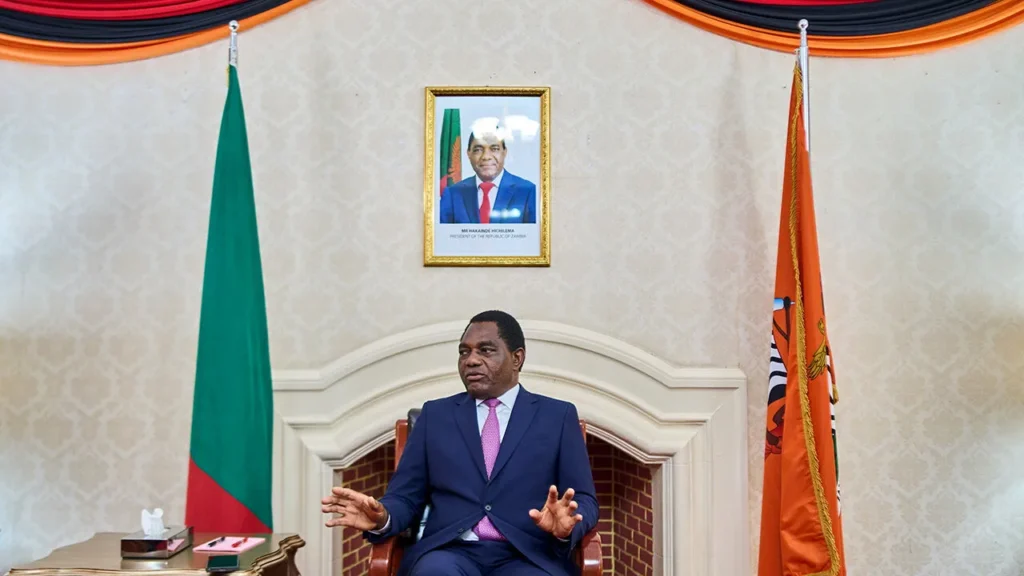
A spokesperson for the ruling United Party for National Development pointed to Hichilema’s own experience as an opposition leader under Lungu.
“Zambians know what repression looks like. In 2021, the opposition leader [Hichilema] had been arrested 15 times, Prime TV [a private station] and the Post [a newspaper] had been shut down, and on election day the internet was switched off.”
He added that, “today the opposition campaigns freely across all 10 provinces, no media house has been closed and the airwaves are open.”
However, concerns about the conduct of the campaign have not disappeared. Transparency International Zambia recorded instances in which police interrupted opposition rallies.
Activists have also accused the government of restricting peaceful demonstrations during Hichilema’s presidency.
The political question for Hichilema, however, is not whether he can win another term, but whether he can emerge from the election with a strong enough mandate to solve broad economic concerns.
READ ALSO: Ministry of Sports Rejects Black Queens’ Claims of Unpaid Per Diems