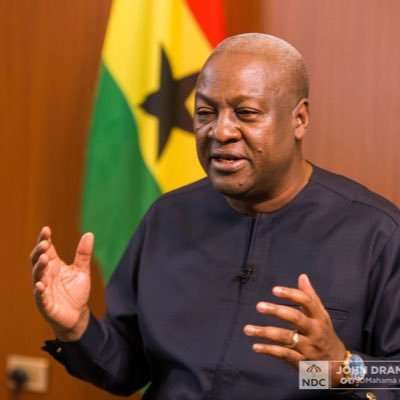
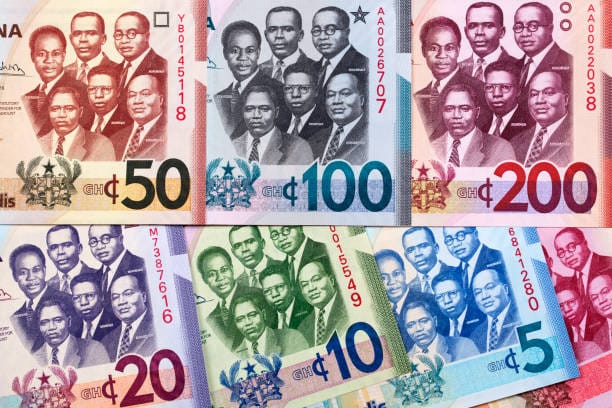
President John Dramani Mahama has revealed that the Bank of Ghana (BoG) is preparing plans to refresh Ghana’s currency, raising the prospect of a major security upgrade for the country’s banknotes.
The President said the move would be necessary to keep Ghana’s currency ahead of counterfeiters while ensuring that the cedi remains protected against increasingly sophisticated attempts to reproduce banknotes.
Speaking during his Resetting Ghana Tour in the Upper East Region, President Mahama disclosed that the Governor of the Bank of Ghana has plans to refresh the currency, although the timing and details of the exercise remain the responsibility of the central bank.
“I know the governor has plans to refresh the currency and I am sure that at the appropriate time, the Bank of Ghana will let Ghanaians know what they are doing about it.”
President John Dramani Mahama
Cedi Considered Long Overdue for Refresh
President Mahama described Ghana’s existing currency as being “long overdue for refreshing”, arguing that banknotes must periodically receive security upgrades to make counterfeiting more difficult.
According to him, countries need to update their currencies periodically because prolonged use of the same banknotes gives criminals more time to study and replicate their security features.
“Every country, every ten years, you are supposed to refresh your currency because if you use the same currency for too long, people learn how to counterfeit it,” President Mahama said.
He further stressed that the security features embedded in banknotes must evolve alongside counterfeiting techniques.
“And so this particular currency is long overdue for refreshing,” he added.
The comments have reignited discussions about the future of Ghana’s banknotes and whether the country could soon witness the introduction of refreshed currency designs with enhanced security features.
What a Cedi Refresh Could Mean
A currency refresh does not necessarily mean Ghana will redenominate the cedi or alter its monetary value.
Instead, the exercise would primarily focus on improving the physical and technological security features of the banknotes.
Such features could include enhanced security threads, improved watermarks, colour-changing elements, tactile features and other measures designed to make genuine notes easier to identify and counterfeit notes harder to produce.
For businesses and consumers, the potential benefit would be stronger protection during cash transactions.
The move could also help financial institutions, retailers and other cash-intensive businesses improve their ability to identify suspicious notes.
However, the appearance of the cedi should not be confused with its economic strength.
A redesigned banknote does not automatically mean a stronger currency in foreign exchange markets.
Mahama Links Cedi Strength to Economic Management
While discussing the possible currency refresh, President Mahama also used the opportunity to highlight what he described as the improving strength of the cedi.
He maintained that the long-term performance of Ghana’s currency depends heavily on how the economy is managed.
“What I would say is that the cedi today is stronger than it was in the past because of good economic management.”
President John Dramani Mahama
According to the President, government will continue implementing policies aimed at strengthening the economic fundamentals that support the cedi.
“We will continue to make sure that the economy bolsters the strength of the cedi. But, like I said, at the appropriate time, the Governor will apprise us of any plans that he has for replacing the currency.”
President John Dramani Mahama
His comments place the potential currency refresh within a broader economic narrative, where currency security and macroeconomic stability are treated as separate but important issues.
BoG Holds the Key to Timing
Despite President Mahama’s disclosure, the final decision on when and how Ghana’s currency will be refreshed rests with the Bank of Ghana.
The central bank is responsible for issuing the country’s currency and determining the appropriate measures required to maintain its integrity.
This means Ghanaians may have to wait for an official announcement from the BoG before knowing whether the exercise will involve new designs, upgraded security features, replacement of selected denominations or a broader currency overhaul.
The President’s remarks nevertheless provide an indication that discussions around refreshing the cedi are already taking place at the highest levels of monetary policy.
Counterfeit Concerns Drive the Conversation
Counterfeiting remains a major concern for economies that rely heavily on physical cash.
As technology becomes more accessible, criminals can potentially use increasingly sophisticated equipment to reproduce banknotes.
Regularly upgrading banknote security features therefore forms part of efforts by central banks around the world to protect the integrity of national currencies.
For Ghana, a refreshed cedi could strengthen public confidence in cash transactions while giving banks and businesses additional tools to distinguish genuine notes from counterfeits.
The move could also serve as an opportunity to educate the public on identifying legitimate security features.
Strong Cedi Still Depends on Fundamentals
While a currency refresh could improve the security of Ghana’s banknotes, the broader strength of the cedi will continue to depend on economic fundamentals.
Inflation, foreign exchange supply, international reserves, fiscal discipline, interest rates, investor confidence and the country’s balance of payments will remain critical to the currency’s performance.
Consequently, the proposed refresh should not be interpreted as a measure designed to increase the cedi’s value against major international currencies.
For now, attention will be firmly fixed on the Bank of Ghana as Ghanaians await details of what could become one of the country’s most significant currency security updates in years.
If implemented, the exercise could give the cedi a new layer of protection while reinforcing the central bank’s broader responsibility to preserve confidence in Ghana’s currency.
READ ALSO: UMB Branches Become New Hubs for Business Registration