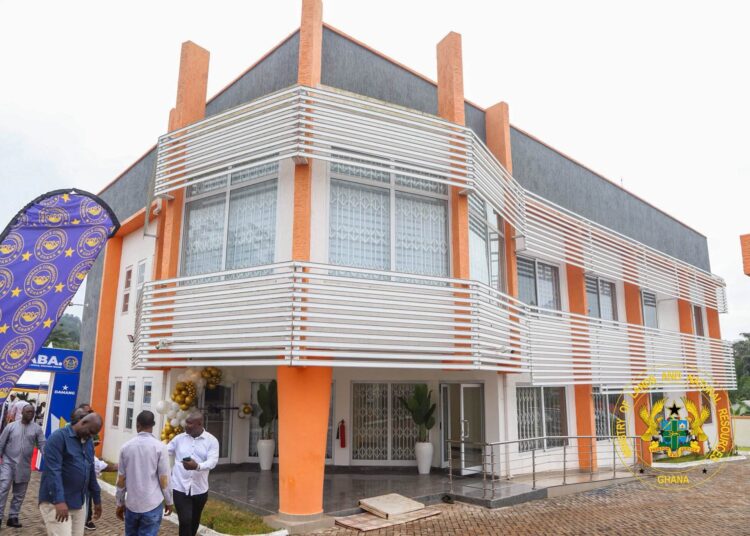
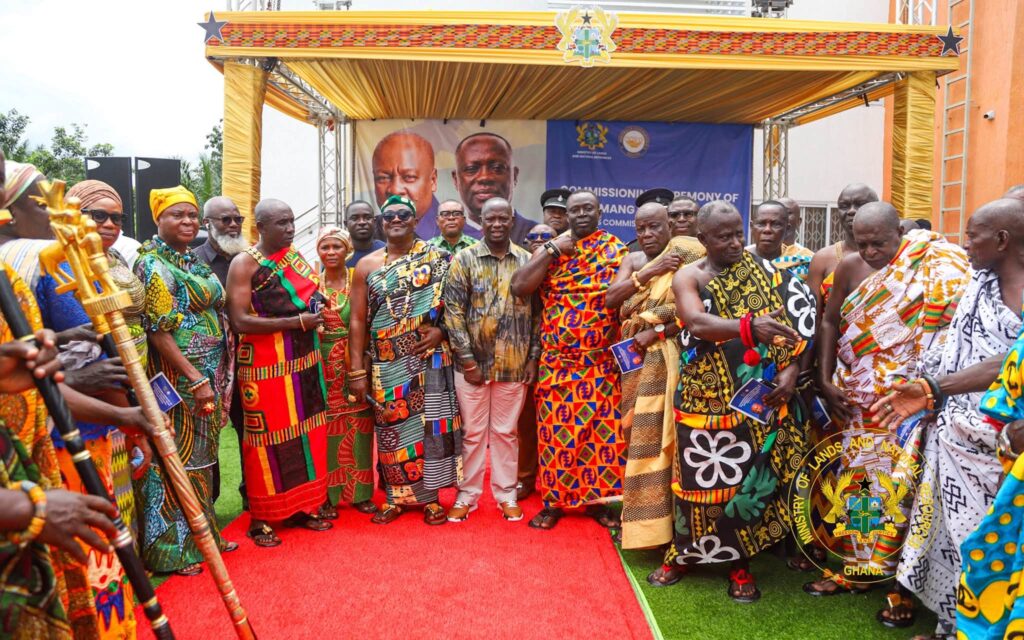
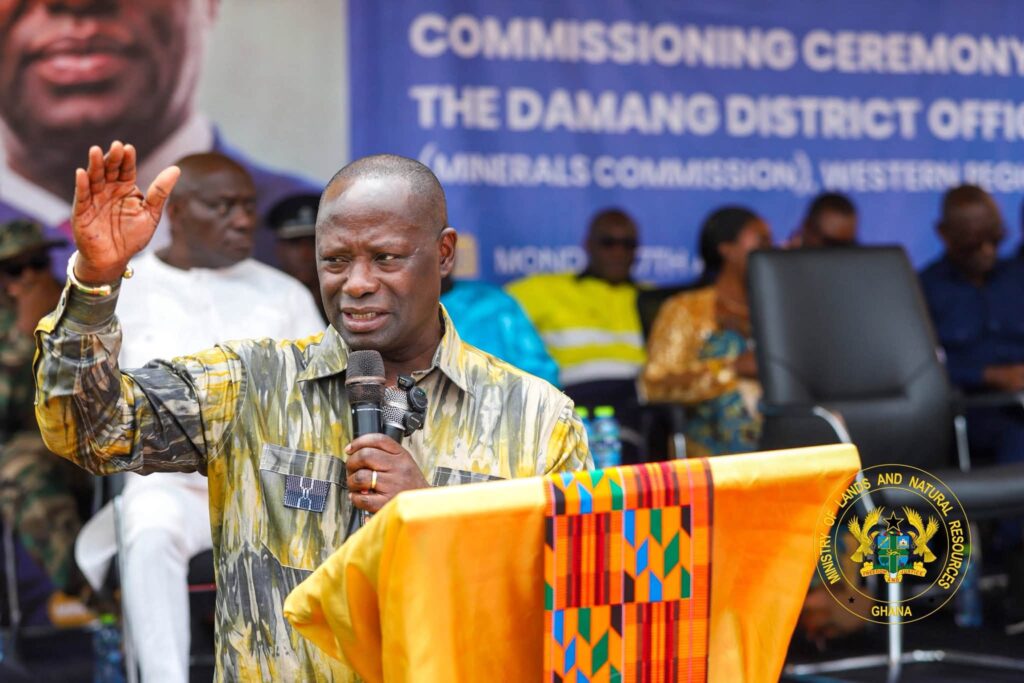
The Minister for Lands and Natural Resources, Hon. Emmanuel Armah-Kofi Buah, on Monday, August 17, 2026, officially commissioned a brand-new, modern Minerals Commission District Office in Damang, situated within the Prestea Huni-Valley Municipality of the Western Region.
The strategic establishment of this regulatory facility aims to drastically enhance government oversight, enforce strict compliance within the local mining industry, and curb the persistent spread of illegal mining activities commonly known as galamsey directly at the operational heartland of the nation’s resource extraction zones.
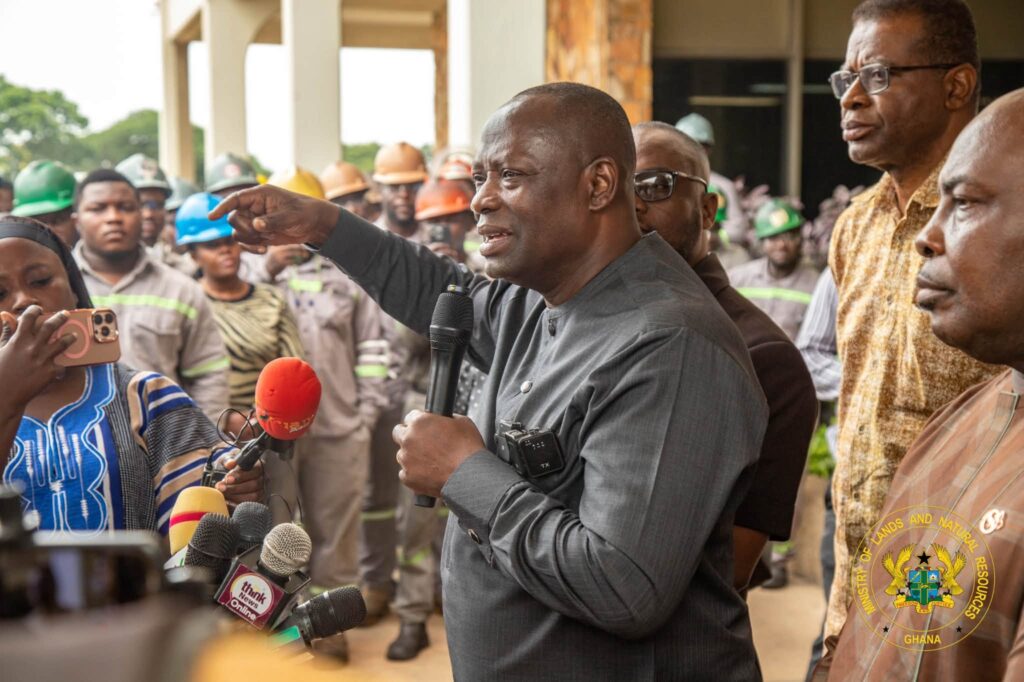
“Decentralising the operations of the Commission through this office places the regulator directly where mining activities happen. This boots-on-the-ground presence is vital in our battle to curb illegal mining, allowing us to monitor operations rigorously and enforce strict compliance.”
Minister for Lands and Natural Resources, Hon. Emmanuel Armah-Kofi Buah
Expanding on this historic decentralization drive, the newly inaugurated structure stands as a purpose-built operational hub designed to bridge the structural gap between mining regulators and field operators.
Built with inclusive modern architecture, the facility features fully equipped administrative offices, universal accessibility infrastructure including a passenger lift for persons living with disabilities, and an environmentally sustainable biogas waste-treatment plant that converts organic human waste into renewable cooking fuel.
The strategic choice of Damang highlights the government’s renewed policy shift toward a localized regulatory paradigm, ensuring that enforcement officers maintain a physical, high-density presence in high-volume mineral extraction corridors.
Decentralized Monitoring and Regulatory Enforcement
The institutional placement of a dedicated regulatory agency in Damang marks a decisive transition from reactive policy enforcement to proactive, real-time monitoring.
For decades, the centralized nature of mining administration in regional capitals created spatial gaps that illegal operators routinely exploited.
By bringing the Minerals Commission’s administrative machinery closer to concession boundaries, field inspectors can perform spontaneous site audits, verify environmental compliance documentation, and track the movement of heavy earth-moving equipment without the logistical delays associated with distant regional centers.
This immediate proximity significantly lowers reaction times to illegal encroachment on legitimate concessions and forest reserves.
Furthermore, this operational presence establishes a continuous regulatory chain of custody over both small-scale and large-scale mining operations.
Mining companies and licensed artisanal operators will now experience streamlined administrative services, including expedited licensing, environmental safety reporting, and regular compliance training.
By dismantling bureaucratic bottlenecks, the government actively disincentivizes illegal operations, encouraging informal miners to transition into legal, monitored, and environmentally responsible frameworks under the direct supervision of district inspectors.
Eco-Friendly Infrastructure and Sustainable Mining Standards
The physical construction of the Damang office sets a high ecological standard for future public and industrial infrastructure across Ghana’s mining districts.
By integrating an innovative biogas waste-treatment system, the facility practically demonstrates green technology principles, turning operational waste into usable thermal energy.
This sustainable approach visually reinforces the Ministry’s message to mining communities: resource utilization must align with environmental stewardship.
The inclusion of comprehensive disability-friendly access, such as passenger elevators, further illustrates a commitment to inclusive governance and social responsibility within the extractive sector.
Beyond its physical amenities, the facility serves as a benchmark for local environmental accountability.
As the country wrestles with the severe ecological degradation of land and water bodies caused by unregulated mining, operating a green-certified regulatory office at the center of an extraction zone sends a clear message to mining firms.
Compliance is no longer treated as a periodic reporting exercise, but as a continuous, everyday standard that begins with the regulator’s own localized footprint.
Community Engagement and Traditional Partnerships
The successful execution of this pivotal public project highlights the indispensable role of traditional leadership in national development and environmental preservation.
Hon. Armah-Kofi Buah expressed “profound gratitude to Nana Kwaku Armah II, the Chief of Damang, and the traditional authorities for generously donating the land for this pivotal project,” reinforcing the reality that sustainable resource governance relies heavily on strong community alliances.
Land tenure systems in mining areas frequently complicate state-led regulatory efforts, making grassroots support from traditional custodians a key component for long-term enforcement success.
By aligning state regulatory mandates with traditional custody, the Damang office establishes a collaborative framework for local intelligence gathering and land preservation.
Local chiefs and traditional councils remain the first line of defense against land degradation; their active partnership ensures that illegal mining activities are swiftly reported and addressed.
Moving forward, this unified front between traditional rulers, local miners, and the Minerals Commission creates a resilient ecosystem capable of driving responsible, sustainable, and highly compliant mining operations across the Western Region.
READ ALSO: Genser Secures $527m to Expand Gas-to-Power Platform