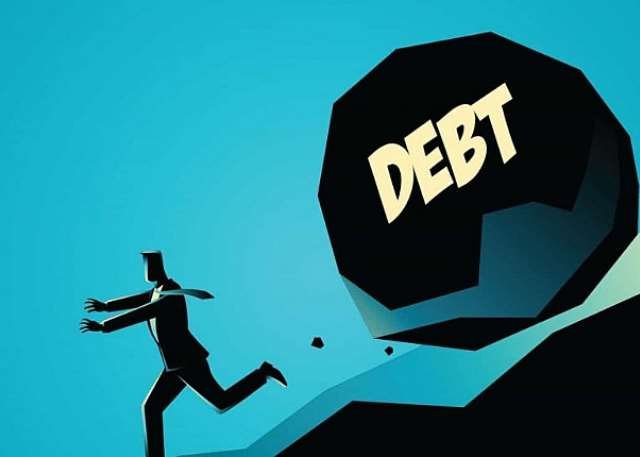
The world’s debt burden has climbed above US$365 trillion, raising fresh concerns about the growing cost of borrowing and the pressure interest payments are placing on government finances.
While the headline figure reflects a global challenge, its implications could be particularly significant for Ghana as the country seeks to consolidate its debt recovery and sustain economic growth.
Global debt, covering governments, households and companies, increased by US10trillion during the first half of 2026, according to figures from the Institute of International Finance. The total is equivalent to approximately US44,000 for every person on the planet, with emerging markets accounting for much of the latest increase.
The growing concern is not simply how much the world owes, but how much it must pay to service those obligations. As borrowing costs rise, governments face a difficult choice between meeting debt commitments and financing essential services, infrastructure and employment-generating investments.
Ghana, which has undergone a difficult debt restructuring process, cannot afford to ignore these developments.
Global Debt Crisis Raises Fresh Concerns for Ghana
The scale of global borrowing is becoming increasingly worrying as governments refinance existing obligations under less favourable financial conditions. The period of exceptionally cheap borrowing that followed the global financial crisis has given way to higher yields, making it more expensive for countries to roll over maturing debt.
Advanced economies paid more than US$3.3 trillion in interest on government bonds over the past year. That amount exceeded estimated global spending on defence, artificial intelligence or clean energy.
The implications extend beyond government balance sheets. Every dollar spent servicing debt is a dollar that cannot simultaneously be used to recruit teachers, improve hospitals, construct roads or strengthen social protection.
Ghana’s economic recovery depends partly on its ability to avoid a return to the debt pressures that previously constrained public spending and weakened investor confidence.
Although the country has restructured substantial portions of its debt, restructuring alone does not guarantee long-term sustainability. The government must still manage its financing requirements, improve domestic revenue mobilisation and ensure that new borrowing does not outpace the economy’s capacity to repay.
Rising Interest Rates Could Put Ghana’s Recovery to the Test
The experience of major economies demonstrates how quickly borrowing costs can become a fiscal problem.
France, for instance, has seen its 10-year borrowing cost rise to approximately five per cent, compared with about 3.41 per cent for Germany. France now pays more to borrow than Italy and Greece, countries historically associated with the eurozone debt crisis.
The development does not mean France faces an immediate default. Rather, it illustrates how investors demand greater compensation when they perceive higher fiscal risks.
The same principle matters to emerging and frontier economies such as Ghana, where access to international capital can be more sensitive to changes in investor confidence, currency movements and global financial conditions.
When advanced economies offer attractive returns on their bonds, investors may become less willing to commit funds to riskier markets unless they receive higher compensation. Countries that cannot afford those returns may find external financing more difficult or expensive to obtain.
For Ghana, this could complicate efforts to finance infrastructure, expand productive capacity and attract long-term investment if global borrowing conditions deteriorate.

Debt Servicing Could Crowd Out Development Spending
The danger of rising interest costs lies in their ability to squeeze spending without producing an immediate or dramatic financial crisis.
Governments may respond to mounting debt obligations by increasing taxes, reducing expenditure or postponing projects. Although these measures can ease short-term fiscal pressure, excessive cuts to productive investment may weaken economic growth and limit future revenue generation.
This creates a difficult cycle. Slower growth can reduce tax collections, making debt repayment more challenging. Investors may then demand higher returns to compensate for the increased risk, further raising borrowing costs.
Ghana needs to avoid this pattern as it pursues fiscal discipline while attempting to create jobs, improve infrastructure and strengthen economic resilience.
The challenge is particularly important in sectors where investment can generate lasting economic benefits. Reliable electricity, efficient transport networks, improved education and better healthcare can strengthen productivity and expand the economy’s future revenue base.
Cutting such investment indiscriminately to meet immediate financing needs could undermine the very growth required to make public debt sustainable.
Ghana Must Make Every Borrowed Cedi Count
The growing global debt burden reinforces the importance of examining what governments achieve with borrowed money.
Debt is not inherently harmful. Governments can use borrowing to finance infrastructure, businesses can expand operations through credit, and households can acquire assets through loans. Problems emerge when obligations grow faster than repayment capacity or when borrowing finances expenditure that fails to generate lasting economic value.
Ghana must therefore prioritise projects capable of improving productivity, generating future revenue or delivering measurable public savings.
Greater transparency will also be essential. Clear disclosures of government debt, guarantees, arrears, repayment schedules and contingent liabilities can help investors assess risks and reduce the uncertainty that often pushes borrowing costs higher.
Domestic revenue mobilisation remains another important part of the equation. A stronger revenue base can reduce dependence on borrowing and provide the government with greater flexibility when external financing becomes expensive.
At the same time, maintaining investor confidence will require consistent fiscal management and credible policies that support private-sector expansion.
The Next Debt Crisis Could Arrive Without a Default
The global debt burden offers a warning that financial pressure does not always begin with a dramatic sovereign default. It can develop gradually as interest payments absorb more public resources, infrastructure projects are delayed, taxes rise and households experience weaker access to essential services.
Ghana’s ability to protect its economic recovery will depend on how effectively it balances fiscal discipline with investments that support sustainable growth.
The US$365 trillion global debt pile does not automatically mean Ghana is heading towards another debt crisis. However, rising international borrowing costs could narrow the country’s options if fiscal risks increase or growth disappoints.
Preventing that outcome will require prudent borrowing, stronger domestic revenue, transparent public finances and a firm focus on productive investment.
The ultimate test is whether Ghana can keep its debt obligations manageable without sacrificing the economic growth and public services needed to improve living standards.
READ ALSO: Ghana’s Energy Future May Depend on More Than Solar