Ghana has secured the backing of the Russian Academy of Sciences for President John Dramani Mahama’s industrialisation agenda, in a partnership built around ending the export of raw materials by 2030.
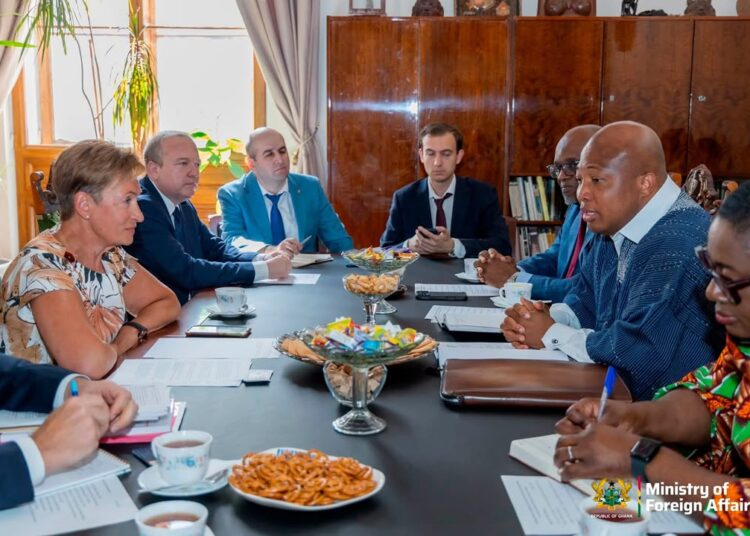
Foreign Affairs Minister Samuel Okudzeto Ablakwa announced the agreement after his delegation was received at the Academy’s Institute for African Studies in Moscow.
The collaboration ties Ghana’s value addition targets to the research capacity of an institute that has studied the continent since 1959, and it extends into reparatory justice research and doctoral scholarships for scholars from both countries.
It comes as Accra searches for partners willing to help it refine and process gold, bauxite, lithium and cocoa at home instead of shipping them out untreated.
Industrialisation and Value Addition at the Centre
Hon Ablakwa framed the outcome as a direct contribution to the President’s flagship economic ambition.
“It is worth highlighting that Ghana and the Russian Academy of Sciences have agreed to work together on President Mahama’s vision of industrialization and value addition as Ghana seeks to stop the export of raw materials by 2030,”
Foreign Affairs Minister Samuel Okudzeto Ablakwa
The 2030 target has become the organising principle of Ghana’s economic diplomacy under the current administration.
Successive governments have watched the country ship out unprocessed minerals and agricultural commodities only to import the finished goods made from them, a pattern that keeps jobs, taxes and industrial skills offshore.
The Academy’s involvement adds a research and technical dimension to a goal that has so far been argued mostly in political and investment terms.
Where the Academy is expected to matter most is in the analytical groundwork that industrial policy depends on.
Its Institute for African Studies runs specialised research centres and trains doctoral candidates, giving Ghana access to expertise in mineral development, economic transformation and industrial planning as it designs the processing capacity the 2030 deadline demands.
Reparatory Justice Research and PhD Scholarships
The second strand of the partnership places Ghana’s reparations campaign inside a Russian academic setting.
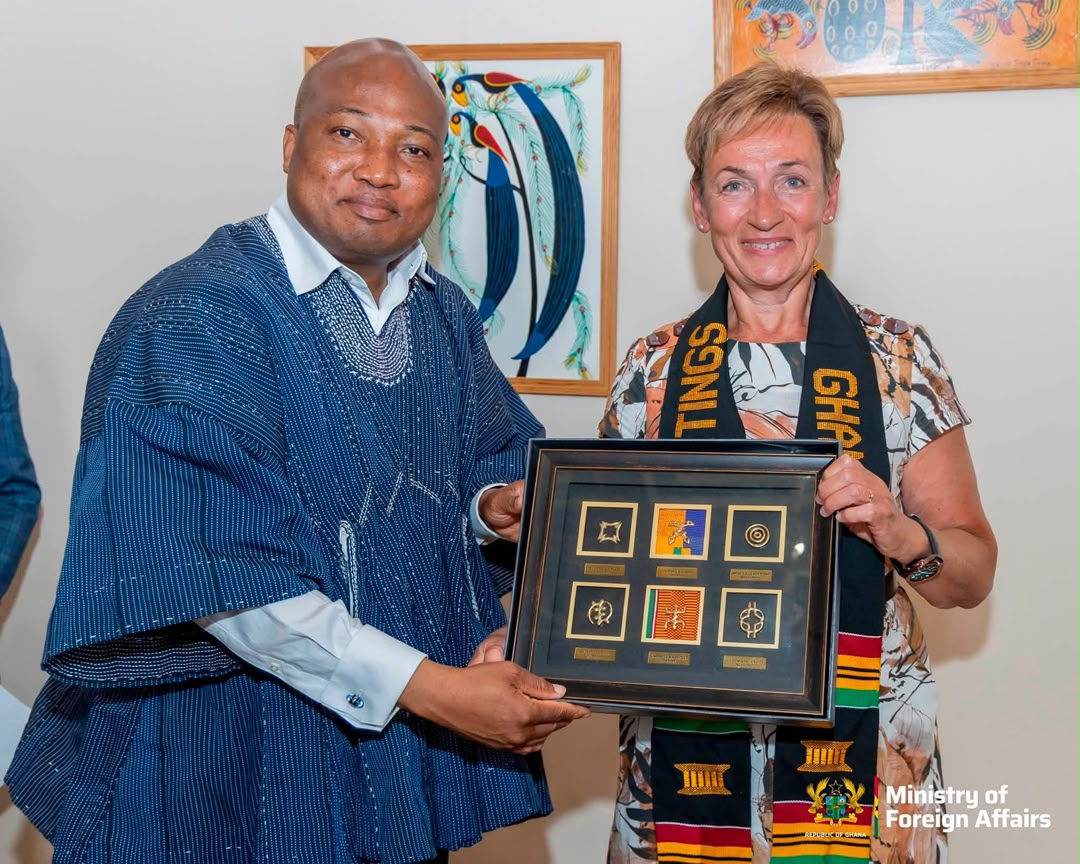
Hon Ablakwa said the two sides would work together on reparatory justice research and on sponsoring PhD scholarships for Ghanaian and Russian scholars, opening a pipeline of graduate training that runs in both directions.
The research component aligns with a foreign policy priority Accra has pursued at the United Nations. Moscow supported the Ghana-led resolution that classified transatlantic enslavement and racialised chattel slavery as the gravest crime against humanity, a vote Ablakwa acknowledged during his bilateral discussions in the Russian capital.
Nkrumah and Mahama on Russian Bookshelves
The minister used the visit to draw attention to an unusual literary distinction.
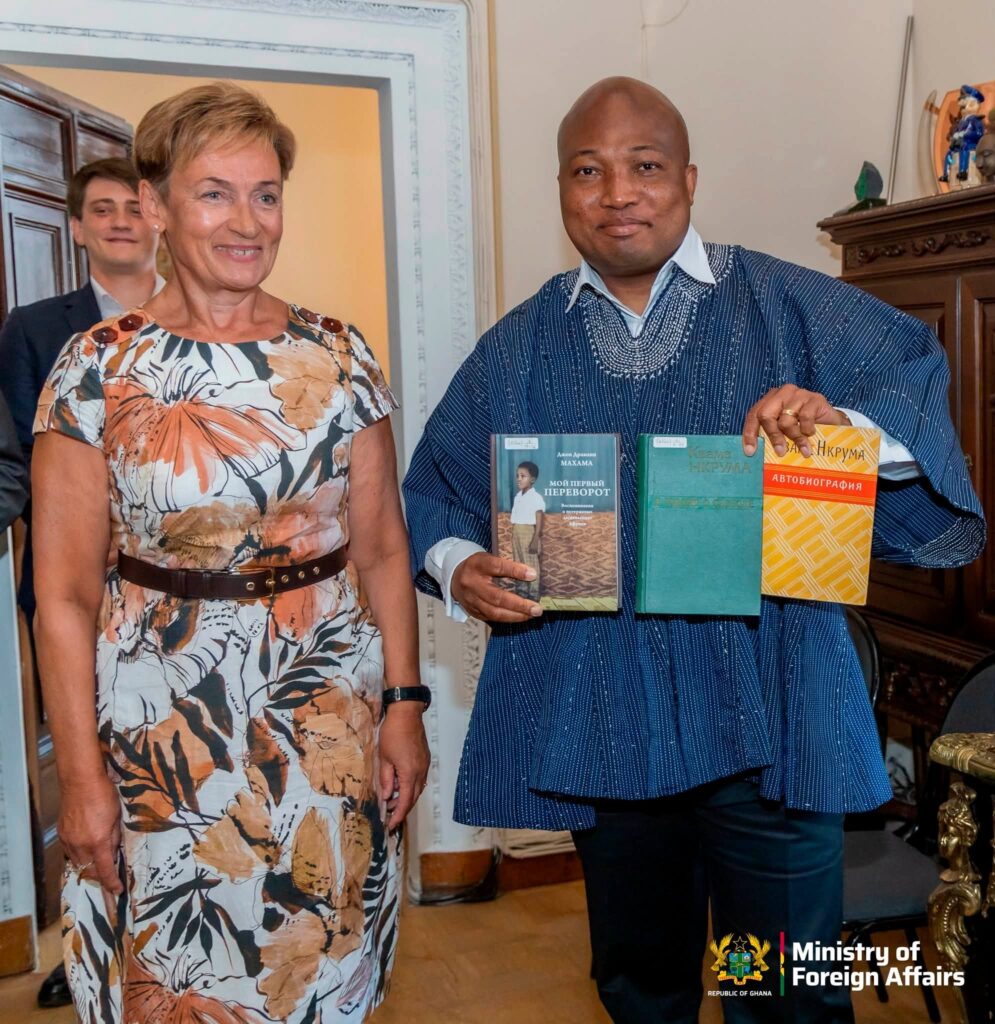
“It is a matter of extreme pride to note that Ghana is the only African country to have the Russian Academy of Sciences translate the literary works of two of our Presidents, Osagyefo Dr. Kwame Nkrumah and His Excellency John Dramani Mahama into the Russian language which are also bestsellers,”
Foreign Affairs Minister Samuel Okudzeto Ablakwa
That detail carries diplomatic weight in a relationship dating back to 1958. Nkrumah remains a recognisable figure in Russia, and Sergey Lavrov noted during the talks that Ghana’s first President had been very popular in his country, a memory both governments have leaned on while rebuilding ties.
A Wider Moscow Agenda
The Academy engagement formed part of a broader working visit. Ablakwa travelled to Moscow at Lavrov’s invitation for three days of talks, during which the two countries signed their first visa waiver agreement covering diplomatic and service passport holders, nearly seven decades after formal relations began.
The ministers also examined business cooperation and joint projects in energy, agriculture, geological exploration and mineral development, and reviewed preparations for the third Russia Africa Summit in Moscow.
That summit is scheduled for 28 and 29 October 2026,  giving Accra a platform to convert this week’s understandings into firmer commitments.
Turning Agreements Into Factories
The immediate test is whether scholarly cooperation translates into industrial capacity within the four years left on the clock.
Research partnerships and scholarships build the human capital Ghana needs, but refineries, processing plants and reliable power supply require capital and policy discipline that no academy can supply.
Hon Ablakwa closed his remarks by thanking Professor Irina Olegovna Abramova and her colleagues for their hospitality and congratulating the institute on its scholarly interest in Africa.
The measure of the visit, however, will be counted in processed exports rather than in translated volumes.
READ ALSO: Power Outage Again Tests Ghana’s Grid Reliability