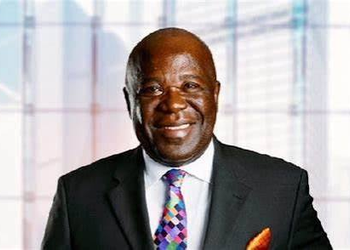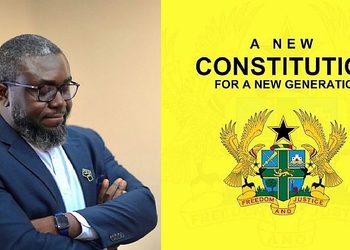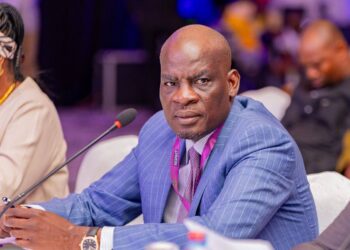

Deputy Attorney-General and Minister for Justice Dr Justice Srem-Sai has accused Ofoase-Ayirebi MP Kojo Oppong Nkrumah and his legal team of building their dismissed injunction application on what he called a deliberate falsehood.
Both interventions followed Justice Gabriel Scott Pwamang’s Friday ruling dismissing Oppong Nkrumah’s bid to halt High Court criminal trials during the legal vacation, and together they represent the sharpest public pushback yet against the case, from a sitting government law officer and from one of the country’s most closely followed constitutional commentators.
Srem-Sai: The Case Rested on a False Premise
Dr Srem-Sai’s central charge is that the plaintiff’s own evidence undermined the claim at the heart of the application. He said Oppong Nkrumah and his lawyers built their case on the allegation that the Chief Justice had assigned “selected cases” to two judges to hear during the legal vacation, and sought an injunction against those two judges on that basis.

“In court, however, their own evidence shows that their allegation was a deliberate falsehood,” Dr Srem-Sai said. He pointed to the applicant’s own Exhibit D, which he said showed the Chief Justice’s warrant was general rather than targeted at any particular case.
He called Exhibit E worse still, saying it showed as many as 29 judges, not two, are sitting during the legal vacation.
Despite the dismissal, Dr Srem-Sai argued the application had still achieved a practical effect. “The point, however, is that they have succeeded in preventing the courts from working for one week,” he said. “Never underestimate the power of deliberate falsehood.”
Professor Asare: “Maybe, Occasionally, You Should Listen to Your Uncle”
Professor Asare’s response took a different register, cast as a letter from an uncle to a nephew, addressed directly to Oppong Nkrumah by his first name. He said Friday’s outcome was not surprising, arguing that the precedent set in Essafuah had made the applicable law reasonably clear well before the ruling.
“Maybe, occasionally, you should listen to your uncle,” he wrote. Professor Asare noted that because the ruling came from a single justice, Oppong Nkrumah retains a procedural route to challenge it.

Under Article 134(b) of the Constitution, read together with Rule 73 of C.I. 16 as substituted by C.I. 98, he can return by motion on notice before a three-justice panel. Professor Asare said he would not encourage that path, however, citing what he called the mountain of authority in Essafuah standing in the way.
Working Through the Constitutional Arguments
Professor Asare then addressed each strand of the underlying constitutional case point by point. On the claim that the warrants are unconstitutional because they permit selected criminal trials during vacation, he asked what rule actually requires criminal trials to stop during that period.
On the discrimination argument, he said selecting cases for hearing is not, without more, unconstitutional discrimination. On the claim that the warrants violate the health rights of lawyers and judicial personnel, he said no constitutional right to a two-month vacation exists.
And on the challenge to Order 79 itself, he noted that the rule expressly contemplates hearings during vacation, cutting against the argument that it is being misapplied. He closed on a measured but pessimistic note regarding the substantive writ still pending before the full Supreme Court.
“On a positive note, today’s ruling does not prejudice your substantive writ,” he wrote. “Regrettably, I am not particularly optimistic about that one either.” He signed the letter “Uncle GOGO,” adding that uncles advise but do not decide.
Two Different Attacks, One Shared Conclusion
The two interventions differ sharply in tone and method. Dr Srem-Sai’s is an evidentiary attack, arguing the factual premise of the case collapsed under its own exhibits. Professor Asare’s is a doctrinal one, testing each constitutional claim against the text of the rules and prior authority.
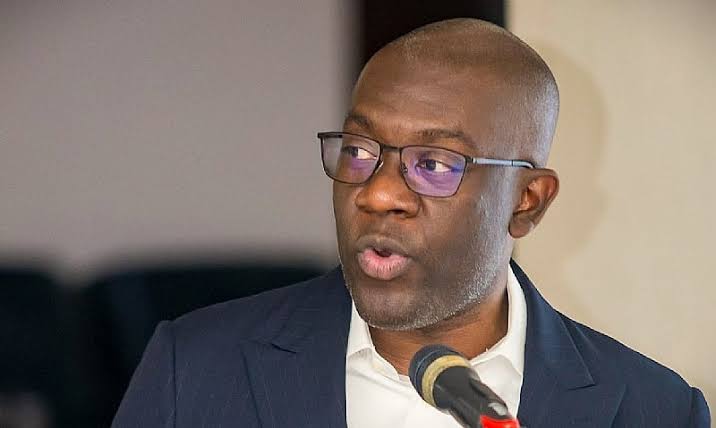
Both arrive at the same place: that the injunction application, and by extension the broader challenge to the Chief Justice’s vacation warrants, rested on weaker ground than its framing suggested.
Neither man’s remarks resolve the substantive constitutional case Oppong Nkrumah filed on August 14, which continues before the Supreme Court independent of Friday’s ruling.
But both interventions land at a moment when the practical consequences of the dispute, a week of disrupted High Court sittings, have already been felt regardless of how the underlying legal questions are eventually decided.
READ ALSO: UNICEF Somalia’s Humanitarian Crisis Deepens as Aid Cuts Hit Essential Services