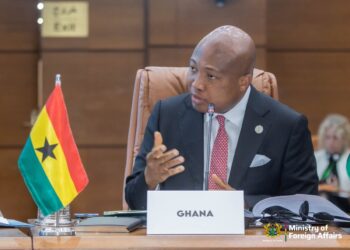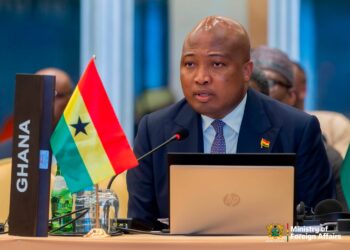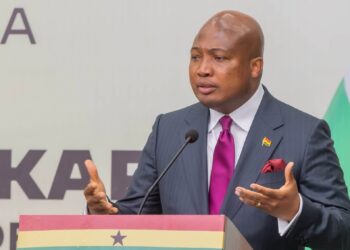
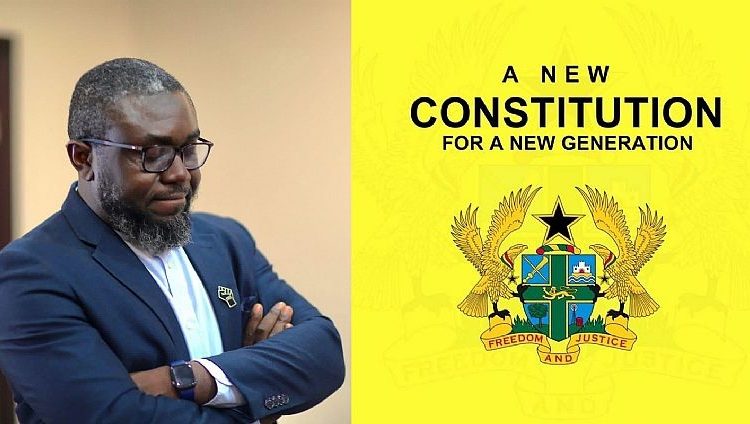
The Secretary to the Constitutional Review and Implementation Committee, Osagyefo Oliver Barker-Vormawor, says the current amendment exercise may itself convince Ghanaians that the country needs an entirely new constitution.
He told The Vaultz News in an exclusive interview at his Accra office that even a deliberately slimmed reform package has left more than twenty questions requiring a referendum.
Asked what would finally produce a national call for a new constitutional order, he pointed to the difficulty of the road Ghana is currently walking. “Maybe this experience,” he said, arguing that the mechanics of piecemeal amendment may do more to make the case than years of advocacy have managed.
Fewer Amendments, Bigger Problem
His argument turns on the contrast between Ghana’s two major review efforts. The committee chaired by Professor Albert Fiadjoe produced a volume of proposed amendments that proved difficult to implement, and the more recent work chaired by Professor Henry Kwasi Prempeh set out deliberately to recommend fewer.

That restraint, in his reading, achieved the opposite of what it intended. “But in the attempt to reduce them, they’ve really exposed the problem,” he said.
The number is the evidence. Even after a conscious effort to be conservative, he noted, the country is left with about twenty-plus questions that must go through a referendum. A process designed to be manageable has produced a ballot that looks anything but.
From there he draws the wider conclusion. The practical difficulty of amending the 1992 constitution piece by piece may awaken Ghanaians to the idea that a holistic bargain, put together and voted on as a whole, is the more honest route.
Who Holds The Pen
He was careful not to treat that realisation as sufficient on its own. A new constitution, he argued, requires a particular kind of constitutional moment, and that moment is defined by who holds power when it arrives.
The evidence he cites comes from the current process. He pointed to the way government has taken “a red pen to the committee’s recommendations and generated its own position,” treating that revision as a lesson about authorship rather than a complaint about content.
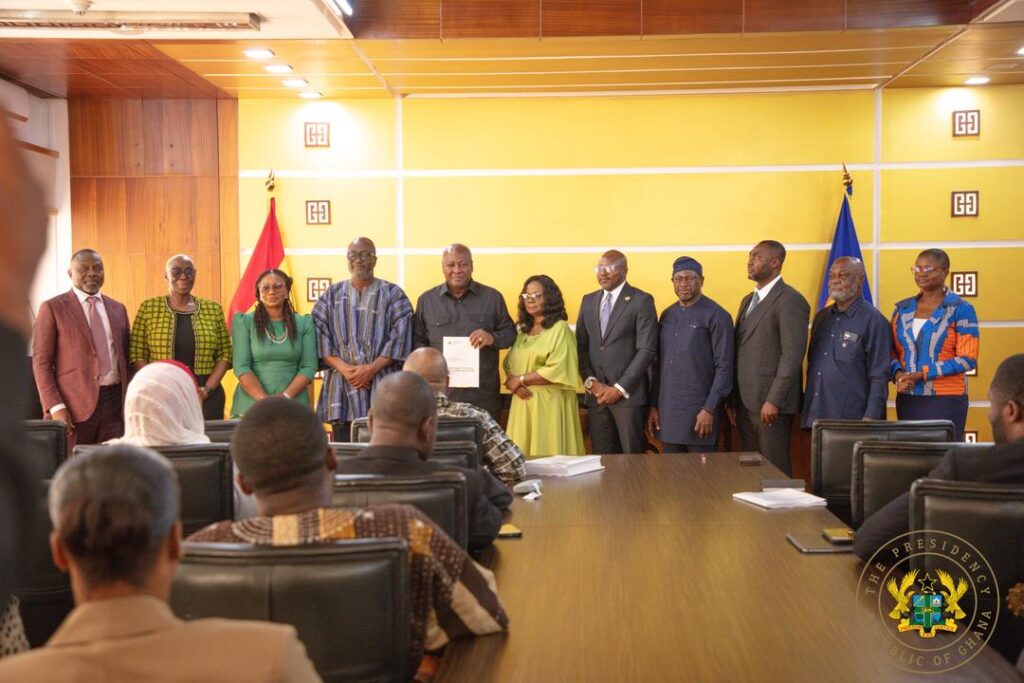
The lesson leads to a question he posed directly. “Even if we get to the point where we want a new constitution, who holds the pen over that process?” It is a pointed caution for anyone assuming that popular demand alone settles the matter.
A reform movement that succeeds in forcing a new constitution onto the agenda, but arrives without leverage over the drafting, may find the document written by the same interests it set out to displace.
Political Capital, Not Just Consciousness
That reasoning reshapes what he means when he talks about building a critical mass. The requirement, as he now frames it, is not only a shift in public consciousness but an accumulation of political capital by those demanding change.
“So we must retain sufficient political capital to direct the content of what that new constitutional order should look like,” he said.
The distinction matters in a system where constitutional change ultimately passes through Parliament, the executive and the parties that control both. Consciousness fills a square, while political capital determines what appears on a page.
A Moment That Has To Be Made
For all the caution, he described the underlying project in terms closer to persuasion than procedure. The task, as he put it, is to mobilise Ghanaians around the belief that “the ordering and structuring of the society as it is limits the pursuit of happiness for each individual.”
He expects everything else to follow from that. “When we’re able to get there, I think the new constitution will rise itself.”

He also treats the call as a discipline on the person making it. Committing to a new constitution obliges you to answer what you actually want to change and why, questions he says come at him daily.
The interview framing invited a comparison with the United States, which has amended its founding document twenty-seven times without replacing it since the Articles of Confederation collapsed.
Barker-Vormawor’s answer suggests the comparison cuts the other way for Ghana, where the amendment route has proved cumbersome enough to raise doubts about whether it can carry the weight being placed on it.
What he does not claim is that the moment has arrived. His position is that the referendum now being prepared will teach the country something about its own constitution either way, and that the lesson will outlast whatever verdict the ballot returns.
READ ALSO: IFC Pipeline Raises Ghana’s Productive Investment Stakes