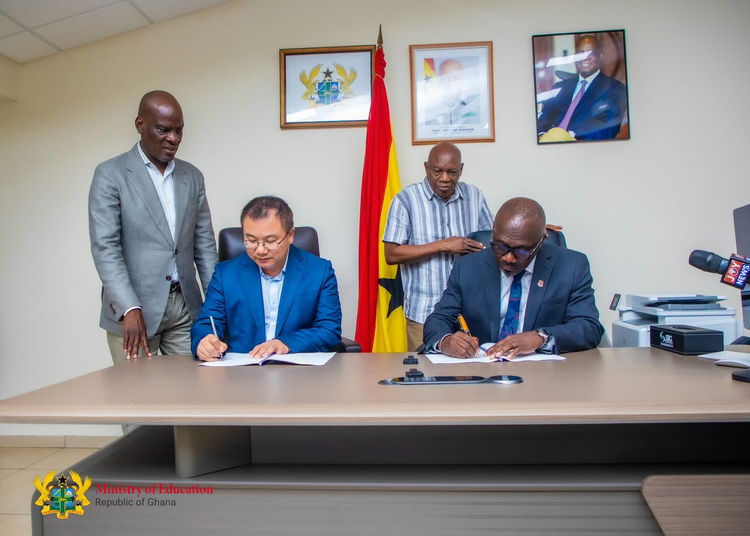
The University of Cape Coast (UCC) has signed a Memorandum of Understanding (MoU) with GSC Property Investment Limited for the development of a 28,000-bed student accommodation facility, estimated at US$500 million, in what stands as one of the largest private-sector investments in university infrastructure in Ghana’s recent history.
The project will be implemented under a 30-year Build-Operate-Transfer (BOT) arrangement, with 25 hectares of UCC land earmarked for the development, positioning it as a long-term infrastructure partnership rather than a conventional government-funded construction project.
According to details shared at the signing, the development will include 28 dormitory blocks, alongside commercial and catering centres, an entertainment and cinema centre, dedicated student activity facilities, parking spaces and other supporting infrastructure.
The scale and range of amenities suggest the project is designed as a comprehensive residential and lifestyle complex for students, extending well beyond basic dormitory accommodation.
No Direct State Funding Required, Minister Says
Speaking after witnessing the signing, the Minister for Education, Hon. Haruna Iddrisu, said the project would not require direct state funding or a sovereign guarantee from government, framing the arrangement as a model for how public universities can address accommodation shortfalls without placing additional strain on the public purse.
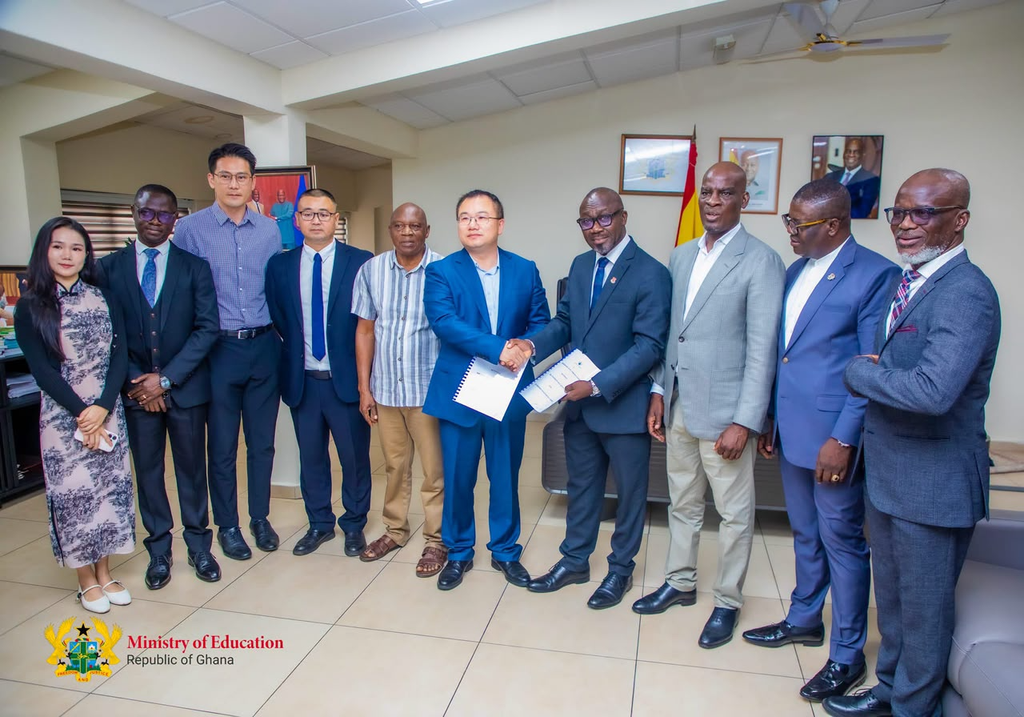
“The project would not require direct state funding or a sovereign guarantee,”
Hon. Haruna Iddrisu
Despite confirming the signing of the MoU, Iddrisu was careful to note that the agreement remains subject to a series of necessary government approvals before it can proceed to full implementation.
These include approval from Cabinet and Parliament, processes required by the Ministry of Finance, and a Value for Money assessment intended to verify that the arrangement represents sound financial value for the university and, by extension, the state.
This multi-layered approval process suggests that while the MoU marks a significant milestone, the project’s actual commencement remains contingent on further governmental review and endorsement before construction can begin.
Beyond addressing the project’s financing structure, the Minister used the occasion to urge UCC to ensure that accommodation fees under the new facility remain affordable for students, particularly against the backdrop of rising costs within the private hostel market surrounding many public universities.
“I urged UCC to ensure that accommodation fees remain affordable for students, particularly in view of the rising cost of private hostel facilities,”
Hon. Haruna Iddrisu
He reflected government’s concern that large-scale private investment projects of this nature should not inadvertently price out the very students they are intended to serve.

Potential Model for Other Universities
Iddrisu further suggested that the UCC initiative could serve as a valuable template for addressing the broader accommodation challenges facing public universities across Ghana, many of which continue to grapple with insufficient on-campus housing capacity relative to growing student enrolment numbers.
He encouraged other tertiary institutions to explore similar public-private partnership arrangements, framing this model as a viable pathway for expanding student accommodation infrastructure without requiring direct government capital investment or the assumption of sovereign financial risk.
The persistent shortage of on-campus student accommodation has remained a recurring challenge across Ghana’s public university system for years, often pushing students toward private hostel accommodation at costs that many students and families struggle to afford.
Against this backdrop, the scale of the proposed 28,000-bed facility at UCC represents a potentially significant expansion of available student housing capacity, should the project progress successfully through the remaining approval stages.
Long-Term Partnership Structure
The 30-year BOT arrangement underpinning the project reflects a structure commonly used in large-scale infrastructure financing, under which a private developer constructs and operates a facility for a defined period before eventual transfer of ownership or operational control back to the originating institution.
This structure allows GSC Property Investment Limited to recoup its substantial capital investment over the life of the agreement through revenue generated from the facility’s operations.

With the MoU now signed, attention will turn to how quickly the project secures the outstanding Cabinet and Parliamentary approvals, alongside the completion of the required Ministry of Finance processes and Value for Money assessment.
Should these approvals proceed smoothly, the project would mark a substantial addition to UCC’s residential infrastructure, while potentially setting a precedent for how other Ghanaian public universities approach the persistent challenge of student accommodation shortages through private capital partnerships rather than direct government funding.
READ MORE: No Qualified Student Will Be Left Behind, Haruna Iddrisu Assures on CSSPS Crisis