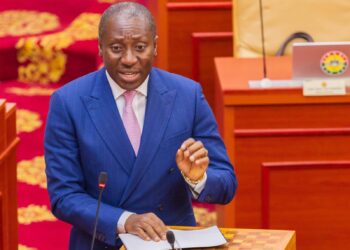

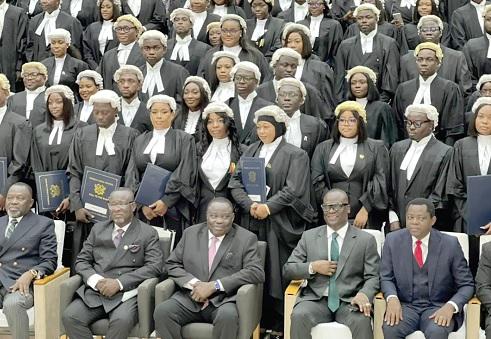
Professor Stephen Kwaku Asare has argued that Ghana’s development challenges, from poor roads to weak accountability, cannot be blamed on the growing number of lawyers. The legal scholar and CDD-Ghana Fellow made the case in a commentary written under his GOGO pen name, after the call of new lawyers to the Bar.
Professor Asare maintained that development depends on effective institutions, productive investment and merit-based opportunities, and he cited approximate lawyer-to-population estimates for Ghana, Singapore and China to challenge claims of oversupply. He was answering Bongo Ideas, who had linked the rising number of lawyers to the country’s problems.
“A country does not develop by choosing between lawyers and engineers. It develops by making its institutions work.”
Professor Stephen Kweku Asare, Legal Scholar and CDD-Ghana Fellow
Roads, Sanitation and the Lawyer Argument
Professor Asare accepted that Ghana faces real problems. He agreed that the country needs engineers, scientists, innovators and builders, and he shared the concern about poor roads, inadequate sanitation and unemployment.
He disagreed that the lawyers entering the profession, including the record 1,568 lawyers called this month, stand in the way of national development. He argued that the question sets up a false choice between lawyers who argue and engineers who build.

Lawyers, he noted, create the legal frameworks within which engineers build. They draft and enforce construction contracts, protect property rights, regulate procurement, resolve commercial disputes and hold public officials accountable.
“Infrastructure requires engineering. But it also requires contracts, financing, regulation, accountability, and the rule of law.”
Professor Stephen Kweku Asare, Legal Scholar and CDD-Ghana Fellow
What the Lawyer Ratios Show
Professor Asare turned to numbers. Using reported 2025 figures, he offered approximate estimates of lawyers per head of population. Singapore has one practising lawyer per 950 people, China one per 1,693 and Ghana one per 4,200. He cautioned that the estimates use national lawyer counts that are not necessarily defined identically.
On those figures, he explained, Singapore has about 4.4 times Ghana’s lawyer density and China about 2.5 times. He pointed out that Singapore and China are often cited as development models. “The figures do not establish Ghana’s ideal number of lawyers,” he wrote, but they do not show that Ghana is overwhelmed by lawyers either.
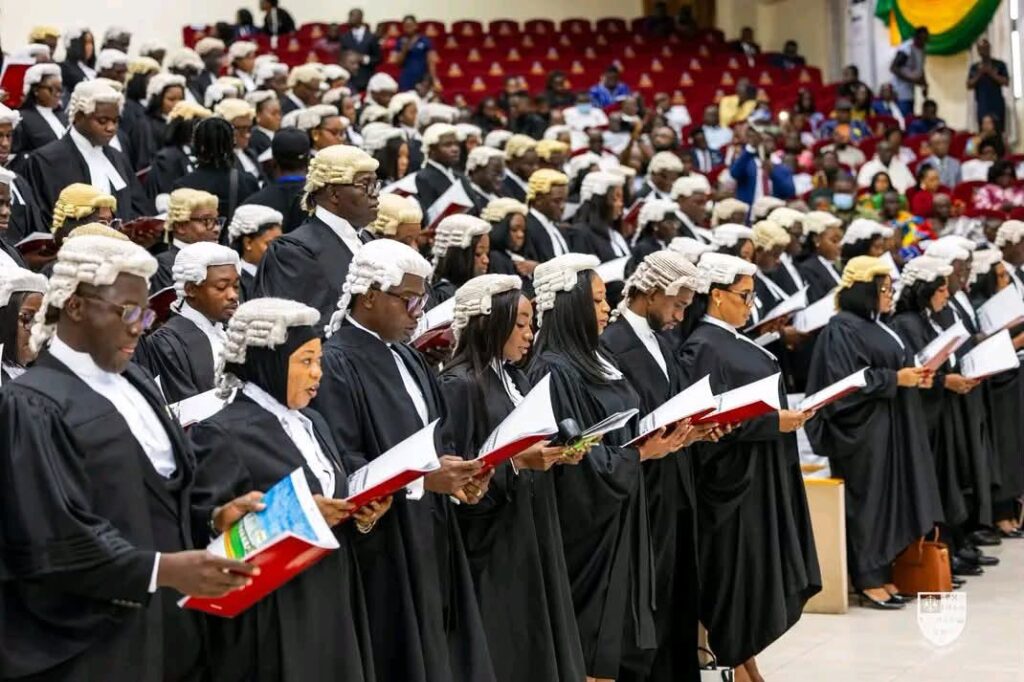
He posed a pointed question. If Singapore can sustain a much higher concentration of lawyers while building a successful economy, he asked, why should Ghana’s smaller concentration be treated as an obstacle?
Production Not the Problem
Professor Asare argued that the issue is how a country uses its professionals, not how many it trains. A country can have thousands of engineers and still have poor roads, he noted. It can have thousands of doctors and inadequate healthcare, thousands of accountants and financial mismanagement, and thousands of lawyers and a struggling rule of law.
He asked whether that means the country should stop training engineers, doctors, accountants and lawyers, and he answered: “Of course not.” The challenge, he explained, is to create institutions and opportunities that let professional knowledge serve society.
He also stated that the existence of poor roads and inadequate sanitation no more proves that Ghana has trained too many lawyers than it proves that Ghana has trained too few engineers.
Politics, Credentials and the Seven Thousand Lawyers
Professor Asare dismissed the idea that legal education is a shortcut to political office. If people see it as a route into politics, he argued, the proper question concerns why the political system rewards certain credentials and networks.
That is a matter of political recruitment, party structures and opportunities for public service, he added, and not an indictment of legal education. If Parliament needs more engineers, scientists, teachers and economists, he suggested, the country should encourage their participation instead of discouraging lawyers.
He also challenged the question of what tangible impact the thousands of lawyers called to the Bar have made. He asked why lawyers should be singled out, and how many engineers, economists, accountants and journalists graduated in the same period.
Lawyers contribute through legal advice, dispute resolution, rights protection and commercial transactions, he noted, not only through public campaigns. “If we want to evaluate the contribution of a profession, let us establish appropriate measures and collect evidence.”
The Real Development Problem
For Professor Asare, the country’s difficulty lies elsewhere. Ghana has not sufficiently translated education, talent and expertise into productive activity and effective institutions, he argued.
He wants the debate to ask why trained professionals cannot find meaningful opportunities, why public institutions underperform, why merit is so often subordinated to political connections and why accountability remains weak.

He dismissed mockery of lawyers for taking photographs, carrying files or working in particular neighbourhoods as no serious analysis. In his words, it is “professional stereotyping dressed up as socio-economic wisdom.”
Professor Asare closed by calling for more knowledge, more interdisciplinary competence and more opportunities for productive work. In his assessment, the country does not have too many lawyers. It has too many unsolved problems, despite what he called an incredible pool of talent, and he urged that attention turn to solving them.
READ ALSO: UK Chancellor Faces Tough Budget Choices