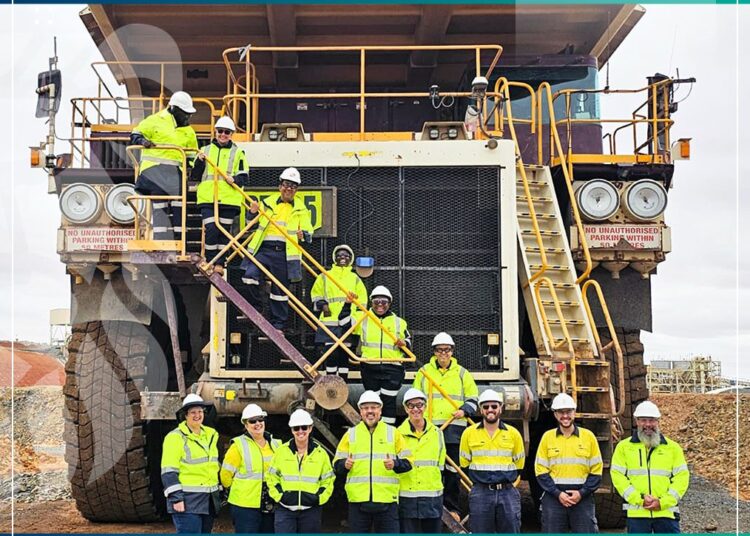
Gold Fields Limited announced in its half-year performance summary for 2026 that its flagship open-pit Tarkwa Mine in Ghana recorded a total production volume of 192,000 ounces during the first six months of the year, representing a sharp 18 percent contraction compared to the 233,000 ounces posted in the corresponding period of 2025.
This pronounced downturn underscores major operational disruptions within the Western Region concession, where processing plants received lower mill feed grades alongside severe technical grade reconciliation discrepancies discovered in a designated section of the underlap pit.
Furthermore, relentless and inclement heavy rainfall severely hampered heavy machinery movement, stifling essential loading, hauling, and production drilling activities across the site throughout the initial months of the operational year.
“Tarkwa produced 192koz in H1 2026, 18% lower than H1 2025 (233koz), reflecting lower mill feed grades, grade reconciliation issues in a section of the underlap pit and the impact of adverse weather on load, haul and drilling activities. Performance improved during Q2 2026 as rainfall eased, supporting better mining conditions and continued progress of the recovery plan. While the recovery is gaining traction, Tarkwa is at risk of not recovering the H1 2026 shortfall and therefore not meeting full-year guidance.”
Gold Fields Limited

Operational conditions began to stabilize during the second quarter of 2026 as heavy rains subsided, allowing management to advance its ongoing operational recovery strategy and clear logistical bottlenecks.
To rebuild operational momentum, the mine leadership is prioritizing drill rig mechanical availability, optimizing blasted ore stockpiles, and mobilizing external rig infrastructure to safeguard raw material supply for processing plants through the remainder of the year.
Nevertheless, executive leadership acknowledged that Tarkwa faces a high risk of failing to bridge the first-half production deficit, which directly threatens the asset’s ability to achieve its full-year output targets.
Macroeconomic Implications for Ghana’s Economy
The operational deficit at Tarkwa presents significant challenges for Ghana’s macroeconomic environment and national fiscal balance.
As gold remains the nation’s primary foreign exchange earner, a multi-thousand-ounce deficit from one of its largest producing mines directly threatens state revenue streams.
Mineral royalties, corporate income taxes, and dividend payments tied to state equity stakes face contraction, putting pressure on public expenditure plans.
Furthermore, reduced foreign exchange inflows from gold exports could strain the Ghanaian Cedi in international currency markets, complicating central bank efforts to stabilize domestic inflation and maintain adequate foreign reserve buffers.
Beyond macroeconomic indicators, the setback carries broad socio-economic consequences across the local supply chain in the Western Region and nationwide.
Mining support firms, heavy equipment vendors, and fuel suppliers encounter reduced service volumes, while local community development funds which depend on royalty payments face funding shortfalls.
As Gold Fields works to stabilize operations under its recovery framework, government regulators and industry stakeholders are closely monitoring progress to gauge the broader impact on Ghana’s mining sector performance through the second half of 2026.
READ ALSO: NPP Links GoldBod Operations To Worsening Galamsey, Demands Closer Scrutiny